How Much Does Flooring Installation Cost And What Impacts the Price Most?
May/18/2026 535How Much Does Flooring Installation Cost And What Impacts the Price Most?
Deciding to upgrade your floors is a significant investment that adds both aesthetic value and equity to your home. If you’ve already narrowed down your choice of materials, the next critical step is understanding the financial landscape of the project. While material costs are often front-and-center in showrooms, the labor and logistical factors of installation are what truly define the final invoice.
This guide breaks down everything from flooring installation cost per square foot to the hidden variables that can shift a budget by thousands of dollars.
Understanding the Baseline: Flooring Installation Cost Per Square Foot
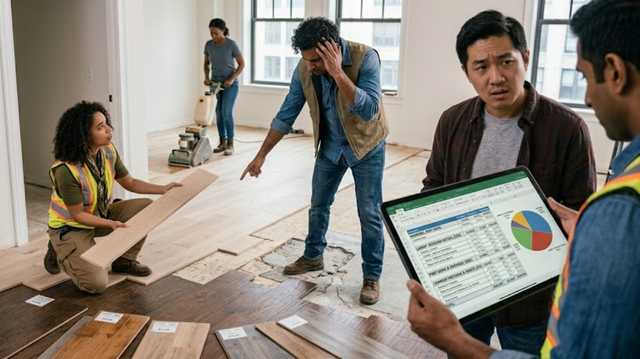
When calculating your budget, the industry standard is to look at the total cost as a combination of materials and labor. On average, homeowners can expect to pay anywhere from **$3 to $22 per square foot** for both materials and professional installation.
Average Cost Breakdown by Material
| Flooring Type | Material Cost (per sq. ft.) | Labor Cost (per sq. ft.) | Total Average Installed |
|---|---|---|---|
| Vinyl Plank (LVP) | $2.00 – $7.00 | $1.50 – $4.00 | $3.50 – $11.00 |
| Laminate | $1.00 – $5.00 | $2.00 – $5.00 | $3.00 – $10.00 |
| Hardwood | $6.00 – $15.00 | $4.00 – $10.00 | $10.00 – $25.00 |
| Engineered Wood | $4.00 – $10.00 | $3.00 – $8.00 | $7.00 – $18.00 |
| Tile (Ceramic/Porcelain) | $1.00 – $15.00 | $5.00 – $15.00 | $6.00 – $30.00 |
Laminate vs. Hardwood Cost: Which Is Better for Your Budget?
One of the most frequent debates for homeowners is laminate vs. hardwood cost. While they can look remarkably similar, their financial profiles are vastly different.
Hardwood: The Long-Term Investment
Hardwood is the gold standard of flooring. It offers incredible longevity—often lasting 50 to 100 years—and can be refinished multiple times. However, the installation is labor-intensive, requiring stapling, nailing, or gluing to a subfloor.
- Pros: High ROI (Return on Investment), timeless appeal.
- Cons: High upfront cost, susceptible to moisture damage.
Laminate: The Budget-Friendly Alternative
Laminate uses a photographic layer under a clear wear layer to mimic wood. The primary cost-saver here is the "click-lock" system, which allows for a "floating floor" installation. This significantly reduces labor time.
- Pros: Scratch-resistant, significantly cheaper labor.
- Cons: Shorter lifespan (15–25 years), cannot be refinished.
Focusing on the Modern Standard: Cost to Install Vinyl Plank Flooring
Luxury Vinyl Plank (LVP) has become the most popular choice for modern renovations due to its waterproof nature and durability. When calculating the cost to install vinyl plank flooring, you must account for the thickness of the wear layer and the type of core (SPC or WPC).
- Labor Efficiency: Because LVP is often installed as a floating floor, labor costs are generally on the lower end of the spectrum ($1.50–$4.00 per sq. ft.).
- Subfloor Requirements: LVP is unforgiving regarding uneven surfaces. If your subfloor isn't perfectly level, you may face additional "prep costs" to avoid "telegraphing" (where imperfections show through the vinyl).
What Impacts the Price Most? The "Hidden" Cost Drivers
Beyond the price tag of the boxes of flooring, several factors will influence your final quote:
1. Subfloor Preparation and Repair
If a contractor removes your old carpet only to find cracked concrete or rotted plywood, the price will spike. Leveling a subfloor using self-leveling compound or installing new underlayment is essential for the warranty and longevity of the floor.
2. Existing Floor Removal
Disposing of old tile or glued-down hardwood is a grueling, dusty process. Removal fees typically range from $1.00 to $3.50 per square foot depending on the difficulty and weight of the material.
3. Room Layout and Complexity
A wide-open rectangular living room is much cheaper to floor than a hallway with five doors, a fireplace hearth, and curved walls. Every cut the installer makes adds time and increases the "waste factor" (the extra material you need to buy, usually 10%).
4. Stairs
Stairs are almost always quoted per step rather than per square foot. Expect to pay between $60 and $150 per step for labor and materials, as they require intricate cutting and nosing work.
Maximizing Your ROI: Why Professional Installation Matters
While DIY is tempting, professional installation ensures that your manufacturer’s warranty remains valid. Many high-end brands require proof of professional install to honor claims regarding wear or defects.
How to Get an Accurate Quote
- Measure Twice: Know your square footage plus a 10% waste buffer.
- Clear the Space: You can save on labor by moving your own furniture and removing old baseboards yourself.
- Check Credentials: Ensure your contractor is licensed and insured.
Ready to Transform Your Home?
Understanding the costs is the first step, but every home is unique. A generic estimate can't account for the specific needs of your subfloor or the intricacies of your floor plan.
Don’t leave your investment to chance. Get a precise, no-obligation quote tailored to your specific project.
[Fill out our Project Assessment Form here] to connect with a flooring specialist today. Let’s get your project started with a budget that works for you.