Kitchen Countertop Materials: Which Is Best for Your Home?
Oct/21/2026 55Kitchen Countertop Materials: Which Is Best for Your Home?
Remodeling a kitchen is one of the most exciting projects you can undertake as a homeowner, but it can also feel overwhelming. The kitchen is the heart of your house—it is where meal preparation happens, family gathers, and daily life unfolds. At the center of all this activity sits your kitchen countertop. It takes the brunt of daily wear and tear, from hot pots and accidental spills to heavy appliances and constant cleaning.
If your current counters are chipped, stained, outdated, or simply do not fit your lifestyle, you are likely looking for a replacement that balances style, longevity, and price. With dozens of surfaces available on the market today, selecting the right option requires careful thought. Between heat resistance, stain susceptibility, maintenance requirements, and local installation costs, making the right choice can quickly feel complicated.
The good news is that you do not have to make these decisions alone. Upgrading your kitchen surfaces should be an inspiring project, not a source of stress. By learning how different surfaces perform under real-world conditions and getting connected with trusted local tradespeople, you can make an informed choice that elevates your space and fits your budget. Submitting a simple online inquiry form is the quickest way to get transparent pricing, material samples, and expert guidance tailored specifically to your home.
Understanding the Problem: Aging Counters and Material Selection Challenges
Kitchen counters do not last forever, and continuing to prepare food on damaged or worn-out surfaces can create daily headaches. Over time, constant use leads to cosmetic and structural defects that affect how your kitchen looks and functions. Recognizing the signs of an aging surface helps you address issues before they cause damage to underlying cabinetry or walls.
Common Signs Your Kitchen Countertops Need Replacement
Many homeowners put up with failing surfaces for years, adapting to minor flaws until they turn into larger problems. Watch for these common signs that it is time to upgrade:
- Persistent Cracks and Surface Chips: Small cracks in stone, tile, or laminate can harbor bacteria, food particles, and moisture. Over time, water seeps into these micro-fissures, weakening the structural integrity of the slab and potentially causing dark stains or mold underneath.
- Deep Stains and Discoloration: If coffee, oil, wine, or citrus juices leave permanent marks even after scrubbing, the protective sealant on your surface has worn off completely. Porous materials without adequate sealing absorb liquids deep into their structure.
- Heat Damage and Scorching: Placing hot pans directly onto unrated surfaces can result in irreversible discoloration, resin burning, or thermal shock cracks.
- Deteriorating Grout Lines: Tile counters from older renovations often feature wide grout lines that become discolored, crumbling, and impossible to sanitize thoroughly.
- Water Damage near the Sink: Plywood substrates beneath laminate or thin wood surfaces can absorb water near faucet mountings, causing swelling, warping, and rot.
Hidden Dangers of Ignoring Damaged Surfaces
Ignoring damaged kitchen surfaces involves more than enduring an outdated aesthetic. When water penetrates through cracked laminate or unsealed grout, it reaches the wooden cabinet boxes beneath. Over time, hidden moisture fosters mold growth, structural rot, and pest infestations. Replacing water-damaged cabinetry is vastly more expensive than replacing an aging slab early.
Furthermore, cracked or porous materials are difficult to sanitize properly. Food particles trapped in unsealed stone or deep chips can breed harmful bacteria, compromising food safety in your household. Upgrading to a modern, non-porous surface protects your health and your cabinet investment simultaneously.
High-Intent Answers for California Homeowners
How much does kitchen countertop installation cost in California?
Kitchen countertop installation in California typically ranges from $3,000 to $9,500, including materials, fabrication, and labor. Final pricing depends on material selection, overall square footage, complex edge profiles, sink cutouts, and local municipal permit requirements. Submitting an online request connects you with local contractors who provide detailed, transparent quotes tailored to your layout.
When should you call a professional for countertop installation?
You should call a professional contractor whenever you select heavy natural stone, quartz slabs, or engineered solid surfaces. Slabs require precise digital measuring, heavy lifting equipment, specialized diamond tools for cutting, and accurate leveling to prevent structural cracking. Professional installers ensure seamless joints, secure sink undermounting, and proper alignment with existing cabinetry.
Is it worth replacing kitchen countertops before selling a home?
Yes, replacing worn or outdated kitchen counters yields a strong return on investment. Modern buyers prioritize clean, updated kitchens and often discount their offers heavily if they see damaged surfaces. Installing durable, attractive materials like quartz or granite enhances curb appeal, accelerates time on market, and allows you to recoup a high percentage of project costs during sale.
Comparing Popular Kitchen Countertop Materials
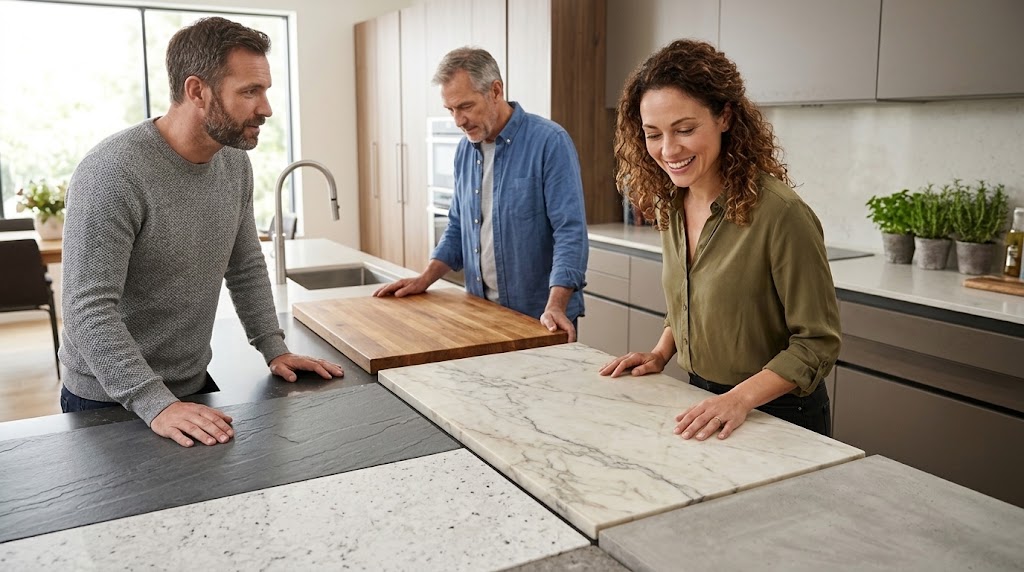
Every material comes with unique strengths, maintenance profiles, and aesthetic characteristics. Finding the best fit depends on how you use your kitchen, your willingness to perform routine upkeep, and your project budget.
Quartz (Engineered Stone)
Quartz is crafted by combining ground natural quartz crystals with polymer resins and color pigments. It has become one of the most popular choices for modern kitchens due to its versatility and strength.
- Durability: Exceptionally resistant to scratches, chips, and stains. Because it is manufactured rather than quarried, it lacks internal natural flaws that can lead to unexpected cracking.
- Maintenance: Extremely low maintenance. Quartz is non-porous, meaning it never requires sealing, polishing, or special oil treatments. Cleaning requires only warm water and mild soap.
- Heat Sensitivity: Resin binders inside quartz can discolor or scorch if exposed to extreme heat. Trivets or hot pads are always recommended.
- Aesthetic Range: Available in hundreds of patterns, from solid minimalist tones to realistic veining that mimics high-end Italian marble.
Granite
Granite is a 100% natural stone quarried directly from the earth, sliced into thick slabs, and polished to a shine. No two pieces of granite are identical, giving each kitchen a distinct, one-of-a-kind look.
- Durability: Outstanding resistance to heat, scratch marks, and impacts. You can set hot pans directly on most granite surfaces without causing damage.
- Maintenance: Granite is naturally porous and requires periodic application of a penetrating sealant (typically once every 1 to 2 years) to prevent oil and liquid staining.
- Aesthetic Appeal: Features rich, organic depth with natural variations in flecks, veins, and color tones.
Quartzite
Not to be confused with engineered quartz, quartzite is a naturally occurring metamorphic rock formed from sandstone under intense heat and pressure deep within the Earth.
- Durability: Harder than granite, offering top-tier resistance to scratching, heavy impacts, and elevated temperatures.
- Maintenance: Requires regular sealing to protect against oil-based stains and acidic liquids like lemon juice or tomato sauce, which can etch softer varieties.
- Aesthetic Appeal: Offers the elegant, sweeping veining of natural marble paired with superior structural hardness.
Solid Surface (Acrylic/Polyester Blend)
Solid surface materials are synthetic, non-porous options engineered for seamless visual continuity and straightforward repairs.
- Durability: Moderate resistance to impacts and scratches. While it can scratch more easily than natural stone, light surface marks can be sanded out using fine-grit abrasive pads.
- Maintenance: Non-porous surface requires no sealing. Integrated sinks can be fused directly to the counter for a seamless finish without dirt-collecting lips.
- Heat Sensitivity: Vulnerable to heat damage; hot pots must never be placed directly on the surface.
Butcher Block (Wood)
Butcher block counters bring warmth, natural texture, and a classic farmhouse charm into culinary spaces. They are formed from hardwood strips glued together into solid planks.
- Durability: Susceptible to scratches, denting, and water damage if neglected, but can be sanded down and refinished multiple times over its lifespan.
- Maintenance: Requires regular application of food-safe mineral oil or conditioner to keep the wood hydrated and prevent splitting or warping. Water must not be left pooling on the wood.
- Aesthetic Appeal: Adds natural warmth and organic texture that softens kitchens dominated by stainless steel and tile.
DIY vs. Professional Expertise: Making the Right Choice
While simple home projects make great weekend DIY tasks, replacing kitchen counters requires specialized skills, heavy equipment, and precise execution. Understanding the physical demands and technical accuracy involved helps avoid costly mistakes.
+-------------------------------------------------------------------+
|                     DIY VS. PROFESSIONAL SCOPE                    |
+-------------------------------------------------------------------+
| DIY FRIENDLY TASKS                | LICENSED CONTRACTOR TASKS     |
| • Applying granite stone sealers  | • Slicing & seaming stone     |
| • Replacing minor sink faucets    | • Digital template measuring  |
| • Sanding down butcher block      | • Structural cabinet reinforcement|
| • Applying wood mineral oil       | • Undermount sink installation|
| • Patching minor tile grout       | • Pulling municipal permits   |
+-------------------------------------------------------------------+
The Risks of DIY Countertop Installation
Heavy stone slabs like quartz, granite, and quartzite weigh between 15 and 25 pounds per square foot. A standard 30-square-foot kitchen slab can easily top 500 pounds. Attempting to maneuver, cut, and drop these slabs into place without professional rigging equipment carries serious risks:
- Slab Fractures: Natural stone has subtle tension lines. Handling a slab incorrectly during transit or installation can instantly snap the piece in two, destroying thousands of dollars in raw materials.
- Inaccurate Measurements: Walls are rarely perfectly square or straight. Professional installers use laser measuring equipment to create digital templates that account for bowed drywall and uneven corners. A small measurement error made during manual measuring can leave wide, unsightly gaps along your backsplash.
- Plumbing and Structural Complications: Modern stone surfaces require reinforced cabinet framing to handle heavy loads without sagging. Incorrect undermount sink installations can detach over time under the weight of water and dishes, leading to hidden leaks.
Why Professional Fabrication and Installation Pays Off
Working with a licensed contractor ensures every stage of your project is handled with precision. Professional fabricators use industrial waterjet cutters and diamond CNC tools to create precise cutouts for sinks, cooktops, and electrical outlets.
Furthermore, professional installers possess the expertise required to mix color-matched epoxy resins for near-invisible seam lines. By entrusting your project to experienced trade specialists, you protect your material warranty, ensure structural stability, and achieve a flawless finish that lasts for decades.
Navigating Costs and Scope in California
Budgeting for a kitchen improvement project requires looking beyond the raw material price per square foot. Total project cost includes several interconnected factors, ranging from surface selection to local regulatory standards.
Primary Cost Drivers
- Material Grade: Rare stone patterns, exotic colors, and thick edge profiles increase material costs compared to entry-level options.
- Layout Complexity: Kitchens with multiple corners, kitchen islands, waterfall edges, and integrated backsplash turnups require additional labor, cutting, and seaming time.
- Substructure Preparation: Older cabinets may require structural shimming, plywood leveling underlayment, or internal bracing before heavy stone slabs can be installed safely.
- Demolition and Disposal: Removing and hauling away heavy old materials like concrete, tile, or thick wood requires specialized labor and disposal fees.
California-Specific Environmental and Building Factors
Homeowners in California face unique environmental conditions and regulatory standards that influence material performance and installation requirements:
- Seismic Activity: California is prone to ground movement. Professional contractors use flexible, high-tensile silicone adhesives and engineered structural supports to ensure stone slabs withstand mild tremors without shearing or cracking at seam joints.
- Title 24 Energy Standards and Permitting: Extensive kitchen modifications involving plumbing re-routes, gas lines, or integrated electrical outlets must comply with California Title 24 energy efficiency standards and local municipal building codes. Licensed contractors navigate permit filings seamlessly on your behalf.
- Intense Sun Exposure and Thermal Fluctuations: In inland areas experiencing heat waves and UV exposure, outdoor or sun-exposed indoor surfaces require UV-stable materials. Resins in engineered quartz can yellow under direct sunlight over time, making natural quartzite or UV-treated granite better choices for bright, sun-drenched kitchens.
- Water Conservation Considerations: Low-flow plumbing fixtures and eco-friendly plumbing codes dictate sink and faucet installations across the state. A licensed professional ensures all connected fixtures meet regional water efficiency guidelines.
How Online Quote Forms Simplify Finding the Right California Pro
Tracking down qualified tradespeople used to require hours of phone calls, endless internet searches, and long waits for return messages. Modern online inquiry forms eliminate this hassle by connecting you directly with vetted professionals in your immediate area.
What to Look for in a California Contractor
When evaluating local professionals for your project, insist on verified qualifications:
- CSLB License: Ensure the contractor holds an active license from the California Contractors State License Board (CSLB) in the appropriate classification (such as C-54 Tile and Stone or Class B General Building Contractor).
- Insurance Coverage: Verify they hold active General Liability insurance and Workers' Compensation coverage to protect your property and workers during installation.
- Local References and Portfolio: Look for verified local reviews and photos of completed projects in homes similar to yours.
- Written Guarantees: A reputable contractor provides written contracts detailing clear timelines, payment schedules, material specifications, and labor warranties.
The 60-Second Solution: How Our Inquiry Process Works
Submitting a quick online quote request removes stress and uncertainty from your home improvement project. Here is how simple the process is:
- Share Your Project Details: Complete a brief 60-second online form describing your layout, target timeline, preferred materials, and California zip code.
- Get Matched with Pre-Vetted Pros: Our system analyzes your requirements and matches your project with top-rated, licensed, and insured local contractors who specialize in your chosen material.
- Receive Free, No-Obligation Estimates: Matched professionals reach out to schedule convenient home consultations, measure your space, show you physical material swatches, and provide transparent written quotes.
- Compare and Choose with Confidence: You review your options, ask questions, and select the professional who best aligns with your vision and budget—all without sales pressure or hidden fees.
Essential Questions to Ask Your Contractor
When matched contractors contact you to discuss your estimate, use these questions to guide your conversation:
- Are you fully licensed with the CSLB, and do you carry current liability and workers' compensation coverage?
- Will my cabinet layout require additional structural framing or leveling before slab placement?
- Where will seams be placed in my layout, and how do you match pattern veining across those joints?
- Do you handle plumbing disconnects and reconnects for sinks and cooktops, or will I need a separate plumber?
- What specific care and sealing regimen do you recommend for the exact slab grade I selected?
Frequently Asked Questions
Which countertop material is the most durable for heavy cooking?
Quartz, granite, and quartzite are the most durable options available. Quartz provides outstanding resistance to staining and scratching without requiring sealing. Granite and quartzite deliver exceptional heat tolerance alongside structural strength, provided they receive periodic protective sealing.
How long does a typical countertop installation take?
Once your chosen material is fabricated, physical installation in your home usually takes 1 to 2 days. Fabrication itself—which includes laser measuring, cutting, edging, and polishing—typically takes 1 to 3 weeks after layout finalization.
Can new countertops be installed on top of existing cabinets?
Yes, provided your existing cabinet boxes are structurally sound, plumb, and square. A professional installer evaluates cabinet framing prior to slab placement and installs plywood underlayment or internal reinforcement if necessary.
How do I know if my stone counters need to be resealed?
Perform a simple water test: pour a few drops of water onto the surface and let them sit for 10 to 15 minutes. If the water beads up, your seal is intact. If the water absorbs into the stone and leaves a dark spot, it is time to reapply sealant.
Are quartz counters completely heatproof?
No, quartz is heat resistant but not heatproof. The polymer resins used to bond ground quartz crystals can scorch, discolor, or crack if exposed to sudden thermal shocks, such as placing hot pans straight off a burner onto the surface. Always use trivets.
What edge profile is best for kitchen counters?
Eased (slightly rounded square) and pencil edges are popular choices because they offer a clean, modern aesthetic and resist chipping. Bullnose (fully rounded) edges are great for busy households with young children, while beveled or ogee edges complement traditional architecture.
Will replacing my kitchen counters require a permit in California?
Direct surface replacements using existing plumbing and electrical lines typically do not require permits. However, if your installation involves moving gas lines, rerouting plumbing, adding new electrical outlets, or modifying structural walls, municipal permits and compliance with California Title 24 guidelines are required.
Final Call to Action
Upgrading your kitchen counters is one of the most rewarding investments you can make in your home. From increasing daily functionality to boosting overall property value, selecting the right material transforms how your entire kitchen looks and feels.
You do not need to figure out measurements, material grades, or local building regulations on your own. Take the guesswork out of your remodel by connecting with qualified, licensed local professionals who can bring your vision to life safely, efficiently, and within budget.
Get started today—filling out our simple form takes less than a minute and puts you in control of your project from start to finish!
Contact us today for a free consultation and take the first step toward the kitchen you’ve always wanted!