How to Hire a Flooring Contractor: Questions, Rates, and Floating Floor Costs
Jul/05/2026 18How to Hire a Flooring Contractor: Questions, Rates, and Floating Floor Costs

Upgrading the flooring in your home is one of the quickest ways to completely transform a space. New floors change how a room feels underfoot, how light bounces across the house, and how much value your property holds.
However, getting to that beautiful final result requires making a few major decisions. The biggest decision isn't actually the color of the wood or the texture of the tile—it is choosing the right professional to install it.
If you are reading this, you are likely past the dreaming phase. You have looked at samples, you have a general idea of what you want, and you are ready to start talking to professionals. This guide will walk you through everything you need to know before you sign a contract, including the exact questions for hiring contractor teams, an honest breakdown of flooring installation rates, and a deep dive into the cost of floating floors installed.
Part 1: Crucial Questions for Hiring a Contractor
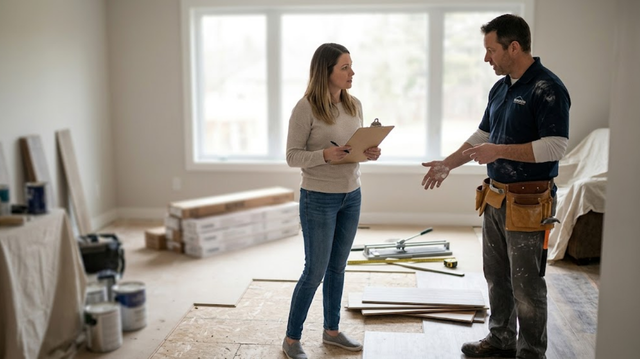
When you sit down or hop on a phone call with a potential flooring installer, you are conducting an interview. They are applying for a job to work on your largest financial asset: your home.
Many homeowners feel intimidated during this process. They worry they don't know the technical jargon well enough to ask the right things. The secret is that you don't need to be a construction expert to vet a professional. You just need to ask clear, direct questions that reveal their experience, professionalism, and honesty.
Here are the essential questions you should ask before letting anyone start tearing up your old floors.
1. "Are you fully licensed, bonded, and insured for this specific work?"
This is your baseline requirement. Never hire a contractor who hesitates when answering this.
- Liability Insurance: Protects your home if a worker accidentally breaks a pipe or damages your property.
- Workers' Compensation: Ensures that if a crew member gets hurt while inside your home, you are not held financially or legally responsible for their medical bills.
- Bonding: Provides a layer of financial protection if the contractor fails to finish the job or does it poorly.
2. "Who will actually be handling the daily installation work?"
Many contractors operate as salespeople. The person who comes to your house to give you an estimate might not be the person doing the physical labor. Ask if they use their own employee crews or if they subcontract the work out to independent laborers. If they use subcontractors, ask how long they have worked with them and how they verify the quality of their work.
3. "How will you prepare the subfloor, and is that cost included?"
A beautiful floor is only as good as the subfloor underneath it. If your subfloor is uneven, rotting, cracked, or damp, your new flooring will eventually fail. A quality contractor will always inspect the subfloor after removing the old material. Ask directly: “If you find out my subfloor needs leveling or repairs, how much will that add to the bill?”
4. "What is your timeline, and what happens if the project goes over schedule?"
Flooring projects disrupt your life. Your furniture has to move, rooms become unusable, and your house gets dusty. You need a clear start and end date. Ask what their policy is if they face unexpected delays, and find out if they will be working on your home every consecutive day until the project is finished.
5. "What kind of warranty or guarantee do you offer on your labor?"
The flooring material itself usually comes with a manufacturer’s warranty, but that only covers defects in the product. It does not cover mistakes made during installation (like gaps, lifting, or uneven surfaces). A reputable flooring installer should offer at least a one-year written warranty on their craftsmanship.
Part 2: Understanding Flooring Installation Rates
To budget effectively, you need to understand how flooring installation rates are calculated. Contractors generally charge by the square foot, but that single rate rarely tells the whole story.
Let's break down typical average labor rates across the industry for different types of flooring materials. Note that these are average labor costs and do not include the cost of the materials themselves.
| Flooring Type | Average Labor Cost per Sq. Ft. | Project Complexity |
|---|---|---|
| Laminate / Luxury Vinyl Plank (LVP) | $2.00 – $4.50 | Low to Moderate |
| Engineered Hardwood | $3.50 – $7.00 | Moderate |
| Solid Hardwood | $5.00 – $10.00 | High (Requires nailing/stapling) |
| Ceramic or Porcelain Tile | $6.00 – $15.00 | Very High (Requires layout, grout, cutting) |
| Carpet | $1.50 – $3.50 | Low (Includes padding installation) |
Hidden Costs That Affect Installation Rates
When you get a formal estimate, you might see extra line items that push the total price past the basic square footage rate. This is normal, but you should know what they are ahead of time:
- Furniture Removal: Moving heavy couches, beds, and refrigerators takes time and physical effort. Some contractors charge an extra $50 to $150 per room to handle this for you.
- Old Floor Tear-Out and Disposal: Ripping up old carpet, scraping away old glue, or smashing up old tile is incredibly messy, hard work. Expect to pay anywhere from $1.00 to $4.00 per square foot just for demolition and junk removal.
- Stairs: Installing flooring on stairs is highly detailed work because every single step requires custom cutting, wrapping, and trim work. Contractors usually charge a flat rate per step (often $50 to $100 per stair) rather than using a square footage rate.
- Transitions and Moldings: The edges of your room need baseboards or quarter-round molding. The spots where your new floor meets a different room (like going from wood to bathroom tile) need transition strips. Purchasing and installing these pieces adds to the total labor cost.
Part 3: Deep Dive into the Cost of Floating Floors Installed
Floating floors are incredibly popular for modern home renovations. If you are looking for a beautiful balance between durability, style, and cost-effectiveness, this is likely what you are considering.
What Exactly is a Floating Floor?
A floating floor is not glued, nailed, or stapled down to the subfloor. Instead, the individual planks or tiles click together tightly like puzzle pieces. The entire floor simply rests on top of the underlayment, held down by its own weight and locked together at the edges.
Laminate, Luxury Vinyl Plank (LVP), and engineered hardwood are the most common materials installed using the floating method.
Calculating the Total Cost of Floating Floors Installed
When calculating the total cost of floating floors installed, you have to look at three primary components: the material cost, the underlayment cost, and the professional labor cost.
On average, the total cost to have a floating floor professionally installed ranges from $5.00 to $12.00 per square foot all-inclusive.
Let’s look at a realistic scenario for a standard 1,000-square-foot living space using standard mid-range Luxury Vinyl Plank (LVP) or quality laminate:
- Materials (Planks + 10% Waste): 1,100 sq. ft. × $4.00 = $4,400
- Underlayment/Moisture Barrier: 1,000 sq. ft. × $0.50 = $500
- Labor Costs (Installation): 1,000 sq. ft. × $3.00 = $3,000
- Trim, Transition Strips, Moldings: Flat estimate = $400
- Total Budget Estimate: $8,300
Why Do Floating Floors Cost Less to Install?
If you are looking to get the maximum value out of your budget, floating floors are highly attractive because their installation rates are significantly lower than traditional solid wood or tile.
- Speed of Installation: Because the pieces snap together rapidly without the need for individual messy glues or loud nail guns, an experienced crew can finish a massive room in a fraction of the time. Less time on the job means you pay less for labor.
- Subfloor Flexibility: While the subfloor still needs to be flat, floating floors are much more forgiving over minor imperfections than glued or nailed floors. This often cuts down on expensive subfloor preparation fees.
- Built-in Underlayment: Many modern luxury vinyl planks come with the padding already attached to the bottom of each piece. This saves the contractor a step, keeping your labor costs low.
Part 4: Red Flags to Watch for When Talking to Contractors
As you begin calling professionals and scheduling walk-throughs for your home, your goal is to spot the great contractors and filter out the unreliable ones. Pay close attention to how they communicate and how they structure their business transactions.
Warning Sign: Avoid any contractor who demands a massive cash deposit upfront (such as more than 50% of the total project cost) before any materials arrive or any work begins. A standard, safe payment schedule typically looks like a small deposit to lock in your date, a payment when materials arrive at your home, and a final payment only after the job is fully completed to your satisfaction.
Here are a few other warning signs to look out for:
- The price is drastically lower than all other quotes: If three contractors quote you around $8,000 for the job and a fourth quotes you $3,500, they are likely cutting corners, using unlicensed labor, or planning to hit you with massive surprise fees later.
- They refuse to put the estimate in writing: An oral agreement leaves you entirely unprotected. If it isn't written down in an explicit, detailed invoice, it practically doesn't exist.
- They ask you to pull the building permits: If a permit is required for major structural structural shifts or home renovations in your town, the licensed professional should always pull it under their own business name. If they ask you to do it, it often means they don't hold an active, valid license in your area.
Part 5: Preparing Your Home for the Contractor's Arrival
Once you have asked your questions for hiring contractor teams, compared your local flooring installation rates, settled on your final cost of floating floors installed, and signed your contract, it's time to prep for the big day.
Taking a few proactive steps can save you time, keep your household items safe, and help the installation crew move as fast as humanly possible.
- Clear the Walls and Shelves: The vibration from removing old flooring and hammering down new pieces can shake walls. Take down valuable picture frames, paintings, and fragile items from nearby shelves so nothing accidentally falls.
- Empty Your Closets: If the contractors are replacing the flooring inside your bedroom or hallway closets, make sure all shoes, clothes, and floor items are completely cleared out. The workers need clear, open access to the ground.
- Manage Your Pets: Construction is loud, dusty, and requires workers to constantly open and close exterior doors. Keep your cats, dogs, or other pets safely contained in a separate room that isn't getting worked on, or arrange for them to stay with a friend or boarding service for the week.
- Establish a Clean Workspace: Talk to the crew supervisor on morning one to decide where they will cut materials (usually the garage, driveway, or back patio) and which bathroom they are permitted to use while on your property. Clear boundaries make the entire project run smoother for everyone involved.
Making Your Final Decision
Investing in new flooring is an incredible step toward making your home more beautiful, modern, and comfortable. By taking the time to ask smart questions, understanding how local rates operate, and understanding what goes into floating floor pricing, you protect your bank account and your home.
You are now fully armed with the information you need to speak intelligently with professionals. Step forward confidently, get your written estimates, and look forward to enjoying your gorgeous new floors.