How to Choose Energy-Efficient Windows for Your Home
Oct/22/2026 52How to Choose Energy-Efficient Windows for Your Home
Stepping into your living room on a warm July afternoon shouldn't feel like stepping straight into the desert heat. Yet for thousands of California homeowners, warm drafts near glass panes, skyrocketing electric bills, and relentless sunlight fading the living room couch are daily struggles. When your windows fail to protect your living space from the elements, your heating and cooling systems work overtime just to keep your family comfortable.
Replacing old or inefficient windows is one of the single most impactful upgrades you can make to your property. Beyond lowering your monthly energy bills and elevating your curb appeal, modern high-efficiency windows stabilize interior temperatures, block harmful ultraviolet radiation, and minimize unwanted outdoor noise.
Choosing the right glass, frame materials, and installation style can feel overwhelming when balancing local weather patterns and building codes. How do you select options that suit your architectural style while meeting California’s strict energy standards?
This guide walks you through the entire process step-by-step. You will learn how modern glass technologies function, how to evaluate climate-specific ratings, and how to balance upfront investment with long-term savings. The fastest path to absolute clarity on project costs and timeline is connecting directly with verified local specialists. By submitting a simple 60-second online inquiry form, you can instantly match with licensed California window contractors ready to evaluate your space and provide a detailed, no-obligation quote.
The Hidden Costs of Outdated Windows
Many homeowners view drafty or aging windows as a minor aesthetic concern, often postponing replacement until a glass pane breaks or a frame rots away. Operating with outdated window systems creates quiet financial leaks that drain your budget every month.
Old double-hung or single-pane windows allow air infiltration through degraded weather stripping and shrinking frame seals. In the summer months, oppressive heat penetrates single-pane glass effortlessly, turning your home into a thermal trap. In the winter, warm interior air escapes rapidly, leaving your HVAC system running continuously.
Common Signs Your Windows Need Attention
- Noticeable Drafts: Feeling air movement near window frames when windows are completely closed and locked.
- Temperature Spikes: Experiencing sharp room-to-room temperature differences near glass surfaces during sunny afternoons.
- Condensation and Moisture Between Panes: Seeing foggy or milky moisture trapped inside double or triple-pane units, indicating a broken hermetic seal.
- Faded Interior Furnishings: Noticing distinct discoloration on hardwood flooring, carpets, rugs, and furniture exposed to direct sunlight.
- Operability Issues: Sticking, jamming, or refusing to stay open due to warped frames or failed spring balances.
- Intense Outside Noise: Hearing street traffic, barking dogs, or lawnmowers almost as clearly as if you were outdoors.
Environmental Demands on California Homes
California presents unique climate challenges that accelerate window degradation. The coastal regions face constant exposure to salt-laden air and heavy ocean fog, which corrode hardware and degrade cheap frame materials.
Inland valleys experience summer heat waves exceeding triple digits, placing intense thermal strain on vinyl and wood frames. Southern regions endure relentless, high-UV sunshine year-round, while northern areas navigate atmospheric rivers with heavy rainfall.
Ignoring failing windows in these environments leads to more than higher electric bills. Water leaking past deteriorated window flashing rots internal wall framing, creates mold growth behind drywall, and ruins interior finishes. Solar heat forces air conditioning units to run continuously, driving up peak-time power bills and shortening your HVAC system's operational lifespan.
Quick Answers for California Homeowners
How Much Do Energy-Efficient Replacement Windows Cost in California?
The average cost to replace standard residential windows in California ranges between $650 and $1,500 per window, including professional labor and materials. Final pricing depends on frame material, glass packages, window size, structural repairs, and local permit fees required by municipal building departments.
When Should You Hire a Licensed Contractor for Window Replacement?
You should hire a licensed contractor whenever replacing full window frames, altering structural rough openings, installing windows on upper stories, or upgrading to meet California Title 24 compliance. Professional installation ensures proper flashing, waterproofing, and full manufacturer warranty protection.
Is Replacing Windows Worth the Investment?
Yes. Energy-efficient window replacement yields an average ROI of 65% to 75% in immediate home equity, while reducing monthly cooling and heating expenditures by up to 12% to 15%. Updated windows also significantly improve indoor acoustic comfort and elevated curb appeal.
DIY Maintenance vs. Professional Replacement
When dealing with window problems, it is vital to know which tasks you can safely tackle yourself and when you need experienced, licensed trade professionals.
+-----------------------------------------------------------------------+
|                       KNOW YOUR REPAIR LIMITS                         |
|                                                                       |
|   DIY SCOPE                             PROFESSIONAL SCOPE            |
|   - Re-caulking exterior trim           - Structural frame removal    |
|   - Replacing worn weather stripping    - Title 24 efficiency sizing  |
|   - Cleaning sill weep holes            - Custom flashing & sealing   |
|   - Installing temporary insulation     - Full glass unit replacement |
+-----------------------------------------------------------------------+
Simple Maintenance Tasks You Can Handle
- Re-caulking Exterior Trim: Inspecting exterior window perimeters and applying high-grade exterior silicone or polyurethane sealant to fill minor gaps.
- Replacing Weather Stripping: Swapping out cracked, flattened, or missing rubber seals along moving sashes to cut down on surface drafts.
- Cleaning Sill Weep Holes: Clearing dirt, leaves, and debris from bottom window track drainage channels to ensure rainwater drains properly.
- Installing Temporary Thermal Films: Applying heat-shrink window insulation film during cold snaps or temporary sun-blocking shades to mitigate glare.
Complex Projects Requiring Licensed Expertise
- Full-Frame Removal and Replacement: Stripping a window down to the structural studs to address hidden rot, install new sill pans, and completely re-flash the opening.
- Modifying Wall Openings: Expanding existing window dimensions or creating new openings, which requires structural reframing and header modifications.
- Ensuring Title 24 Compliance: Calculating precise Solar Heat Gain Coefficient (SHGC) and U-factor ratings across multiple elevations to meet California energy codes.
- Waterproofing and Flashing Integration: Correctly layering house wrap, flexible self-adhering flashing tapes, and counter-flashing to prevent water intrusion during atmospheric storms.
Attempting to install complete replacement window units without professional expertise creates high risks. Improperly sealed windows frequently leak rainwater inside wall cavities, causing structural damage that remains hidden for months. Minor installation errors can also void manufacturer warranties, leaving you responsible for costly repair bills later.
Navigating Materials, Ratings, and Energy Standards
Selecting energy-efficient windows requires understanding key performance metrics and material properties. Windows are complex engineering systems designed to manage heat transfer, solar radiation, air leakage, and visible light transmission simultaneously.
Decoding Key Energy Performance Metrics
When reviewing window labels, you will encounter ratings certified by the National Fenestration Rating Council (NFRC). Understanding these metrics helps you choose the right performance package for your local microclimate:
When reviewing window labels, you will encounter ratings certified by the National Fenestration Rating Council (NFRC). Understanding these metrics helps you choose the right performance package for your local microclimate:
- U-Factor: Measures how well a window prevents heat from escaping your home. U-factor values range from 0.20 to 1.20. Lower numbers mean better insulation. This metric is crucial for colder mountain and coastal areas.
- Solar Heat Gain Coefficient (SHGC): Measures how well a product blocks heat caused by direct sunlight. SHGC is expressed as a number between 0 and 1. Lower numbers mean less solar heat transmission. A low SHGC is essential for Central Valley and Southern California homes facing intense sun exposure.
- Visible Transmittance (VT): Measures how much natural daylight passes through the glass pane. VT ranges from 0 to 1. Higher numbers mean brighter indoor spaces without relying on artificial lighting.
- Air Leakage (AL): Measures how much air passes through the joints of a closed window assembly. Lower numbers reflect tighter construction and fewer draft issues.
Understanding California Title 24 Requirements
California’s Building Energy Efficiency Standards, known as Title 24, Part 6, set strict energy guidelines for residential window replacements. These standards are updated regularly to reduce state energy consumption and grid strain.
Title 24 establishes maximum allowable limits for U-factor and SHGC based on your specific California climate zone. For example, windows installed in hot inland valleys must meet low SHGC requirements to minimize air conditioning demand.
In addition, replacement projects must meet safety glazing rules (tempered glass near doors or floors) and emergency egress sizing requirements in bedrooms. Working with a knowledgeable local contractor ensures every installed window meets state and local building codes without unexpected permit issues.
Comparing Popular Window Frame Materials
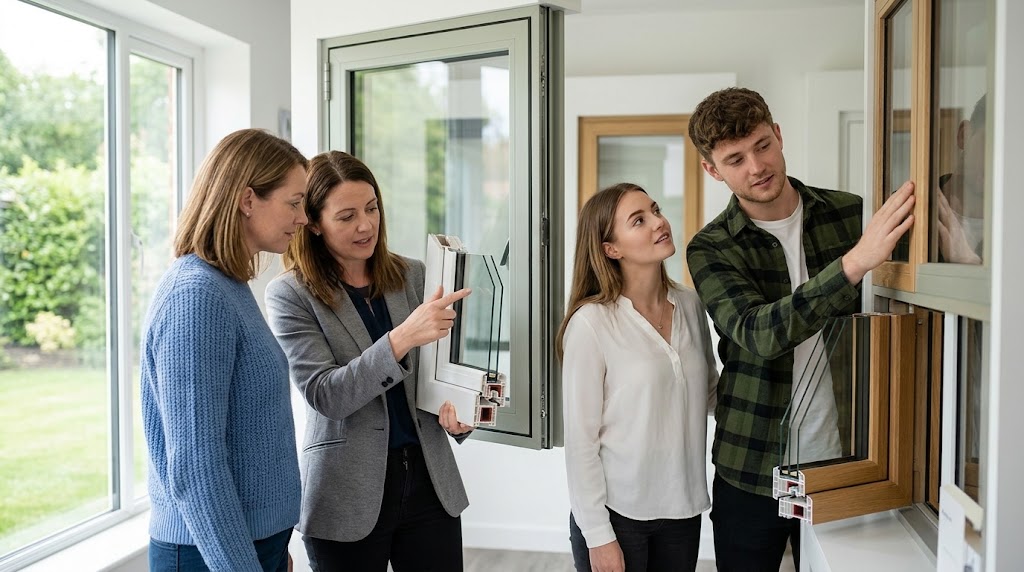
Frame materials affect long-term durability, maintenance needs, thermal performance, and upfront installation costs.
Vinyl Frames
- Pros: Highly affordable, moisture-resistant, non-corroding, and low-maintenance. Multi-chambered designs offer excellent thermal insulation.
- Cons: Limited color choices. Can expand or contract in extreme heat, which may degrade sealants over time if poor-quality vinyl is used.
- Best For: Overall value, coastal areas, and low-maintenance preferences.
Fiberglass Frames
- Pros: Extremely strong, structurally stable in high heat, and paintable. Matches glass expansion and contraction rates to preserve seals.
- Cons: Higher initial cost than vinyl. Fewer local suppliers across certain rural areas.
- Best For: Premium durability, large window openings, and extreme inland heat zones.
Aluminum Frames
- Pros: Exceptionally strong, slim profiles for modern designs, lightweight, and impact-resistant.
- Cons: Conducts heat rapidly unless built with a thermal break. Less energy-efficient in direct sun compared to vinyl or fiberglass.
- Best For: Modern architectural designs with large glass expanses requiring structural strength.
Wood Frames
- Pros: Excellent natural insulation values, rich aesthetic appeal, and customizable paint or stain finishes.
- Cons: High cost and regular maintenance needed to prevent rotting, warping, or termite damage.
- Best For: Historic homes, luxury renovations, and traditional architectural styles.
How Online Quote Forms Simplify Finding the Right California Contractor
Finding a skilled, reliable window contractor does not have to involve endless phone tag, unreturned voicemails, or high-pressure sales pitches in your living room. The modern home improvement process puts control back in your hands through digital inquiry forms.
+-----------------------------------------------------------------------+
|                    THE STREAMLINED INQUIRY PROCESS                    |
|                                                                       |
|   1. SUBMIT DETAILS       2. PRO MATCHING        3. GET ESTIMATES     |
|   Fill simple form        Get matched with       Receive free, clear  |
|   in under 60 seconds.    vetted, licensed pros. project pricing.     |
+-----------------------------------------------------------------------+
What to Look for in a Qualified California Contractor
Before signing contracts or handing over a deposit, verify that your chosen installer meets these standards:
- Active CSLB License: A valid license from the Contractors State License Board under the C17 (Glazing) or B (General Building) classification.
- Comprehensive Insurance: Full worker's compensation coverage for all crew members on-site and general liability insurance.
- Local References and Reviews: Verified customer feedback from homeowners in your immediate city or county.
- Clear, Detailed Contracts: Written bids detailing itemized window specifications, brand names, energy metrics, labor costs, permit handling, and warranty terms.
The Power of the 60-Second Online Form
Submitting an online quote request cuts through the friction of searching for qualified contractors. Instead of calling dozens of companies to ask about availability, a single form matches your project details with pre-screened professionals in your local area.
Here is how online inquiry forms make window replacement simpler:
- Fast and Convenient: Complete the form anytime from your phone, tablet, or laptop without making endless phone calls.
- Zero Pressure: Receive clear, itemized estimates at your own pace, giving you time to compare options without aggressive sales pressure.
- Pre-Vetted Local Pros: Connect with licensed local installers who understand regional microclimates and municipal permit workflows.
- Upfront Price Clarity: Compare real project costs to select a glass package and frame material that fits your budget.
Key Questions to Ask Matched Contractors
Once matched local specialists contact you to discuss your project, ask these targeted questions to make an informed decision:
- Will you handle pulling all necessary municipal permits for Title 24 compliance?
- Which specific frame material and low-E glass coatings do you recommend for my home's sun exposure?
- Are installation labor costs included in the written bid along with material delivery and debris disposal?
- What total warranty coverage applies to both the window units and your installation labor?
- How long will the entire process take, from initial measurement to final installation?
Frequently Asked Questions
What is low-E glass, and do I really need it in California?
Low-E (low-emissivity) glass features microscopically thin metallic coatings designed to reflect infrared heat back to its source while letting visible light pass through. In California, low-E glass is essential. It keeps interior spaces significantly cooler during sunlit summer months, prevents UV rays from fading your home furnishings, and is required to meet Title 24 energy compliance standards.
How long does a full home window replacement project take?
Manufacturing custom-sized windows typically takes four to eight weeks after exact home measurements are finalized. The physical installation process is remarkably fast: an experienced installation crew can usually replace 10 to 15 standard windows in one to two days, minimizing disruption to your routine.
Can I replace my windows one at a time, or should I do the whole house at once?
While replacing all windows simultaneously offers the best volume pricing and labor efficiency, you can complete projects in phases. Homeowners often prioritize the hottest south and west-facing rooms first to address immediate comfort issues, then replace remaining north and east-facing windows as budget permits.
How do double-pane windows differ from triple-pane options?
Double-pane windows feature two glass sheets separated by an insulating gas space (such as argon). Triple-pane units add a third glass sheet and a second gas-filled chamber. While triple-pane windows deliver superior thermal insulation and soundproofing, double-pane windows with high-performance low-E coatings are usually sufficient for most California climate zones and offer a faster payback on your investment.
Will replacing my windows require a local building permit in California?
Yes. Municipalities across California treat replacement windows as structural and energy upgrades that require a building permit. Permits ensure that installed units comply with Title 24 energy limits, safety glazing laws, and bedroom fire egress codes. Qualified contractors handle the permit application and inspection processes for you.
Request Your Free California Window Replacement Quote
Upgrading to high-efficiency windows is one of the smartest investments you can make for your California home. You can eliminate uncomfortable drafts, lower high summer cooling bills, protect interior furnishings from UV damage, and elevate your property's overall market value.
Please visit us here to find Find top-rated service pros for your project or call us at 1 (888) 646-7358!