What Is the Most Durable Flooring for Homes?
Oct/27/2026 63What Is the Most Durable Flooring for Homes?
High-traffic foot traffic, muddy paws, dragged furniture, and daily spills can take a severe toll on your floors. If you are noticing soft wood indentations, frayed carpet edges, or chipped tiles, you are likely wondering what option will actually stand up to real life without needing replacement in a few short years. Finding a surface that balances rugged durability with authentic style is one of the most practical investments you can make in your home.
California living adds its own distinct set of challenges to this decision. From coastal moisture and atmospheric rivers in Northern California to intense sunlight and temperature spikes in Southern California, indoor materials undergo continuous environmental stress. Choosing the right surface requires understanding how different materials handle active households, pet nails, UV exposure, and heavy foot traffic. Getting clarity on materials, installation requirements, and actual project costs begins with an easy first step. Requesting a quick, free estimate online connects you directly with vetted local professionals who can assess your home's unique layout and subfloor conditions.
Understanding the Durability Problem: Why Floors Fail Early
When flooring wears out prematurely, the culprit is rarely simple age. Most early failures stem from a mismatch between the floor material, daily lifestyle demands, and unseen subfloor or environmental conditions.
Wear and Tear in High-Traffic Zones
Hallways, entryways, kitchens, and living rooms bear the brunt of everyday motion. Every step carries micro-abrasives—dust, sand, and grit—that act like fine sandpaper underfoot. Over time, this constant friction strips protective wear layers, dulls glossy finishes, and creates noticeable traffic paths across hardwood or laminate.
Moisture Intrusion and Subfloor Movement
Moisture is the primary enemy of standard flooring. Spills left unattended can seep into seams, causing wood planks to cup, buckle, or swell. In homes built on concrete slabs, ground moisture can migrate upward through invisible hairline fractures. If a moisture barrier is missing or incorrectly installed, even premium surface materials can warp, delaminate, or harbor mold beneath the surface.
UV Fading and Thermal Expansion
California homes often feature generous windows designed to maximize natural light. However, intense ultraviolet rays break down wood stains, fade vinyl print layers, and cause uneven discoloration where area rugs protect certain spots. Sunlight also heats surfaces quickly, causing lower-grade synthetic materials to expand and contract repeatedly until lock systems break or seams gap open.
The Impact of Pets and Active Families
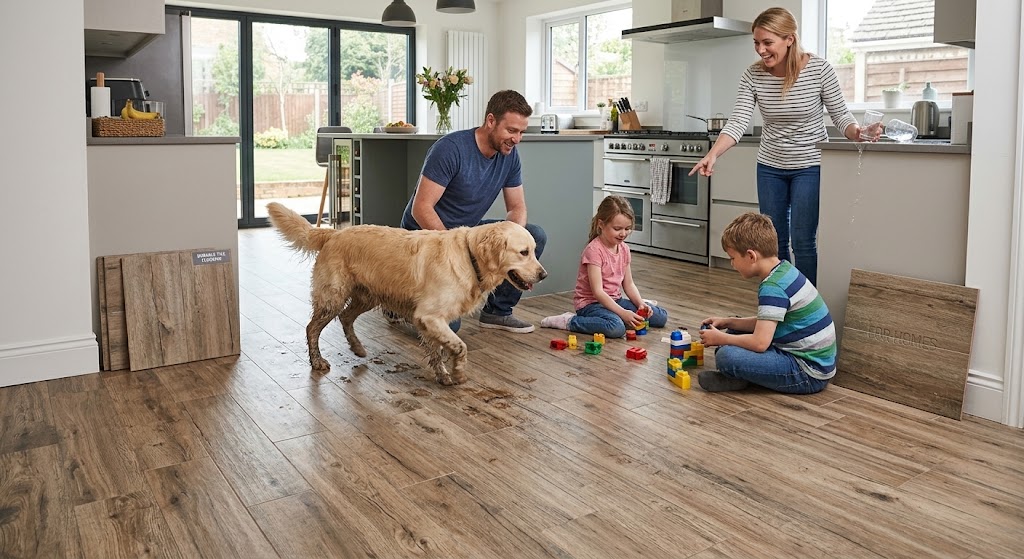
Large dogs with unclipped nails generate intense point-pressure that easily gouges soft woods like pine or Douglas fir. Beyond scratches, pet accidents contain acids that quickly break down protective coatings, leaving dark stains and persistent odors inside natural porous surfaces if not completely sealed.
Direct Answers to High-Intent Flooring Questions
What is the absolute most durable flooring for homes?
Porcelain tile is widely considered the absolute most durable flooring for homes. Fired at extremely high temperatures, dense porcelain resists scratches, moisture, heavy impacts, and intense sunlight. When installed properly over a stable subfloor with quality grout, porcelain tile easily lasts 50 years or more with minimal maintenance.
Is hard surface flooring better for homes with dogs?
Yes, hard surface flooring—specifically scratch-resistant options like porcelain tile, rigid-core luxury vinyl plank (LVP), and engineered hardwood with a high Janka hardness rating—outperforms carpet for homes with dogs. They resist claw scratches, prevent liquid absorption from spills or accidents, and allow easy cleaning of pet dander and tracked-in dirt.
When should you call a pro instead of fixing flooring yourself?
You should call a licensed contractor when your flooring project involves uneven subfloors, concrete slab moisture testing, structural repair, extensive square footage, or material transitions across multiple rooms. Professional installation ensures proper moisture barriers, seamless locking joint engagements, and full preservation of manufacturer warranty coverage.
Top Durable Flooring Options Compared
Evaluating durable flooring options involves looking beyond surface looks to examine core composition, wear layer thickness, moisture resistance, and long-term performance under real-world conditions.
1. Porcelain and Ceramic Tile
Porcelain tile sits at the very top of the durability scale. Manufactured from refined clay and baked at extreme heat, it creates an exceptionally dense, waterproof surface.
- Pros: Completely impervious to water, virtually impossible to scratch with pet nails, fade-proof under direct sun, and easy to sanitize.
- Cons: Hard underfoot, cold in winter without radiant heating, and requires careful installation to avoid cracked tiles from subfloor movement.
- Best For: Kitchens, entryways, bathrooms, mudrooms, and ground-floor living spaces with heavy foot traffic.
2. Luxury Vinyl Plank (LVP) and Luxury Vinyl Tile (LVT)
Rigid-core Luxury Vinyl Plank—especially Stone Plastic Composite (SPC)—has become a favored choice for modern busy households. It pairs authentic wood textures with superior structural resilience.
- Pros: 100% waterproof construction, highly resistant to dents and scratches, comfortable underfoot, and budget-friendly compared to natural hardwood.
- Cons: Cannot be refinished; lower-grade thin wear layers (under 12 mil) can show wear faster in commercial-level traffic zones.
- Best For: Whole-home installations, basements, active pet households, and open-concept layouts where water resistance is crucial.
3. Solid and Engineered Hardwood
Hardwood delivers timeless value and natural elegance. While solid wood expands and contracts with atmospheric changes, high-quality engineered hardwood features a cross-layered plywood core that maximizes stability while preserving a real hardwood surface layer.
- Pros: Increases total home value, can be sanded and refinished multiple times (depending on wear layer thickness), and offers long-life potential.
- Cons: Susceptible to scratching from heavy dogs, sensitive to standing water, and requires higher upfront investment.
- Best For: Living rooms, dining areas, hallways, and bedrooms where classic aesthetics and long-term value are top priorities.
4. High-End Laminate Flooring
Modern high-density laminate features advanced resin-infused wear layers and realistic photographic print layers that rival natural wood in appearance.
- Pros: Exceptional scratch and stain resistance, highly cost-effective, and easier to keep clean than traditional carpet.
- Cons: Susceptible to edge swelling if standing water penetrates non-waterproof core layers; cannot be refinished when worn down.
- Best For: High-traffic living spaces, hallways, and rental properties seeking high scratch resistance on a practical budget.
DIY vs. Professional Installation: Making the Right Choice
While simple click-lock vinyl planks in a small, square laundry room might be manageable for an experienced weekend DIYer, whole-home flooring installation involves precise trade techniques that directly determine how long your investment lasts.
The Hidden Realities of Subfloor Preparation
A floor is only as stable, flat, and quiet as the surface directly beneath it. Laying new rigid-core planks or tile over an uneven subfloor creates minor flex with every step. Over time, this continuous motion snaps click-lock mechanisms, causes grout lines to crumble, and leads to hollow-sounding spots underfoot.
Professional contractors spend a significant amount of time assessing subfloors. They grind down high spots on concrete slabs, pour self-leveling underlayment across uneven subfloors, and replace damaged plywood to create a flat base.
Moisture Mitigation and Environmental Factors
California’s climate demands careful moisture management. Installing flooring over a concrete slab without performing proper calcium chloride or relative humidity testing risks trap moisture beneath your new surface. Trapped moisture leads to adhesive failure, cupped wood planks, and mold growth. Licensed local pros understand regional soil conditions, water tables, and mandatory moisture barriers required under California building standards.
Complex Transitions and Material Waste
Navigating tricky door jambs, fitting planks around stone fireplace hearths, setting expansion gaps against perimeter walls, and creating flush transitions between different room materials requires specialized tools and technical skill. Poor cuts lead to excessive material waste, uneven gaps, and unsightly thresholds that compromise the finished look.
By requesting a free online estimate, you save time, eliminate costly material mistakes, and ensure that skilled craftspeople manage subfloor prep, moisture protection, and precise trim work seamlessly.
Understanding Project Scope and Cost Factors
Planning a successful flooring project requires understanding the variables that influence final estimates. Rather than relying on rigid per-square-foot guesses, reviewing these key elements helps you prepare a clear project scope.
Key Factors Influencing Your Estimate
- Material Selection: High-grade porcelain tile and thick-wear-layer engineered hardwoods occupy a higher price bracket, whereas rigid-core SPC vinyl offers cost savings.
- Subfloor Condition: Minor floor patching requires minimal labor, while grinding concrete, leveling uneven joists, or replacing rotted subfloor panels increases prep time and material costs.
- Demolition and Disposal: Removing old nailed-down hardwood, glued carpeting, or thick mortar tile beds requires heavy machinery and haul-away debris fees.
- Room Layout and Trim Work: Simple rectangular rooms are straightforward. Open-concept spaces with angles, closets, staircases, and custom baseboards require more detail work and labor hours.
- Permits and Energy Compliance: Depending on your city and whether structural changes or underfloor insulation are involved, local permit fees and Title 24 energy efficiency compliance checks may apply.
Requesting an online quote allows local contractors to review these exact room conditions, evaluate your subfloor, and provide a clear, line-item proposal tailored specifically to your home.
How Online Inquiry Forms Simplify Finding the Right California Contractor
Searching through dozens of directory listings, calling busy shops, and waiting days for call-backs can feel frustrating. Using a streamlined online quote request form removes the stress from finding vetted local home service professionals.
The Benefits of a Simple Online Request
Submitting your project details online takes less than 60 seconds. Instead of chasing down contractors, your information matches with licensed, pre-vetted local specialists who actively serve your neighborhood and are available for your timeline.
- Vetted and Licensed Professionals: Matched pros hold active licensing with the California Contractors State License Board (CSLB), carry proper liability insurance, and maintain up-to-date worker's compensation coverage.
- Zero Pressure, Complete Control: You receive clear project options without obligation, allowing you to review estimates, examine past customer reviews, and compare contractor communication styles at your own pace.
- Tailored Local Expertise: Local contractors understand nearby weather patterns, regional humidity swings, coastal salt air considerations, and municipal building codes specific to your city.
Crucial Questions to Ask Matched Contractors
When a matched flooring specialist reaches out to discuss your project, ask these targeted questions to ensure a smooth partnership:
- Will you perform a comprehensive subfloor moisture test before installing the new flooring?
- What specific underlayment or moisture barrier do you recommend for my home's foundation type?
- Is subfloor leveling, old floor removal, and baseboard reinstallation included in the final estimate?
- How long will the acclimation period be for the materials inside my home before installation begins?
- What written warranties cover both the installation workmanship and the material performance?
Frequently Asked Questions
What is the best durable flooring option for homes with large dogs?
Rigid-core Luxury Vinyl Plank (SPC) with a 20-mil wear layer or higher, as well as glazed porcelain tile, are top choices for homes with large dogs. Both options withstand heavy claw friction, resist liquid absorption from spills or accidents, and are easy to clean regularly.
Can water leak through luxury vinyl plank seams?
While the luxury vinyl planks themselves are 100% waterproof, water can still seep through seams between planks if standing liquid is left on the surface for extended periods. In high-moisture spaces like bathrooms, proper perimeter sealing and prompt cleanup prevent moisture from reaching the subfloor.
How do I know if my concrete subfloor has too much moisture for new flooring?
A licensed contractor uses specialized testing tools, such as pinless moisture meters or relative humidity probe tests embedded in the slab, to measure exact moisture emissions. Visible signs include white powdery mineral deposits (efflorescence), musty odors, or previous floor adhesives breaking down.
Is engineered hardwood as durable as solid hardwood?
Engineered hardwood is actually more dimensionally stable than solid hardwood in environments with changing humidity because of its cross-layered core construction. However, its surface durability against scratches depends on the top wood species hardness (Janka rating) and the protective factory finish applied.
How long does a typical home flooring installation take?
An average whole-home or multi-room installation takes between 2 to 5 days, depending on room size, old flooring removal, subfloor prep work, and material selection. Tile installations often take slightly longer due to mortar drying times and grouting processes.
Choose Confidence for Your Home Investment
Upgrading to durable, long-lasting flooring protects your home from daily wear, improves indoor comfort, and elevates your property's value for years to come. Whether you prefer the waterproof resilience of rigid-core luxury vinyl, the classic elegance of engineered hardwood, or the sheer strength of porcelain tile, choosing the right material is only half the equation. Professional installation ensures proper moisture defense, flat subfloors, and flawless fit.
Taking the next step is fast, simple, and low-pressure. Submit a quick online inquiry today to get matched with top-rated, licensed local flooring contractors in your area. Receive transparent project estimates, expert advice tailored to your home layout, and the peace of mind that comes with working with vetted California professionals.
Final Call to Action Block
Ready to upgrade your home with durable, beautiful flooring that stands up to kids, pets, and daily life? Stop guessing on costs and materials. Request a quick, free estimate online today to get connected with pre-vetted, licensed California flooring specialists near you.
Find top-rated service pros for your project or call us at 1 (888) 646-7358! Reach out today to schedule your consultation and bring peace of mind back to your home.