Metal Roofing vs. Traditional Roofing: Which Is Better for Your Home?
Nov/05/2026 19Metal Roofing vs. Traditional Roofing: Which Is Better for Your Home?
If you are getting ready to hire a roofing contractor, this guide will walk you through everything you need to know. By the time you reach the end, you will know exactly what questions to ask and which material best fits your home.
What Are We Comparing?
Before diving into the direct comparison, let us define what we mean by traditional roofing and metal roofing.
Traditional Roofing (Asphalt Shingles)
When people talk about traditional roofing, they are usually talking about asphalt shingles. Asphalt shingles have been the most popular choice for North American homes for decades.
They are made of a fiberglass mat coated with asphalt and topped with ceramic granules.
There are two main types of asphalt shingles:
- 3-Tab Shingles: These are flat, single-layer shingles that offer a basic, uniform look. They are the least expensive option.
- Architectural (Dimensional) Shingles: These are thicker, multi-layered shingles that mimic the look of wood or slate. They are more durable and look richer than 3-tab shingles.
Metal Roofing
Metal roofing has grown rapidly in popularity over the last twenty years. It is no longer just for barns, sheds, or commercial warehouses. Today, modern residential metal roofs look sleek, stylish, and premium.
The two primary types of residential metal roofs are:
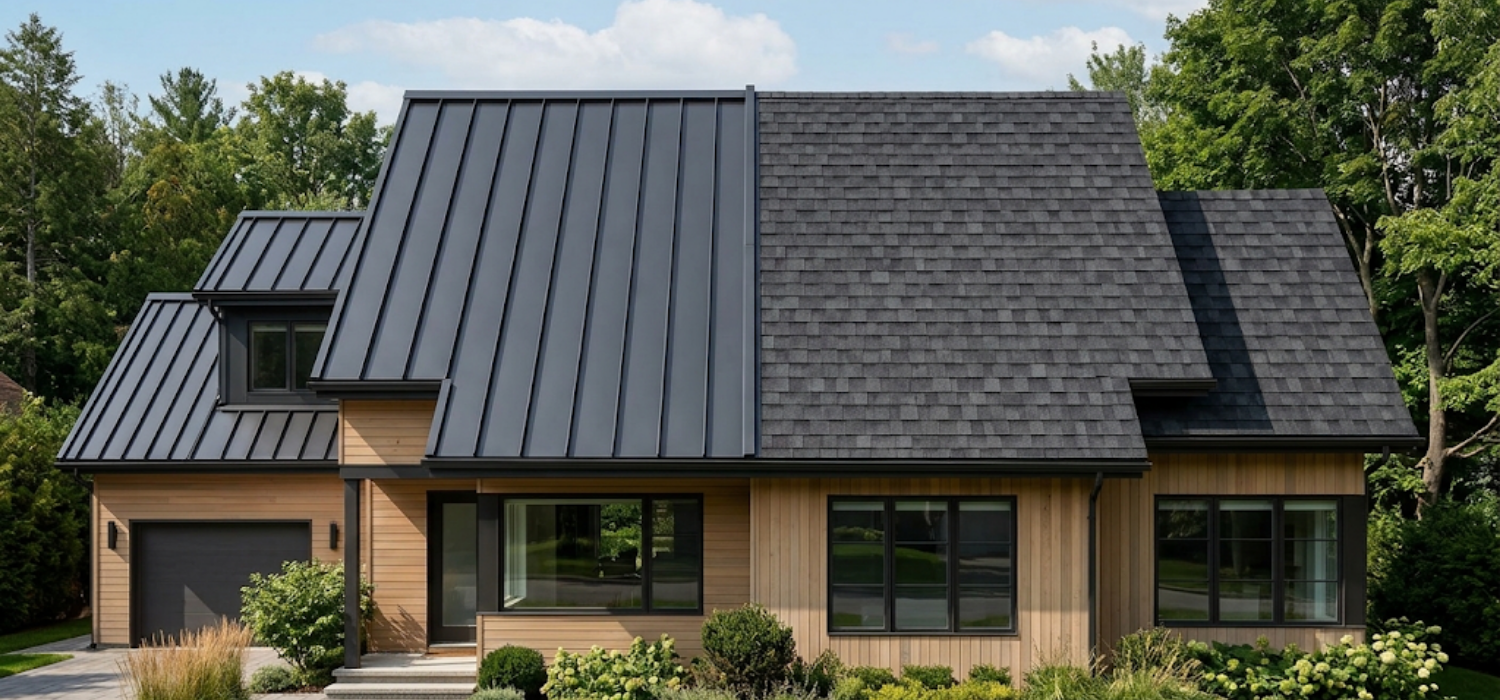
- Standing Seam Metal Roofs: These feature vertical panels with raised seams that interlock. The fasteners are completely hidden from weather exposure, making them highly leak-resistant.
- Metal Shingles or Tiles: These are stamped metal panels designed to look like traditional asphalt shingles, wood shakes, or clay tiles.
Common metals used in roofing include galvanized steel, aluminum, copper, and zinc.
The Key Differences
To help you decide which material is best, let us break down the comparison into seven main categories.
Category 1: Lifespan and Longevity
How long will your roof actually last? This is often the biggest difference between the two materials.
- Traditional Asphalt Shingles:
A standard asphalt roof typically lasts between 15 and 25 years, depending on your local weather, ventilation, and installation quality. In areas with high heat, strong storms, or heavy snowfall, asphalt shingles can wear down faster. - Metal Roofing:
A high-quality metal roof easily lasts 40 to 70 years. In many cases, a metal roof is the last roof you will ever need to install on your home.
The Bottom Line: Metal roofs last two to three times longer than traditional asphalt shingles.
Category 2: Upfront Cost vs. Long-Term Value
Cost is usually the first thing homeowners ask about. It is important to view cost in two ways: what you pay today (upfront cost) and what you spend over the life of your home (long-term value).
- Traditional Asphalt Shingles (Lower Upfront Cost):
Asphalt shingles are significantly cheaper to buy and install. If you are on a tight budget right now, or if you plan to move out of your home in a few years, traditional shingles are often the most practical financial choice. - Metal Roofing (Higher Long-Term Value):
A metal roof can cost two to three times more upfront than a basic asphalt roof. The material costs more, and the installation requires specialized skill and labor.
However, because a metal roof lasts so long, it often costs less per year over time. If you plan to stay in your home for 20 years or more, a metal roof can actually save you money because you will not need to replace it down the road.
The Bottom Line: Asphalt shingles win on upfront price. Metal roofing wins on long-term investment value.
Category 3: Durability and Weather Resistance
Your roof is your home’s main shield against nature. How well do these materials stand up to extreme conditions?
- Wind Resistance:
- Asphalt Shingles: Basic shingles can blow off during high wind storms or hurricanes. Premium architectural shingles handle high winds better, but individual shingles can still tear free.
- Metal Roofing: Metal panels are tightly interlocked. Most metal roofs are rated to withstand winds up to 140 miles per hour, making them extremely tough during severe storms.
- Fire Resistance:
- Asphalt Shingles: Most modern shingles have a Class A fire rating, but they are still petroleum-based products.
- Metal Roofing: Metal is non-combustible. It offers superior fire protection, which is especially important if you live in areas prone to wildfires.
- Hail and Snow:
- Asphalt Shingles: Hail can strip the protective granules off asphalt shingles, leading to fast leaks and premature aging.
- Metal Roofing: Metal resists hail damage very well. While severe hail might dent certain softer metals like aluminum, it rarely compromises the waterproof barrier. In cold climates, snow slips right off metal roofs, preventing heavy snow buildup and ice dams.
The Bottom Line: Metal roofing provides superior durability against wind, fire, hail, and snow.
Category 4: Energy Efficiency and Cooling Costs
Keeping your energy bills manageable during hot summer months is a major priority for homeowners.
- Traditional Asphalt Shingles:
Asphalt absorbs solar heat. Dark shingles trap heat from the sun and transfer it straight down into your attic. This makes your air conditioning system work much harder to keep your house cool. - Metal Roofing:
Metal reflects solar radiant heat instead of absorbing it. Modern metal roofs are coated with special reflective paints that send heat away from the building.
Studies show that reflective metal roofs can reduce your summer cooling costs by 10% to 25%.
The Bottom Line: Metal roofing is significantly more energy-efficient in warm climates and bright sunny environments.
Category 5: Maintenance and Repairs
No homeowner wants to spend their weekend fixing their roof. Here is what maintenance looks like for each option.
- Traditional Asphalt Shingles:
Asphalt roofs require regular inspections. You may need to replace missing shingles after big storms, clean away algae or moss, and check around vents and chimneys for cracked sealant. - Metal Roofing:
Metal roofs require very little maintenance. Aside from occasionally washing off dirt and clearing debris from gutters, a metal roof requires minimal attention. Standing seam metal roofs have hidden fasteners, which means there are virtually no exposed screws that could loosen or leak over time.
The Bottom Line: Metal roofs require much less ongoing maintenance over their lifespan.
Category 6: Curb Appeal and Style Options
How your house looks from the street matters, both for your personal enjoyment and for your home’s resale value.
- Traditional Asphalt Shingles:
Asphalt shingles offer a classic, familiar look that suits almost any home style, from traditional suburban homes to cozy cottages. They are available in a wide range of neutral colors like grey, black, brown, and weathered wood tones. - Metal Roofing:
Metal roofs offer a bold, modern appearance. They come in dozens of colors, including striking shades like standing-seam matte black, forest green, barn red, and slate grey. If you do not want vertical panels, metal can also be formed into shapes that look like slate tiles or traditional wood shakes.
The Bottom Line: Asphalt offers a traditional look that fits into any neighborhood. Metal gives your home a modern, high-end edge with custom color choices.
Category 7: Environmental Impact and Sustainability
If reducing your carbon footprint is important to you, consider how these materials are made and disposed of.
- Traditional Asphalt Shingles:
Asphalt shingles are petroleum-based. Because they need to be replaced every 15 to 20 years, billions of pounds of torn-off shingles end up in landfills every single year. - Metal Roofing:
Metal roofs are highly sustainable. Most metal roofing materials contain between 25% and 95% recycled content. Furthermore, when a metal roof is finally removed decades later, it is 100% recyclable. You can also install solar panels very easily on standing seam metal roofs without drilling holes into the roof deck.
The Bottom Line: Metal roofing is the clear winner for eco-conscious homeowners.
Common Myths About Metal Roofs
Because metal roofing is newer to many residential neighborhoods, several myths still exist. Let us clear up the most common misconceptions before you talk to a professional installer.
Myth 1: "Metal roofs are noisy when it rains."
Many people picture an old barn roof when they think of rain hitting metal. However, on a modern residential house, metal roofing is installed over a solid wooden deck with high-grade underlayment and attic insulation.
Inside your home, a metal roof is no louder than a traditional asphalt shingle roof during a rainstorm.
Myth 2: "Metal roofs attract lightning."
Metal conducts electricity, but it does not attract it. Lightning strikes the highest available point in an area, regardless of material.
In fact, if your home were ever struck by lightning, a metal roof is actually safer than asphalt shingles because metal is non-combustible and will not catch fire.
Myth 3: "Metal roofs make your house colder in the winter."
Your roof material does not control the interior temperature during winter—your attic insulation does. A metal roof performs just as well as an asphalt roof in keeping winter heat inside your home, as long as your attic is properly insulated.
Key Questions to Ask Yourself Before Deciding
To narrow down your choice, ask yourself these simple questions:
- How long do you plan to live in this home?
- If less than 7 years: An asphalt roof will likely give you the best return on investment without a large upfront expense.
- If 10+ years or your forever home: A metal roof makes great long-term financial sense because you will not need to replace it again.
- What is your immediate budget?
- If money is tight right now, asphalt shingles provide reliable protection at a lower starting price.
- What is your local weather like?
- If you live in an area prone to severe hail, high winds, heavy snowfall, or wildfire risk, a metal roof offers superior peace of mind.
- Do you plan to install solar panels?
- Metal roofs, especially standing seam panels, make solar panel installation fast, secure, and leak-free.
What to Discuss When You Speak with a Roofing Contractor
When you are ready to take the next step, speaking with a licensed, experienced roofing contractor is essential. Metal roof installation requires specialized skills that differ significantly from laying asphalt shingles.
Here are the specific questions you should ask your contractor during your consultation:
Questions About Experience and Qualifications
- How many metal (or asphalt) roofs have you installed in the last two years?
- Are your installation crews factory-trained or certified by the material manufacturer?
- Can you provide references or photos of recent projects in our local area?
Questions About Materials and Options
- What gauge (thickness) of metal do you recommend for my home, and why?
- What type of underlayment will be placed beneath the roofing material?
- Which paint finish or coating is used on the metal panels, and what is its warranty against fading or peeling?
Questions About Cost, Warranties, and Timeline
- Does the quote include full tear-off and disposal of my old roof?
- What is the difference between the manufacturer's material warranty and your company's workmanship warranty?
- How long will the project take from start to finish?
Making the Right Choice for Your Home
Both metal roofing and traditional asphalt roofing are reliable, proven choices.
- Choose Traditional Asphalt Shingles if you want a reliable, cost-effective roof with lower upfront costs and a classic appearance.
- Choose Metal Roofing if you want maximum durability, high energy savings, low maintenance, and a roof that will protect your home for a lifetime.
Now that you understand the key differences, you are fully prepared to speak with local roofing experts. Reach out to a qualified roofing contractor today to inspect your current roof, request a detailed quote, and choose the perfect system for your home!