As a Homeowner in CA, Can I Install Solar System with Batteries Without License or Electricians?
Sep/17/2026 17As a Homeowner in CA, Can I Install Solar System with Batteries Without License or Electricians?
Seeing sky-high electric bills during scorching desert summers makes adding solar panels and battery storage feel like an urgent priority. If you live in California—or are researching energy solutions nearby, such as in Nevada—you may be wondering if you can cut project expenses by tackling the installation yourself without hiring a licensed electrician or contractor.
The short answer is yes, under specific state exemptions, California law allows owner-builders to install solar on their primary residence without a license. However, doing so requires pulling strict local building permits, passing rigorous electrical inspections, and securing official Permission to Operate (PTO) from your electric utility before turning the system on.
Before you start climbing ladders or handling high-voltage wiring, it is critical to understand what the DIY route actually entails—and where the hidden financial and safety risks lie.
Direct Answer: Is DIY Solar Legal in California?
Under California Business and Professions Code § 7044 (the Owner-Builder Exemption), homeowners can legally perform construction, structural, and electrical work on their primary home without holding a contractor's license.
Quick Summary: You can legally install a solar and battery system on your own single-family home as an owner-builder, but you cannot skip local building permits, NEC electrical codes, or utility interconnection agreements. Furthermore, if you hire outside help, anyone taking payment for electrical or solar labor must be a licensed contractor.
Can You Legally Install Solar and Battery Storage Yourself in California?
While state law gives homeowners the right to work on their own property, the owner-builder rule comes with strict legal boundaries:
- Primary Residence Rule: You must own and occupy the property. You cannot use the owner-builder exemption on commercial properties or residential flips intended for sale within 12 months.
- The "No Unlicensed Help" Mandate: You must physically do all the work yourself, or employ wage-paid workers. You cannot pay an unlicensed handyman, friend, or independent contractor to assist with the electrical or roofing work.
- Permitting & Code Compliance: The exemption waives the contractor license, but it does not waive city or county building codes, fire setback requirements, or electrical permits.
Major Risks and Challenges of DIY Solar & Battery Systems
While skipping contractor labor costs sounds appealing, solar PV arrays paired with high-capacity lithium battery energy storage systems (BESS) are high-voltage industrial electrical installations.
|
Electrical & Fire Hazards |
Utility & PTO Blockers |
Financial & Warranties |
|---|---|---|
|
• High-voltage DC arc flash risks |
• Failed inspections |
• Voided product warranties |
|
• Lithium battery thermal runaway hazards |
• Grid interconnection denials |
• Denied incentive rebates (SGIP) |
|
• Roof structural leaks and code violations |
• Power shutoffs for unpermitted hookups |
• Home insurance claim rejections |
1. High-Voltage Electrical and Fire Hazards
Solar arrays generate hundreds of volts of Direct Current (DC) electricity whenever sunlight strikes the panels. Incorrect wiring, loose terminals, or inadequate conduit sizing can trigger high-temperature electrical arcs. Batteries add thermal runaway risks if paired with incompatible inverters or improper battery-ready wiring.
2. Roof Leakage and Structural Damage
Securing solar racking requires driving dozens of lag bolts into your roof rafters. Improper flashing sealant, missed rafters, or flawed load calculations can result in roof leaks or structural roof failure during high winds.
3. Voided Manufacturer Warranties
Many top-tier solar panel, microinverter, and battery manufacturers explicitly state in their warranty terms that equipment must be installed by certified, licensed professionals. An improper self-installation can instantly void 10- to 25-year manufacturer warranties.
4. Utility PTO Denials
Electric utilities (such as PG&E, SCE, or SDG&E in California, or NV Energy in Nevada) strictly govern grid interconnection under rules like California's Rule 21. If your single-line electrical diagram, rapid shutdown hardware, or anti-islanding protection fails to satisfy utility engineers, they will deny your Permission to Operate (PTO). Operating an unapproved grid-tied system can lead to immediate utility disconnection.
5. Ineligibility for Rebates and Home Insurance Issues
Programs like California's Self-Generation Incentive Program (SGIP) often require proof of installation by a licensed contractor to qualify for battery rebates. In addition, if an unpermitted DIY electrical system causes a house fire, your homeowners insurance carrier may reject the claim due to unpermitted work.
Navigating Permits, Codes, and Utility Approvals
If you choose the DIY owner-builder path, you take on the role of project engineer, installer, and permit manager.
The Step-by-Step Approval Process
- Engineering Design & Single-Line Diagrams: Draft complete site plans, rafter connection details, structural load calculations, and electrical single-line diagrams showing rapid shutdown devices and battery disconnection switches.
- Local Building Department Submittal: Submit design plans to your local city or county building department to pull building and electrical permits. (Many California jurisdictions utilize automated portals like SolarAPP+ for rapid plan checks).
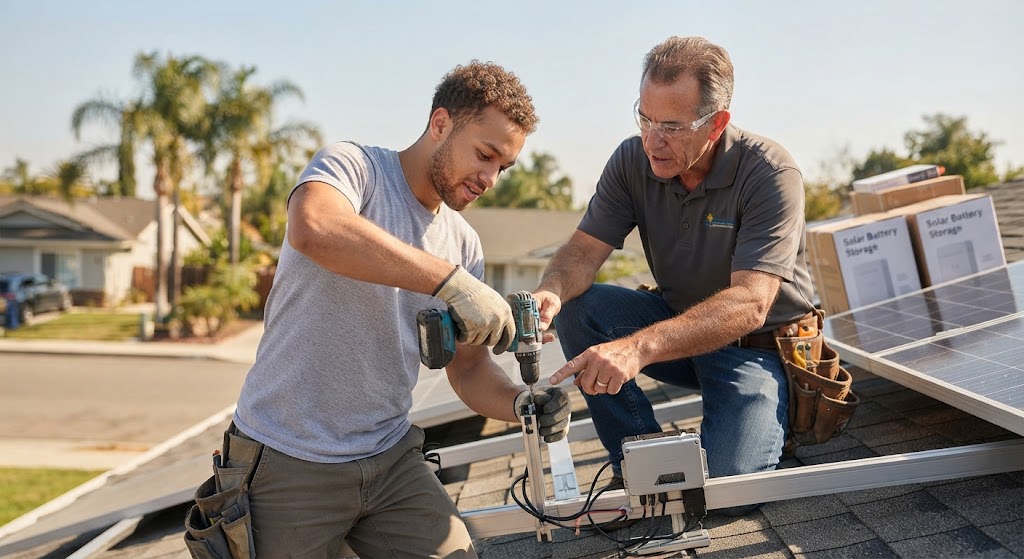
- Physical Installation & Fire Code Rules: Mount roof racking, secure panels, mount battery units, run electrical conduit, and wire main panel connections adhering strictly to National Electrical Code (NEC) standards and fire access pathway setbacks.
- City/County Building Inspection: Host the local building inspector for an on-site evaluation of the wiring, grounding, rapid shutdown functionality, and battery clearances.
- Utility Interconnection Application & PTO: Submit completed inspection sign-offs, equipment spec sheets, and interconnection paperwork to your power utility to receive official Permission to Operate.
Solar Installation Costs: DIY vs. Professional Contracting
Understanding the breakdown between materials and professional labor helps contextualize total project costs.
| Project Component | Estimated DIY Cost | Estimated Professional Contractor Cost |
|---|---|---|
| 6kW Solar Array Hardware | $6,000 – $8,500 | Included in turnkey pricing |
| 10kWh Battery Storage Unit | $6,000 – $9,000 | Included in turnkey pricing |
| Permits, Engineering & Fees | $500 – $1,200 | Included in turnkey pricing |
| Professional Labor & Overhead | $0 (Sweat Equity) | $8,000 – $14,000 |
| Total Turnkey Investment | $12,500 – $18,700 | $22,000 – $32,000 |
Note: Total costs depend heavily on battery capacity, main service panel upgrades, roof condition, and regional labor rates.
Nevada Homeowner Considerations: Sun, Heat, and Extreme Weather
While California's regulatory framework is unique, neighboring Nevada homeowners face similar questions when evaluating a home solar installation project.
In dry, desert climates across Nevada and the Southwest, environmental factors play a major role in solar performance:
- Extreme Heat Efficiency Drops: High summer temperatures increase solar panel electrical resistance, causing a minor drop in peak power output (known as the temperature coefficient).
- Battery Thermal Management: Lithium storage batteries must be installed in shaded, climate-controlled garages or temperature-rated enclosures to prevent extreme desert heat from degrading battery life span.
- Dust and Debris Accumulation: Arid desert winds deposit fine dust across solar glass, requiring regular cleaning or seasonal washing to maintain maximum energy absorption.
- Severe Thermal Cycling: Wide temperature swings between blazing hot summer afternoons and cool desert nights exert physical expansion and contraction stress on electrical wiring joints and roof mounts.
Evaluating these regional factors makes working with experienced contractors familiar with local desert conditions invaluable for long-term system reliability.
What to Look For When Hiring a Local Solar Contractor
If you decide that managing permits, high-voltage wiring, roof penetrations, and utility paperwork is better left to certified professionals, choosing the right installer is your next step.
- Proper Licensing & Insurance: Ensure the company holds an active specialty solar contractor license (such as a C-46 or C-10 electrical license in California, or equivalent contractor licensing in Nevada) along with general liability and workers' compensation coverage.
- In-House Crew vs. Subcontracting: Ask whether the contractor employs dedicated, certified installers or subcontracts the electrical labor out to third parties.
- Workmanship & Roof Leak Warranties: Look for installers offering a minimum 10- to 25-year workmanship and roof-penetration warranty alongside standard equipment manufacturer warranties.
- Battery Storage Expertise: Confirm the contractor has specific manufacturer certifications for configuring smart battery storage, backup loads, and grid-export settings.
Key Questions to Ask Contractors Before Signing
- Does your estimate include all engineering, city permitting, and utility interconnection application fees?
- Will my current main electrical panel require a panel upgrade to support the new solar array and battery storage system?
- What specific equipment brands (panels, microinverters, battery units) are included in this quote?
- How do you handle roof penetration sealing to protect my home warranty?
- What is your estimated timeline from contract signing to final utility Permission to Operate (PTO)?
Frequently Asked Questions
1. Can I legally connect my DIY solar system to the utility grid myself?
No. While you can physically mount and wire panels as an owner-builder, you cannot legally energize a grid-tied system until your local utility approves your interconnection application and issues written Permission to Operate (PTO).
2. Do I need a building permit to add solar batteries to an existing system?
Yes. Installing energy storage systems requires electrical permits, plan checks, and building inspections to verify fire code compliance, battery spacing, and emergency shutdown switches.
3. What happens if I install solar panels without pulling permits?
Unpermitted installations can result in municipal fines, mandatory removal of equipment, denial of grid connection by your utility, loss of home insurance coverage during a claim, and severe disclosure issues when selling your property.
4. Will installing solar myself save me money?
Self-installing saves on initial labor costs, but mistakes in wiring, invalidating equipment warranties, failing city inspections, or incurring damage from roof leaks can quickly eliminate those savings.
5. How long does a professional solar and battery installation take?
Physical installation by a professional crew typically takes 1 to 3 days. However, the overall process—including engineering designs, municipal permit issuance, and final utility PTO approval—usually spans 4 to 8 weeks.
6. Can I install plug-in balcony solar panels without a contractor?
Legislative updates like California's SB 868 allow small, certified plug-in solar devices (up to 1,200W) to connect directly to standard outlets without standard utility fees or heavy structural permits, making low-power portable solar accessible to renters and homeowners alike.
Ready to Explore Your Solar Options?
Navigating high-voltage electrical codes, municipal permits, and utility interconnection rules can quickly turn a weekend DIY project into a stressful ordeal.
If you want to ensure your home energy system is safe, fully permitted, and covered by robust manufacturer warranties, speaking with a licensed professional is a practical next step.
Compare local solar quotes in Nevada or connect with the best solar contractors in California to get clear, zero-pressure estimates tailored to your home's unique energy needs today.
Please visit us here to find Find top-rated service pros for your project or call us at 1 (888) 646-7358!