Best Sagging Floor Repair Services in Reno, NV
Sep/23/2026 35Best Sagging Floor Repair Services in Reno, NV: How to Fix Dipping Subfloors and Restore Your Home
Walking across your living room and feeling a subtle drop, a soft bounce, or an obvious dip in the floorboards can make your heart sink. For many homeowners in Reno and across Northern Nevada, a sagging floor brings up an immediate wave of stress. You might wonder if your house is sinking, how much money a repair will cost, or whether you are facing weeks of disruptive construction.
It is completely normal to feel overwhelmed by structural concerns. Your home is your biggest investment, and feeling the ground shift under your feet breaks that sense of security. The good news is that a sagging floor is a common, fixable issue. Whether your home’s subfloor has weakened over time or expansive soil underneath your crawl space has shifted, working with an experienced floor installer in Nevada can restore your home’s stability, safety, and comfort.
This comprehensive guide will help you understand why floors sag, how local Nevada conditions play a role, what repair options exist, and how you can easily connect with a qualified local contractor to inspect and fix your floors.
1. Recognizing the Signs of a Sagging Floor
A sagging floor does not always show up as a dramatic slope in the middle of a room. Often, structural shifting and subfloor deterioration start with small, subtle indicators throughout the house.
- Uneven or Sloping Surfaces: Rolling marbles across the room or feeling like you are walking downhill toward the center of a space.
- Gaps Between Baseboards and Flooring: Seeing visible space open up between the bottom of your trim and your floating floors or carpet.
- Sticking Doors and Windows: Interior doors that suddenly rub against their frames, refuse to latch, or swing open on their own.
- Cracks in Sheetrock: Diagonal cracks appearing in drywall near door corners, window frames, or ceiling junctions.
- Squeaking or Bouncing Boards: Hearing loud creaks or feeling a springy, trampoline-like sensation when stepping in high-traffic zones.
- Cracked Tile or Buckling Laminate: Hard surfaces cracking along seam lines, or laminate flooring shifting out of place due to uneven support underneath.
2. Why Floors Sag: Understanding the Underlying Causes
To fix a sagging floor permanently, a contractor must address the root cause underneath the surface. Flooring components rely on a support system consisting of joists, girders, piers, and subfloor panels. When any link in this chain weakens, the floor above reflects the damage.
Moisture Accumulation and Crawl Space Dampness
Excess moisture in a crawl space causes wooden support beams, joists, and plywood subflooring to absorb water, swell, rot, and lose structural integrity. Over time, heavy furniture causes weakened joists to bow downward.
Expansive Soils and Foundation Settlement
In Northern Nevada—especially around the Truckee Meadows, Sparks, and Reno valleys—the local ground often contains high concentrations of expansive clay soils. These soils swell when wet and shrink drastically during dry spells. This soil movement causes concrete piers and foundation footings to settle unevenly.
Inadequate or Aging Beam Supports
Older homes built in traditional Nevada neighborhoods may feature floor joists spaced too far apart or support posts that have rotted, settled, or shifted out of alignment over decades.
Termite or Pest Damage
Although Nevada’s high desert climate is relatively dry, subterranean termites and wood-boring beetles can invade damp subfloor wood, weakening joists from the inside out.
Heavy Loads Beyond Design Limits
Placing heavy items like cast-iron tubs, granite island counters, or large fish tanks over improperly reinforced joists creates localized sagging.
3. How Nevada’s Climate Affects Your Floors
Nevada’s unique climate plays a significant role in how subfloors perform over time. Understanding local conditions helps explain why structural issues pop up:
- Freeze-Thaw Cycles: Winters in Northern Nevada bring snow, ice, and freezing temperatures followed by daytime thaws. When groundwater in the soil freezes, it expands against footings; when it thaws, the soil shifts, causing structural movement.
- Extreme Heat and Dry Air: Dry summer heat causes clay soils to shrink and crack. This drying action leaves voids under crawl space piers, causing supports to drop.
- High Desert Humidity Fluctuations: Sudden seasonal storms bring high moisture levels after long dry periods. Plywood subfloors and joists absorb this sudden moisture, leading to warping and seam separation.
4. Can You Fix a Sagging Floor Yourself?
When faced with structural repairs, many homeowners look for DIY options to save money. However, repairing a sagging floor involves lifting structural loads and re-engineering support structures under your home.
The Limits of DIY
- Shimming Minor Gaps: If the floor finish itself is slightly uneven but the structure is 100% sound, installing self-leveling underlayment or placing shims beneath new laminate flooring can smooth out minor surface dips.
- When DIY Becomes Dangerous: Attempting to jack up sagging floor joists using heavy-duty bottle jacks without engineering guidance can crack your drywall, break plumbing lines, crush subfloor framing, or even trigger structural collapses.
Why Professional Expertise Matters
A professional floor installer or structural technician brings hydraulic lifting gear, laser leveling systems, and structural knowledge to ensure the home is lifted safely and evenly without damaging surrounding finishes.
5. What is the Professional Sagging Floor Repair Process?
Understanding the steps professional contractors take helps remove the mystery and stress surrounding structural repair.
- Comprehensive Inspection: The contractor assesses the crawl space, measures floor slopes with digital levels, and checks for wood rot, pest infestation, and soil settlement.
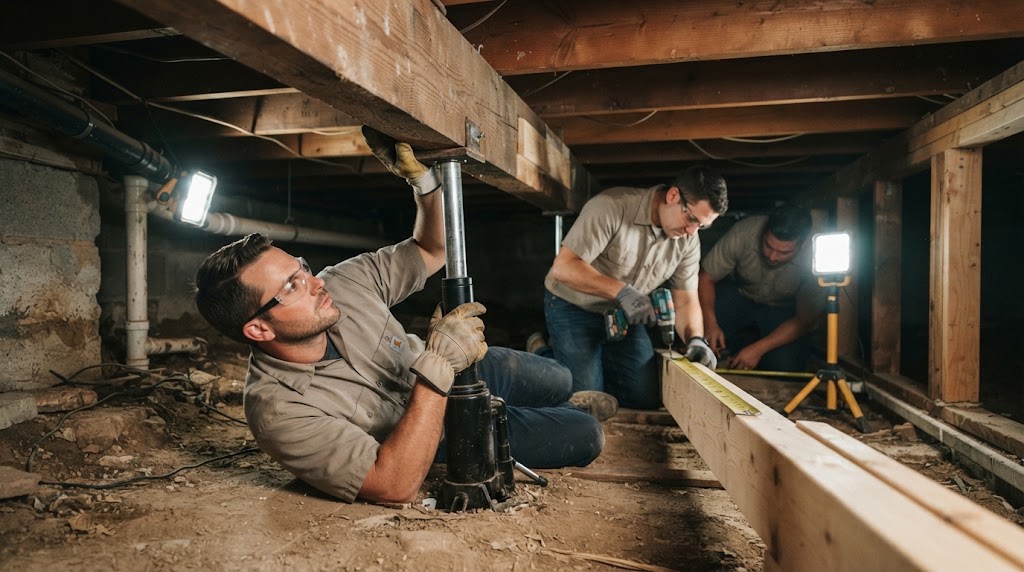
- Developing a Stabilization Plan: The team determines whether joists need reinforcement (sistering), adjustable steel jack posts need to be installed, or foundation piers must be driven down to stable soil.
- Installing Support Hardware: Technicians set solid concrete pads, position heavy-duty steel posts under sagging girders, or bolt sister joists alongside weakened wood framework.
- Gradual Lifting: Using synchronized hydraulic jacks, the crew slowly raises the low areas over hours or days to prevent structural shock to drywall, tile, and plumbing.
- Subfloor Prep and Floor Leveling: Once the structure is stable, subflooring is patched, and self-leveling compounds are applied if surface unevenness remains.
- New Surface Installation: The project concludes by installing beautiful new surfaces such as floating floors, luxury vinyl plank, or hardwood.
6. How Much Does Sagging Floor Repair Cost in Nevada?
Repair costs vary based on what is causing the dip and how much work is required beneath the home.
Key Cost Factors
- Extensiveness of the Sag: Lifting a single sagging joist costs significantly less than re-leveling an entire foundation or crawl space grid.
- Crawl Space Access: Tight, damp, or obstructed crawl spaces require extra labor hours.
- Material Selection: High-grade steel piers, engineered lumber, crawl space encapsulation vapor barriers, and premium replacement flooring influence overall flooring rates.
- New Flooring Choices: Replacing old damaged flooring with budget-friendly laminate flooring keeps surface costs down, while solid hardwoods or custom tile increase total investment.
General Cost Guidelines
- Minor Localized Repairs: Fixing a single joist or adding a few supplemental jack posts often ranges from $1,000 to $3,000.
- Moderate Structural Re-leveling: Re-supporting multiple rooms, replacing damaged subfloor panels, and lifting girders generally runs between $3,500 and $8,000.
- Major Foundation Stabilization & Floor Replacement: Extensive piering, deep soil anchoring, complete subfloor rebuilding, and premium flooring installation nevada projects can range from $8,000 to $18,000+.
The most effective way to understand your exact costs is to schedule a professional on-site evaluation and get a detailed, itemized quote.
7. Choosing the Right Flooring Solution After Structural Repair
Once structural support is restored under your home, updating your interior surfaces brings back warmth, beauty, and long-term home value.
- Floating Floors: Click-lock luxury vinyl plank (LVP) and engineered wood are top choices across Nevada. Because they float above subfloors without glue or nails, they expand and contract smoothly during dry summers and cold winters.
- Laminate Flooring: Modern laminate offers exceptional scratch resistance, realistic wood textures, and affordability. It is an ideal finish after floor-leveling work, provided the subfloor is flat and dry.
- Tile and Hardwood: If you prefer natural tile or solid hardwood, your contractor must ensure the subfloor is rigid and deflection-free to prevent future cracking or warping.
8. What to Look For in a Nevada Contractor
Entrusting your home to a contractor requires peace of mind. Here is what to look for when selecting a specialist in Northern Nevada:
- Proper Licensing and Insurance: Verify that the contractor holds an active license with the Nevada State Contractors Board (NSCB) and carries complete general liability and worker’s compensation insurance.
- Structural and Flooring Expertise: Choose a professional team that understands both crawl space framing/support structures and interior finish work like flooring installation nevada.
- Transparent Pricing: Look for contractors who provide detailed written estimates explaining labor, equipment, permit fees, and material costs.
- Local Nevada Experience: Local contractors understand how Reno’s clay soils, high elevation, and freeze-thaw cycles impact home foundations.
- Solid Warranties: Reputable pros back their structural work with transferable warranties on steel jacks, foundation piers, and subfloor materials.
9. Questions to Ask Before Hiring a Professional
When you meet with potential contractors for an estimate, bring this quick checklist of questions:
- What is causing my floor to sag, and how did you diagnose it?
- Are you proposing a permanent structural fix or a temporary surface patch?
- Do I need local permits for this structural leveling work in Reno?
- Will this lifting process cause hairline cracks in my drywall or tile, and how do you minimize that risk?
- How long will the job take, and will my family need to vacate the house during repairs?
- What warranties do you offer on labor and subfloor materials?
10. Mistakes Homeowners Should Avoid
- Ignoring the Problem: Hoping a sagging floor will fix itself allows wood rot, joist twist, and wall cracking to worsen, driving up ultimate repair bills.
- Covering Up Sags with Carpet: Placing thick carpet, rugs, or heavy furniture over a dipping subfloor hides the symptom without fixing the structural flaw.
- Pouring Self-Leveler Over Weakened Beams: Adding heavy liquid self-leveling cement over unstable joists adds dead weight to a failing structure, accelerating the sag.
- Hiring Unlicensed Handymen for Structural Work: Foundation lifting and subfloor replacement demand structural knowledge and proper safety equipment. Always work with licensed professionals.
Frequently Asked Questions
What is the fastest way to fix a sagging floor?
The fastest way is installing adjustable steel jack posts under sagging girders or joists in your crawl space. This stabilizes the floor immediately and allows for gradual lifting without major demolition inside your living space.
How do I know if my sagging floor is dangerous?
If you notice rapid sloping, large diagonal wall cracks, gaps pulling away from exterior walls, or bouncy floors under light foot traffic, your subfloor system has lost significant strength. You should schedule a professional inspection promptly.
How long does sagging floor repair usually take?
Most residential crawl space stabilization and subfloor leveling projects take between 1 to 3 days. Installing new laminate flooring or floating floors over the newly leveled surface typically adds 1 to 2 additional days depending on home size.
Can I install floating floors over an uneven subfloor?
No. Floating floors require a flat subfloor (typically within 3/16 inch per 10 feet). Installing click-lock planks over dips causes locking mechanisms to snap, create hollow sounds, and separate over time. Subfloor leveling must happen first.
Does homeowners insurance cover sagging floor repair in Nevada?
Insurance generally covers sagging floors if the damage stems from a sudden covered event, such as an acute plumbing burst. It usually does not cover gradual settling, soil movement, or ongoing wood rot due to high humidity.
Is floor leveling worth the investment before selling a home?
Yes. Dip lines and creaky subfloors immediately raise red flags for home inspectors and buyers, often stalling sales or causing steep price cuts. Leveling your floors and installing fresh surfaces boosts buyer confidence and market value.
Ready to Restore Your Home's Stability? Connect with Local Nevada Pros Today
You do not have to guess what is happening under your house or worry about structural safety on your own. Restoring flat, solid, squeak-free floors starts with getting clear answers from an experienced professional.
Taking the first step is simple. By speaking with a trusted local floor installer or structural repair specialist in Reno, you can get a thorough on-site evaluation, understand your options, and receive an accurate quote tailored to your budget.
Find top-rated service pros for your project or call us at 1 (888) 646-7358! Reach out today to schedule your consultation and bring peace of mind back to your home.