Best Kitchen Countertop Materials: A Guide to Choosing the Right One
Nov/06/2026 39Best Kitchen Countertop Materials: A Guide to Choosing the Right One
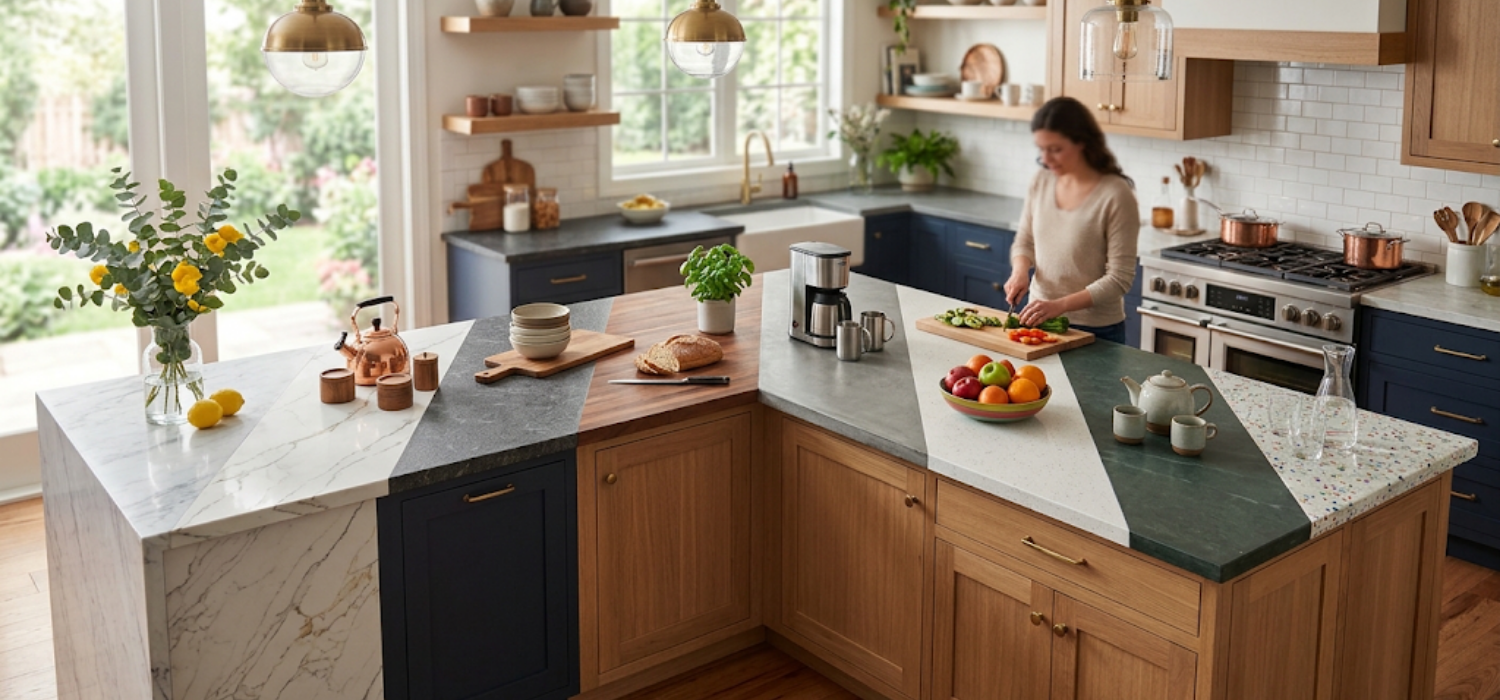
Choosing a new kitchen countertop feels like a massive decision, mostly because it is. Your countertops take the brunt of your daily kitchen routine. They hold heavy cast-iron skillets, endure spilled wine, endure hot coffee mugs, and host every family gathering. At the same time, they set the visual tone for your entire kitchen renovation.
If you are currently planning a remodel and getting ready to speak with a local contractor or stone fabricator, you need to know what you want before the quotes start flying. Walk into a showroom unprepared, and it is easy to get overwhelmed by hundreds of slab options, conflicting advice, and fluctuating price tags.
This comprehensive guide breaks down the most popular countertop materials on the market today. We will compare their real-world durability, maintenance requirements, visual appeal, and cost. By the time you finish reading, you will know exactly which surface fits your lifestyle, household habits, and project budget.
What to Decide Before You Pick a Material
Before jumping into individual materials, take a moment to evaluate how your kitchen actually functions. A surface that works perfectly for a quiet home with two adults might be a disaster for a household with young kids, frequent baking projects, and daily cooking marathons.
When evaluating countertop surfaces, base your decision on four critical factors:
1. Heat Resistance
Are you someone who likes to pull a hot tray straight out of the oven and set it down? Some natural stones handle thermal shock without breaking a sweat. Synthetic and engineered surfaces, on the other hand, contain resins or binders that can scorch, yellow, or crack under direct heat.
2. Porosity and Stain Resistance
Porous materials act like sponges. If you leave a drop of red wine, dark coffee, or olive oil on an unsealed porous stone, it can sink past the surface and leave a permanent mark. Non-porous surfaces lock liquids out completely, making clean-up fast and stress-free.
3. Scratch and Impact Resistance
If you do a lot of chopping, baking, or food prep, or if heavy pots occasionally slide across the counter, scratch resistance is vital. Harder minerals withstand knives and metal utensils better, while softer stones will show scratches, scuffs, and chips much faster.
4. Ongoing Maintenance
Be honest with yourself about how much maintenance you are willing to do:
- Are you okay sealing your counters every 6 to 12 months?
- Do you want to use specialized ph-neutral stone cleaners?
- Or do you want a set-it-and-forget-it surface that only requires warm water and mild dish soap?
Keep these four factors top of mind as we walk through the top kitchen countertop options available today.
The Low-Maintenance Champion
Quartz has dominated the home remodeling market for years, and for good reason. Unlike natural stone dug straight out of the earth, quartz is an engineered product. Slabs are crafted by mixing roughly 90% crushed natural quartz crystals with 10% polymer resins and color pigments.
The Appearance
Because quartz is manufactured, it offers incredible visual variety. It can mimic high-end white Italian marble with bold veining, copy the subtle grain of industrial concrete, or show a uniform solid color. If you want a consistent pattern across multiple slabs—especially on a large kitchen island—quartz is one of the easiest materials to match seamlessly.
Kowalske Kitchen & Bath
Daily Durability
Because resin binds the stone together, quartz is completely non-porous. It resists juice, coffee, oil, tomato sauce, and food dyes without needing any chemical sealers. It is also exceptionally hard and resists scratches from daily kitchen use.
Kowalske Kitchen & Bath
The Drawbacks
- Low Heat Resistance: The polymer resin used in quartz cannot tolerate high heat. Setting a hot pan directly on quartz can melt the resin, leaving a permanent ring or discoloration mark. You must always use trivets or hot pads.
- Indoor Use Only: Direct sunlight and outdoor UV rays break down the resins over time, causing the color to fade or yellow.
Maintenance Profile
- Sealing Needed: Never.
- Cleaning: Simple soap and warm water. Avoid harsh abrasives or heavy chemical cleaners.
Verdict
Quartz is ideal for busy families, high-traffic kitchens, and homeowners who want the luxurious look of marble without the maintenance chores.
Kowalske Kitchen & Bath
Granite: The Classic Natural Stone Workhorse
For decades, natural granite has been the gold standard for high-end kitchen remodels. Quarried directly from deep within the earth in massive blocks, every single slab of granite features a unique pattern formed by millions of years of heat and intense tectonic pressure.
The Appearance
No two granite slabs look alike. Granite features distinct speckles, swirls, flecks of mineral mica, and deep colors ranging from soft creamy whites to rich charcoals, deep greens, and bold blacks. You can choose a classic high-gloss polished finish, a smooth matte honed finish, or a textured leathered finish that adds a soft, tactile feel.
Kowalske Kitchen & Bath+ 1
Daily Durability
Granite is tough. It is virtually immune to knife scratches, making it one of the most durable natural surfaces you can install. More importantly, granite handles heat effortlessly. You can set a scalding baking sheet or hot cast-iron skillet directly onto a granite counter without worrying about scorch marks.
Kowalske Kitchen & Bath+ 1
The Drawbacks
- Porosity: Granite is a natural stone, which means it contains tiny pores. Light-colored granites in particular can absorb liquids and stain if they are not sealed properly.
- Weight: Granite is very heavy. Your cabinetry must be structurally sound and level to support the weight of thick natural stone slabs.
Maintenance Profile
- Sealing Needed: Yes, typically once every 1 to 2 years, depending on the porosity of your specific slab and the quality of the sealer used.
- Cleaning: Mild soap and water, or a specialized stone cleaner. Avoid acidic cleaners like vinegar, ammonia, or lemon juice.
Verdict
Granite is perfect for avid home cooks who prioritize heat resistance, love natural visual character, and do not mind applying a simple stone sealer once a year.
Quartzite: The Ultimate Blend of Beauty and Toughness
Do not confuse quartzite with quartz. While quartz is engineered in a factory, quartzite is a 100% natural metamorphic rock. It begins its life as sandstone, which undergoes extreme heat and pressure beneath the earth's crust, fusing quartz grains together into a dense stone.
The Appearance
Quartzite is widely considered the rising star of natural stone countertops. It naturally offers the soft, elegant, veined look of marble—complete with light gray, gold, or soft white tones—while offering strength that rivals granite. Popular options like Taj Mahal quartzite give kitchens an unmistakable high-end look.
Stonify+ 1
Daily Durability
On the Mohs hardness scale, quartzite is actually harder than granite. It resists scratches, gouges, and heavy wear exceptionally well. It also has excellent heat resistance, meaning hot pans will not damage the stone surface.
The Drawbacks
- Price: Quartzite sits near the top of the price ladder. Slabs are expensive to quarry and difficult to fabricate because the stone is so hard, which drives up labor costs.
- Variable Porosity: Some quartzite slabs are very dense and naturally stain-resistant, while others are slightly more porous and require diligent sealing.
Maintenance Profile
- Sealing Needed: Yes, regularly. Test your surface periodically by dripping water on it; if the water stops beading and soaks in, it is time to reseal.
- Cleaning: Mild dish soap and water with a soft microfiber cloth.
Verdict
Quartzite is the dream choice for homeowners who want luxury marble looks combined with granite-level durability and do not mind paying extra for top-tier quality.
Marble: Unmatched Elegance for Careful Homeowners
Marble is the quintessential symbol of timeless luxury. Used for centuries in European sculpture and architecture, marble brings a soft, bright, and romantic aesthetic into any modern kitchen.
The Appearance
Famous varieties like Carrara and Calacatta feature luminous white or soft gray backgrounds accented by delicate, feathered veining. The depth and soft glow of genuine natural marble cannot be 100% duplicated by any synthetic surface.
Daily Durability
Marble is physically soft and chemically reactive:
- Etching: Marble is composed of calcium carbonate. Acidic liquids like lemon juice, tomato sauce, vinegar, wine, and carbonated sodas react chemically with the stone on contact. This reaction removes the polished finish, leaving a dull, matte spot known as an "etch mark."
- Scratching & Staining: Because it is softer than granite or quartz, marble scratches easily under metal utensils and absorbs liquids quickly if unsealed.
The Advantage
Marble is naturally cool to the touch and maintains a low surface temperature, making it a favorite for bakers who roll out pie crusts, pastries, and dough.
Maintenance Profile
- Sealing Needed: Frequently—often every 3 to 6 months.
- Cleaning: Gentle pH-neutral cleaners only. Spills must be wiped up immediately.
Verdict
Marble is for design purists who love aging natural materials and view scratches, patina, and wear as marks of authentic character rather than flaws. If minor stains or etch marks will stress you out, pass on marble for your main kitchen counters.
Porcelain Slabs: The High-Tech Modern Contender
Large-format porcelain slabs are rapidly growing in popularity for modern and minimalist kitchen designs. Made from dense china clay and natural minerals fired at extreme temperatures, porcelain is a tough surface with impressive performance specs.
Oppein Home USA
The Appearance
High-definition inkjet printing technology allows porcelain manufacturers to print hyper-realistic high-resolution stone textures, marble veins, concrete looks, or wood grains onto the slab surface.
Daily Durability
- Heat Proof: You can place hot pots straight from the stove onto porcelain without damaging it.
- Zero Porosity: Porcelain does not absorb liquids, making it naturally immune to stains, bacteria, and mold.
- UV Resistant: Unlike quartz, porcelain colors will not fade under direct sunlight, making it ideal for sunny kitchens or outdoor BBQ stations.
The Drawbacks
- Surface-Level Patterns: The high-definition pattern is often printed only on the top surface of the slab. If you chip an edge, the plain interior clay color underneath may show through.
- Brittle Edges: Thin porcelain slabs require an experienced installer. If an edge is struck hard by a heavy metal pot, it can chip.
Maintenance Profile
- Sealing Needed: Never.
- Cleaning: Any household cleaner, soft cloth, or standard sponge.
Verdict
Porcelain is a fantastic option for sleek modern spaces, outdoor kitchens, or homeowners who want total stain and heat resistance with minimal maintenance.
Butcher Block: Warmth, Charm, and Character
If natural stone feels too cold or formal for your design vision, butcher block wood countertops introduce soft warmth, organic texture, and rustic charm.
The Appearance
Crafted from straight strips of hard wood glued together—such as hard maple, walnut, oak, cherry, or teak—butcher block creates an inviting, cozy atmosphere. It pairs beautifully with white, navy, or dark green kitchen cabinets.
Kowalske Kitchen & Bath
Daily Durability
Wood is soft compared to stone. It will show knife marks, minor dings, and water marks over time. However, unlike stone, wood can be sanded down with an electric sander and re-oiled to look brand new whenever you want.
The Drawbacks
- Water Vulnerability: Standing water is the enemy of wood. Water left around sink cutouts can cause the wood to swell, warp, discolor, or grow mold if it is not properly sealed.
- Bacteria Risk: If you chop raw meat directly on unsealed wood, bacteria can enter the grain.
Maintenance Profile
- Sealing Needed: Monthly application of food-safe mineral oil or butcher block conditioner (or a durable polyurethane clear coat).
- Cleaning: Wipe immediately with a damp cloth and mild dish soap. Never leave standing water on the surface.
Verdict
Butcher block is ideal for cozy farmhouse kitchens, dedicated baking islands, or mixed-material kitchens where stone is used near the sink and warm wood is used on the island.
Kowalske Kitchen & Bath
Quick Comparison Guide
Use this clear summary to weigh your options across the five key factors:
-
Quartz: High stain resistance | Low heat tolerance | Zero sealing | High durability | Medium to high cost
Kowalske Kitchen & Bath
-
Granite: High stain resistance (when sealed) | Excellent heat tolerance | Yearly sealing | High durability | Medium to high cost
Kowalske Kitchen & Bath
-
Quartzite: High stain resistance (when sealed) | Excellent heat tolerance | Yearly sealing | Very high durability | High to premium cost
-
Marble: Low stain resistance (etches easily) | Medium heat tolerance | Frequent sealing | Moderate durability | High to premium cost
-
Porcelain: High stain resistance | Excellent heat tolerance | Zero sealing | High durability (chip risk) | Medium to high cost
Kowalske Kitchen & Bath
-
Butcher Block: Low stain resistance | Poor heat tolerance | Monthly oiling | Moderate durability (sander friendly) | Low to medium cost
How to Prepare Before Speaking with a Contractor
Once you narrow your preferences down to one or two candidate materials, it is time to bring a local general contractor or stone fabricator into the conversation. Fabrication and installation account for a huge portion of your final project cost, so going into that first meeting prepared will save you time, stress, and money.
Here is a simple step-by-step preparation list to complete before your contractor consultation:
Step 1: Measure Your Kitchen Square Footage
You do not need laser precision yet, but having a basic estimate helps contractors give you realistic ballpark quotes. Measure the length and width of your existing counters in inches, multiply length by width, and divide by 144 to get your approximate total square footage. Remember to add extra area for backsplash height or island overhangs.
Step 2: Establish Your Total Budget Range
Know your hard spending limit. Countertop pricing typically includes three separate cost buckets:
- Material Costs: The price of buying the actual stone or composite slab.
- Fabrication Costs: Cutting the slab, edging, creating sink cutouts, and polishing edges.
- Demolition & Installation: Removing your old counters, hauling them away, leveling cabinets, and installing the new tops.
Step 3: Pick Your Preferred Edge Profiles
Standard eased or straight edges are usually included in base installation costs. Specialty profiles—such as bevel, ogee, bullnose, or thick mitered edges on islands—require additional shop labor and increase fabrication fees.
Stonify
Step 4: Finalize Your Sink and Appliance Cutouts
Will you install an undermount sink, a top-mount drop-in sink, or an apron-front farmhouse sink? Will you have an undermount cooktop or a slide-in range? Fabricators must cut the slab precisely in their shop using CNC water jets, so they need exact model specifications before cutting your stone.
Questions to Ask Your Countertop Contractor
When you sit down with a potential installer or slab fabricator, ask these specific questions to ensure you are hiring the right professional:
-
"Do you handle both fabrication and installation in-house?"
Working with a company that cuts and installs their own stone eliminates middleman markups and avoids communication errors between different sub-contractors.
-
"Can I visit the slab yard to hand-select my actual stone?"
For natural stone like granite, quartzite, or marble, never pick your counter from a tiny two-inch sample chip. Always inspect full slabs in person to approve the specific veining, color distribution, and natural marks.
-
"Where will the seams be placed?"
Unless your kitchen is small, your project will require at least one seam where two slabs meet. Ask your installer to map out seam locations on your layout ahead of time so they fall in inconspicuous spots (like near corners or sink cutouts).
-
"Is old countertop removal and disposal included in your written estimate?"
Avoid hidden fees by confirming whether tearing out old counters, hauling them away, and reconnecting plumbing are included in the quote or billed separately.
-
"What sealant do you apply, and how long does it last?"
If you choose natural stone, ask what type of sealer the fabricator applies before installation and what product they recommend for home upkeep.
Take the Next Step in Your Kitchen Project
Your countertops set the stage for your entire home remodel. Choosing between non-porous quartz, durable granite, luxurious quartzite, or warm butcher block comes down to balancing your daily cooking style with the visual design you love.
Now that you know the pros, cons, and maintenance requirements of each material, you can step into a showroom with complete confidence.
Ready to start your kitchen transformation?
Don't guess your project costs or tackle the process alone. Connect with trusted, local countertop contractors today to get free, no-obligation quotes and expert advice tailored specifically to your home. Reach out to a verified fabricator in your area to schedule your slab consultation and turn your dream kitchen into a reality!