Top Bathroom Remodeling Trends That Will Upgrade Your Home and Boost Value
Nov/24/2026 32Top Bathroom Remodeling Trends That Will Upgrade Your Home and Boost Value
Your bathroom is one of the hardest-working rooms in your house. You start your morning there, and you wind down there at night. Yet, for many homeowners, the bathroom is also the most outdated space under their roof. Cracked tiles, poor lighting, cramped showers, and leaky faucets do not just look bad—they add small doses of stress to your daily routine.
If you have been thinking about a bathroom remodel, you are not alone. A well-planned bathroom renovation is one of the smartest investments you can make in your property. It makes your daily life more comfortable, fixes hidden water issues, and increases the resale value of your home.
However, stepping into a remodel without a clear vision can quickly lead to regrets and wasted money. Before you sit down to talk with a contractor, you need to know what is currently working in modern home design. Trends today are no longer just about looking pretty for a magazine cover. The best bathroom remodeling trends focus on smart function, easy cleaning, long-term durability, and creating a calm, spa-like space right at home.
Here is a complete guide to the top bathroom remodeling trends that will truly upgrade your home, along with practical advice on how to prepare for your upcoming contractor consultation.
Rise of the Wet Room and Curbless Showers
One of the biggest shifts in modern bathroom design is the move away from bulky bathtubs and cramped shower stalls. Today, homeowners are asking contractors for open, spacious wet rooms and curbless walk-in showers.
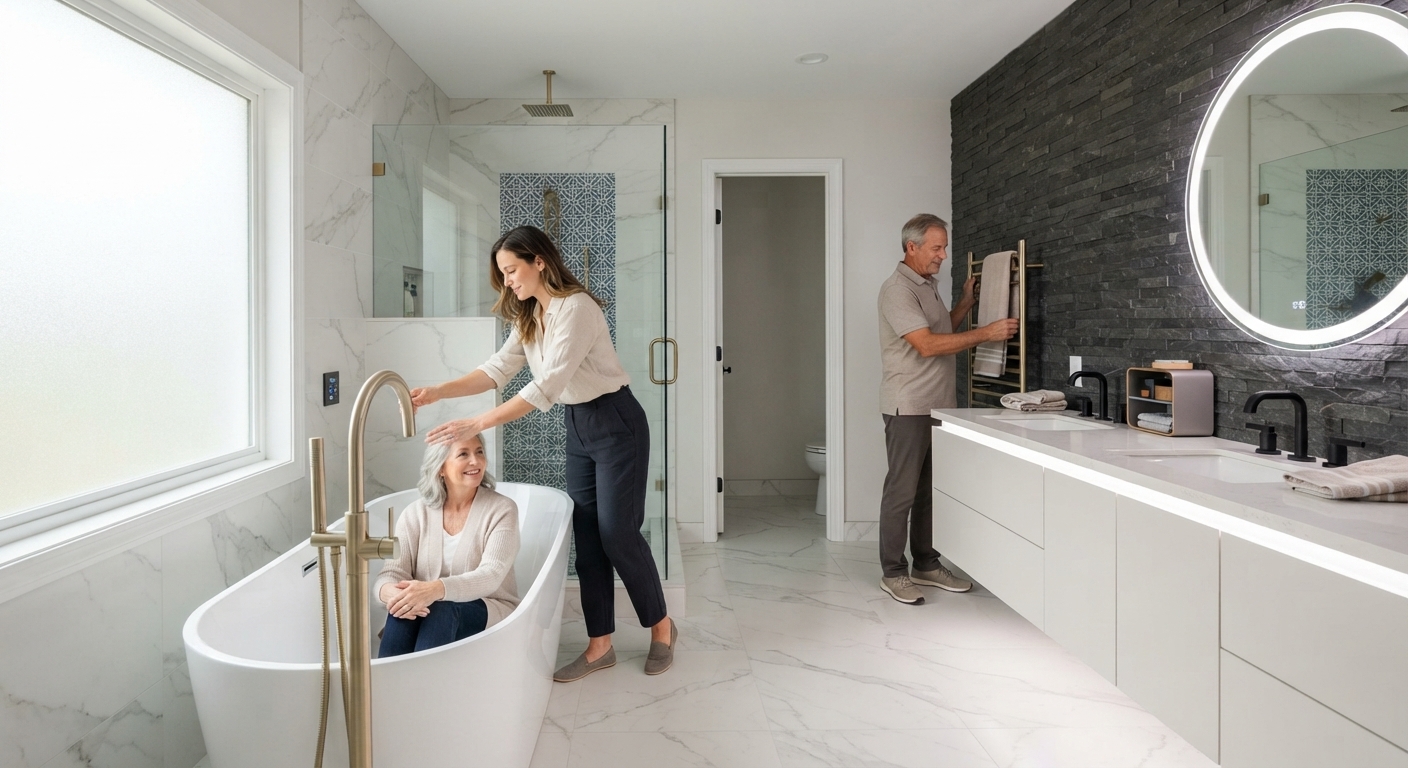
A curbless shower means the bathroom floor flows straight into the shower area without a raised lip or step to climb over. A wet room takes this one step further by waterproofing the entire bathroom space, allowing the shower and a freestanding tub to share the same open, glass-enclosed area.
Why homeowners love this trend:
- A bigger look and feel: Removing visual barriers like shower curtains and thick metal frames makes even a small bathroom feel twice as large.
- Easier cleaning: Fewer tracks, hinges, and corners mean fewer places for soap scum and mold to hide.
- Aging in place: Without a curb to trip over, these showers are much safer for kids, older adults, and anyone with mobility challenges. It future-proofs your home so you can stay there comfortably for decades.
What to tell your contractor:
If you want a curbless shower, bring this up during your very first meeting. Because there is no curb to hold water back, your contractor must slope the subfloor precisely toward the drain. This often requires adjusting floor joists, which is much easier to plan at the start of the project than halfway through demolition.
Warm Earth Tones Replacing Cold All-White Bathrooms
For the last ten years, the all-white, sterile bathroom was the gold standard. While white looks clean, many homeowners have realized it can also feel cold, clinical, and hard to keep spotless. Now, interior design is warming up in a major way.
Earth tones are taking over. Think soft terracotta, warm beige, sage green, muted clay, and rich mushroom grays. Instead of bright, stark white walls, people are choosing creamy off-whites and pairing them with natural wood vanities and brushed brass or warm bronze hardware.
Why this upgrade works:
Warm colors naturally relax the human brain. When you walk into a bathroom filled with soft greens, warm woods, and gentle lighting, it feels like a high-end spa rather than a hospital room. Plus, mid-tone tiles and textured finishes hide water spots, dust, and stray hairs much better than glossy white surfaces.
How to use this in your remodel:
You do not have to cover every inch in bold color. A great approach is to keep your main wall tiles a warm, neutral cream, add a white oak floating vanity, and bring in color through a sage green accent wall or deep terracotta floor tiles.
Floating Vanities for Style and Space
Floor space is precious in any bathroom. Standard vanities sit heavy on the floor, taking up visual room and creating tight corners that are annoying to mop around. That is why floating vanities—cabinets mounted directly to the wall with open space underneath—have become a must-have feature.
The practical benefits of going floating:
- Visual breathing room: Seeing the floor continue all the way to the wall tricks the eye into thinking the room is wider than it really is.
- Custom height: Because the cabinet is mounted to the wall studs, your contractor can install it at the exact height that feels most comfortable for your back, rather than sticking to a standard factory height.
- Effortless floor cleaning: You can sweep or mop straight underneath the vanity without bumping into toe-kicks or cabinet corners.
- Hidden lighting: Many homeowners ask their electrician to install a soft LED light strip under the floating vanity. This acts as a gentle nightlight for late-night bathroom trips without blinding you with harsh overhead bulbs.
Contractor tip: Floating vanities hold a lot of weight, especially once you add a heavy stone countertop and fill the drawers with hair dryers and toiletries. Your contractor will need to install solid wood blocking inside the wall behind the drywall to support the load safely.
Large-Format Tiles and Fewer Grout Lines
Ask any homeowner what they hate most about their current bathroom, and nine times out of ten, they will say scrubbing dirty grout. Traditional small mosaic tiles look nice at first, but hundreds of grout lines trap moisture, dirt, and mildew over time.
The modern solution is large-format porcelain tile. These are oversized tiles measuring 24x48 inches or even larger. Some homeowners are even using full-height porcelain slabs on their shower walls, which look just like real marble or stone without the heavy maintenance.
Why large tiles are a game-changer:
- Minimal grout: Fewer seams mean a cleaner, smoother look and dramatically less scrubbing on weekends.
- Water resistance: Porcelain is dense and nearly waterproof. When paired with high-performance epoxy grout, your shower walls become practically bulletproof against water damage.
- Seamless luxury: Large tiles allow the natural veining of stone-look patterns to flow uninterrupted across your walls and floors.
What to know before buying: Large tiles are heavy and unforgiving if your walls or floors are uneven. Installing them requires a skilled tile setter who knows how to use leveling systems and proper mortar coverage. Always ask your contractor about their experience with large-format tile before signing a contract.
Smart Bathroom Tech That Actually Makes Life Easier
Technology in the bathroom used to feel like a pricey gimmick. Today, smart bathroom features have matured into practical upgrades that save water, save energy, and add serious comfort to your daily routine. You do not need to turn your bathroom into a spaceship, but adding two or three smart features can completely change how you use the room.
Top smart upgrades worth the money:
- Smart shower valves: Imagine pressing a button on your phone or wall panel while still in bed, and your shower warms up to your exact preferred temperature—say, 102 degrees—and pauses until you step inside. No more sticking your arm into freezing water while waiting for the pipes to heat up.
- Bidet toilets and smart seats: Once rare in North America, bidet toilets are now one of the fastest-growing requests in bathroom remodeling. Modern units offer heated seats, warm water washing, air dryers, self-cleaning nozzles, and automatic lids. They are more hygienic and cut down heavily on toilet paper use.
- Anti-fog LED mirrors: Built-in defoggers keep your mirror crystal clear right after a hot shower. Many also let you adjust the light warmth so you can see how your makeup or shave looks in natural daylight versus evening lighting.
- Automatic leak detectors: Small wireless sensors placed behind the toilet or under the vanity can alert your phone the second they detect a drip, saving you from thousands of dollars in hidden water damage.
Planning ahead: Smart toilets, heated mirrors, and digital shower controls all require dedicated electrical outlets inside the bathroom. Make sure these items are on your wish list before the walls are closed up so your contractor can run the proper wiring safely.
Radiant Heated Floors
If you have ever stepped out of a warm shower onto a freezing cold tile floor in the middle of winter, you already understand the appeal of radiant floor heating. Once considered an ultra-luxury feature reserved for mansions, electric radiant floor heating has become surprisingly affordable during a full bathroom remodel.
How it works:
Thin heating mats or cables are laid directly beneath your new tile floor and connected to a programmable wall thermostat. You can set the system to turn on 30 minutes before your morning alarm goes off, so your floor is warm and welcoming the moment your feet hit the ground.
Why it upgrades your home:
- Quiet, even warmth: Unlike forced-air vents that blow dust around and cool down quickly, radiant floors warm the room evenly from the ground up.
- Energy efficiency: Because the heat stays low where you actually feel it, you can often keep your main home thermostat a few degrees lower in the winter.
- High buyer appeal: If you ever sell your home, heated bathroom floors are a memorable feature that makes buyers fall in love with the house instantly.
Layered Lighting for Mood and Function
Bad bathroom lighting is a universal problem. A single bright light fixture mounted above the mirror casts harsh shadows under your eyes and makes the whole room feel flat. Modern bathroom remodeling treats lighting in layers, just like a well-designed living room.
The three layers of great bathroom lighting:
- Task lighting: Vertical sconces mounted on either side of the vanity mirror at eye level. This lights up your face evenly without shadows, making shaving, skincare, and makeup application much easier.
- Ambient lighting: Recessed ceiling lights on a dimmer switch to fill the room with general brightness when you are cleaning or getting ready in the morning.
- Accent lighting: Soft LED strips tucked inside shower niches, under floating vanities, or behind mirrors. In the evening, you can turn off the bright overhead lights, leave the accent lights on, and enjoy a relaxing bath in a peaceful glow.
Pro tip: Ask your contractor to use bulbs with a high Color Rendering Index (CRI of 90 or above) and a warm-neutral color temperature around 2700K to 3000K. This ensures skin tones look natural and healthy in the mirror.
Biophilic Design: Bringing Nature Indoors
"Biophilic design" is a fancy term for a very simple idea: humans feel calmer and happier when we are connected to nature. Because bathrooms are spaces meant for washing away stress, bringing natural elements into your remodel is a timeless choice that never goes out of style.
Easy ways to add biophilic touches:
- Natural materials: Real stone countertops, teak shower benches, bamboo bath mats, and woven light fixtures add organic texture that balances out hard porcelain surfaces.
- More natural light: If your bathroom feels dark, ask your contractor about enlarging an existing window, adding frosted privacy glass, or installing a skylight or sun tunnel. Natural sunlight instantly makes a bathroom feel cleaner and more alive.
- Humidity-loving plants: Bathrooms naturally have warm, moist air—the exact environment tropical plants love. Adding a recessed shelf or hanging planter for ferns, pothos, or peace lilies brings vibrant life into the room.
Built-In Storage That Eliminates Clutter
Nothing ruins the look of a newly remodeled bathroom faster than plastic shampoo bottles lined up on the tub edge and hair tools tangled across the countertop. Smart storage is no longer an afterthought; it is built right into the architecture of the room.
Must-have storage upgrades:
- Oversized recessed shower niches: Instead of a tiny square cutout that barely holds two bottles, contractors are building long, horizontal niches across the width of the shower wall. Adding an LED light strip at the top of the niche turns everyday storage into a striking design feature.
- Recessed medicine cabinets: Modern medicine cabinets sit flush inside the wall, often featuring mirrored interiors, built-in electrical outlets for electric toothbrushes, and magnifying mirrors.
- Tower linen cabinets: If you have extra counter space, a tall cabinet that sits directly on the countertop gives you deep shelves for towels, extra toilet paper, and skincare products without eating up extra floor space.
- Drawer organizers: Swap out deep lower cabinet doors for deep pull-out drawers with built-in dividers and hidden outlets so you can keep hair dryers plugged in and ready to use without cord clutter.
Statement Freestanding Tubs (When You Have the Space)
While many homeowners are removing old built-in garden tubs that waste space and collect dust, freestanding soaking tubs remain a centerpiece for primary bathrooms that have room to spare.
Today’s freestanding tubs are deeper, more ergonomic, and made from materials like cast stone resin and acrylic that hold heat much longer than old-fashioned cast iron. Placed near a window or inside a spacious wet room, a sculptural soaking tub turns an ordinary bathroom into a personal retreat.
Should you keep a tub?
If you are remodeling the only full bathroom in your house, keep at least one bathtub. Families with young children and future homebuyers almost always look for at least one tub in the home. However, if you have a tub in a hallway bathroom, removing the tub in your primary suite to build a luxury walk-in shower is usually a smart move.
How to Prepare Before You Talk to a Bathroom Contractor
Knowing the trends you love is exciting, but turning those ideas into reality takes careful planning. Contractors appreciate homeowners who come to the table organized, realistic, and clear about what they want. Doing a little homework upfront will help you get more accurate quotes, avoid costly surprises, and keep your project running smoothly.
1. Define Your Must-Haves vs. Nice-to-Haves
Make two lists before your first consultation. Your "Must-Haves" are the non-negotiables—fixing a leaky shower pan, adding a double vanity, or improving ventilation. Your "Nice-to-Haves" are the upgrades you want if the budget allows, like heated floors or a smart toilet. Sharing both lists helps your contractor design a plan that fits your wallet without sacrificing what matters most to you.
2. Set a Realistic Budget (Plus a Cushion)
Bathroom remodels involve plumbing, electrical, waterproofing, tiling, and cabinetry—all packed into a small space. Because so many skilled trades are required, bathrooms cost more per square foot than bedrooms or living rooms. Once you decide on your target budget, set aside an extra 15% to 20% as a contingency fund. Once a contractor opens up old bathroom walls, they occasionally find hidden water damage, outdated wiring, or corroded pipes that must be fixed properly before new finishes go up.
3. Gather Visual Examples
Words like "modern," "warm," or "spa-like" mean different things to different people. Save 5 to 10 photos of bathrooms you love. Point out specific details to your contractor—for example, "I love the wood color on this vanity" or "I want my shower tile laid vertically like this photo." Clear visuals prevent misunderstandings before materials are ordered.
4. Ask the Right Questions During Quotes
When interviewing local bathroom contractors, do not just look at the bottom-line price. A suspiciously low bid often means shortcuts behind the walls—especially when it comes to waterproofing. Ask every contractor:
- Are you licensed and insured for both plumbing and electrical work?
- What waterproofing system do you use behind shower tiles? (Look for proven systems like Schluter, Wedi, or Laticrete rather than basic drywall or outdated methods.)
- Who will be on-site managing the project every day?
- How do you handle change orders if I decide to swap a fixture mid-project?
- Can you share photos and references from recent bathroom projects?
Ready to Upgrade Your Bathroom?
A bathroom remodel is one of the most rewarding projects you can take on as a homeowner. By combining warm colors, smart layouts, low-maintenance materials, and thoughtful lighting, you create a space that feels calm, clean, and tailored to your everyday life.
You do not need to figure out every technical detail on your own. The best first step is to bring your ideas to an experienced, licensed bathroom contractor who can evaluate your space, guide you through material choices, and give you a clear roadmap for your renovation. Take your inspiration photos, write down your top priorities, and reach out to a trusted local pro to start turning your outdated bathroom into your favorite room in the house.
Please visit us here to find Find top-rated service pros for your project or call us at 1 (888) 646-7358!
.png)