8 Common Flooring Installation Mistakes Homeowners Should Avoid
Nov/13/2026 448 Common Flooring Installation Mistakes Homeowners Should Avoid (And How to Hire the Right Local Pro)
Home improvement is expensive and confusing. Every year, thousands of homeowners jump into a flooring upgrade with big dreams, only to watch their budget spiral out of control. The hard truth is that many homeowners pay 20% to 30% more than necessary simply because they do not take the time to compare quotes or spot early red flags.
Replacing your floors is one of the single best ways to raise your home's resale value, but a poor installation can ruin expensive materials in just a few months. Whether you are putting down hardwood in the living room, water-resistant vinyl in the basement, or fresh tile in the bathroom, avoiding standard installation traps is essential.
Before you spend thousands of dollars on new materials, let’s look at the eight most common flooring installation mistakes—and how working with a vetted local contractor saves you time, money, and stress.
The 8 Common Flooring Installation Mistakes
1. Skipping Acclimation Time
One of the most frequent mistakes happens before installation even starts: rushing the materials into place. Hardwood, laminate, and luxury vinyl planks (LVP) need time to adjust to your home’s internal temperature and humidity levels.
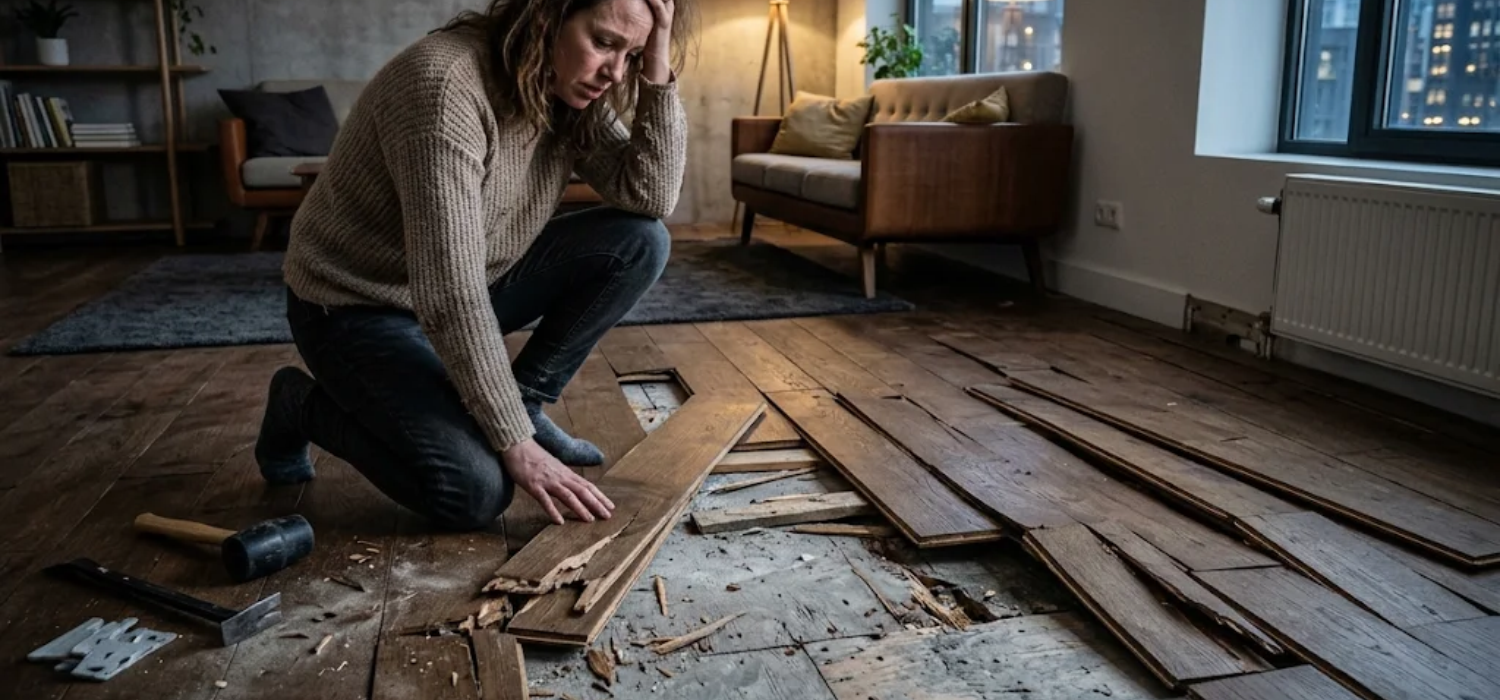
If you install wood straight out of the delivery truck, it will expand or shrink once it settles into your indoor environment. This leads to severe buckling, gaps between planks, and warped boards. A qualified professional always factors acclimation time into the project schedule so your subfloor and boards adjust properly before a single nail or adhesive strip goes down.
2. Ignoring Subfloor Prep and Leveling
You cannot build a smooth, lasting floor on a bumpy or damaged foundation. Homeowners often lay new flooring directly over uneven subfloors, old carpet padding, or deteriorating concrete.
If your subfloor has dips, bumps, or rot, your new floor will squeak, crack, or separate under normal foot traffic. Levelling a subfloor requires moisture testing, patch compounds, and professional grinding or sanding tools. Skipping this step is the fastest way to turn a brand-new floor into an expensive repair job.
3. Choosing the Wrong Flooring for the Niche
Not all flooring types work in every room. Installing solid hardwood in a high-humidity environment like a basement or full bathroom almost guarantees water damage and mold down the line.
Each area of your home serves a specific purpose, and high-ROI projects depend on picking the right material for the space:
- Kitchen & Bathrooms: These wet areas offer the highest ROI for home resale when renovated correctly. They require moisture-sealed tile or waterproof luxury vinyl that can handle constant spills.
- Living Rooms & Bedrooms: Solid or engineered hardwood brings classic warmth and long-term property value.
- Basements & Sunrooms: Engineered options or specialized synthetic materials stand up to changing soil temperatures and shifting moisture levels.
4. Poor Moisture Barrier Installation
Moisture is the silent killer of brand-new floors . Concrete slabs continuously release water vapor. If you install laminate or hardwood over concrete without a proper vapor barrier, trapped moisture will rot the underside of your floor.
A seasoned local contractor tests your moisture levels with calibrated equipment before picking an underlayment. They ensure the vapor barrier is taped securely at every seam so your investment stays dry for decades.
5. Leaving No Expansion Gaps Around Walls
Wood and composite materials expand and contract naturally as seasons change. To allow for this movement, installers must leave a small gap—usually a quarter to half an inch—between the flooring edges and the surrounding walls.
When untrained installers lay planks flush against baseboards, the expanding floor has nowhere to go. The pressure causes the center of the room to bubble up or snap apart. Professional installers leave exact expansion gaps and cover them neatly with trim or quarter-round molding.
6. Falling for Vague, "Ballpark" Estimates
When getting initial project numbers, watch out for contractors who give vague, hand-waved figures without inspecting your home. "Ballpark" estimates almost always lead to severe "budget creep."
A vague quote usually leaves out critical costs, such as:
- Old flooring removal and disposal fees
- Subfloor repairs and self-leveling compounds
- Transitions, baseboard trim, and molding work
- Furniture moving charges
When unexpected tasks pop up midway through the job, vague quotes double in price fast. Always insist on an itemized, line-by-line contract before work begins.
7. Hiring Pros With No Local References
Hiring contractors from far outside your local area can create major service delays and communication breakdowns. Out-of-state or distant crews often lack familiar supply chains in your neighborhood and may not understand local climate demands or building codes.
Working with local specialists guarantees that if a board needs replacing under warranty or an unexpected issue comes up, your contractor is just a short drive away—not two states over.
8. Working With Uncertified or Uninsured Installers
Flooring projects involve heavy tools, subfloor modifications, and structural considerations. Hiring a worker without specific vertical certifications or proper liability insurance leaves you completely exposed to financial loss.
Specific trades require proven industry credentials (for example, National Wood Flooring Association certification for custom hardwoods). Verified credentials guarantee that your contractor follows industry-standard guidelines, honors manufacturer warranties, and carries safety coverage that protects your property.
3 Red Flags You’re Overpaying for Your Home Remodel
To keep your project on schedule and inside your budget, watch out for these three major warning signs when evaluating contractors:
- No Local References: If a contractor cannot provide three recent, verifiable project references from homeowners in your immediate area, move on. Local pros build their business on community reputation.
- Vague Estimates: Never sign an agreement that groups materials, labor, subfloor prep, and cleanup into a single lump sum without line-item breakdowns. Detailed bids prevent surprise charges.
- Missing Certifications: Ask your installer about their trade certifications and proof of insurance right upfront. Legitimate pros are always happy to show their credentials.
Get Verified Local Quotes
Installing new floors is an investment that transforms your house, raises your property value, and makes your daily space far more comfortable. But you shouldn't have to navigate contractor vetting, moisture tests, or subfloor prep alone.
Our 101-point contractor network vets the best local pros so you don't have to. We connect you directly with background-checked, fully insured flooring experts in your area who provide clear, honest, itemized pricing.