California Solar Panel Repair: How to Diagnose System Issues and Connect with Trusted Local Pros
Sep/24/2026 42California Solar Panel Repair: How to Diagnose System Issues and Connect with Trusted Local Pros
You step outside on a sunny California afternoon, look up at a clear sky, and assume your rooftop solar array is quietly powering your home and keeping your electricity bills down. Then you open your latest utility statement and notice an unexpected surge in charges. Or perhaps you checked your solar monitoring app or inverter screen and noticed an error code flashing.
When your solar system stops working efficiently, it can feel frustrating and confusing. Solar energy technology involves specialized electrical systems, and figuring out whether you are dealing with a simple breaker trip, inverter failure, or weather-induced degradation can be stressful. On top of that, finding an honest, qualified contractor who understands local building codes and regional climate conditions can feel daunting.
If you are dealing with solar panel trouble, you are not alone. In this guide, you will learn why solar panel issues happen, how California’s unique weather and environmental factors impact equipment, what typical repairs cost, and how you can connect with certified solar repair contractors in California to get your system back to peak performance.
Direct Answers to Common California Solar Questions
What is the most common cause of solar panel performance loss in California?
The most frequent cause is dust, pollen, and wildfire ash buildup combined with inverter component failure. Heavy dust and particulate accumulation over long dry periods can block sunlight, reducing power output by 15% to 30%. Additionally, central inverters and microinverters undergo thermal stress, making inverter faults the leading electrical cause of system failure.
How much does solar panel repair cost in California?
Most residential solar repair projects in California range between $300 and $1,250. Minor service calls—such as resetting an inverter, updating firmware, or replacing a faulty cable connection—sit on the lower end. Major structural or electrical work, such as replacing a central string inverter or repairing hidden roof wiring, can cost between $1,500 and $2,800 depending on system accessibility.
How long does a professional solar panel repair take?
A standard diagnostic inspection takes 1 to 2 hours. Routine fixes, microinverter swaps, junction box repairs, or panel cleanings are usually completed on the same day within 2 to 4 hours. If specialized replacement parts or specific panel models need to be ordered from manufacturers, the total turnaround time may take 1 to 3 weeks depending on component availability.
Can I repair my solar panels myself?
DIY solar repairs are strongly discouraged due to high electrical and physical safety risks. Solar panel arrays generate high-voltage direct current (DC) electricity whenever exposure to daylight occurs. Handling high-voltage wiring without specialized training and protective gear carries serious risk of electrical shock or arc faults. Furthermore, DIY repair attempts almost always void existing manufacturer warranties and roof leak guarantees.
Common Signs Your Solar Panel System Needs Attention
Catching minor electrical or mechanical issues early can prevent total system shutdowns and protect your financial investment. Watch out for these warning signs:
- Unexplained Spike in Utility Bills: A sudden increase in your monthly electric bill often means your solar array is underperforming or completely off-line, forcing your home to draw power from the grid.
- Inverter Fault Lights or Error Messages: A solid red or amber light on your solar inverter—or a distinct fault code on its digital panel—signals a grid sync issue, internal component failure, or ground fault.
- Visible Physical Damage: Scratches, cracked tempered glass, dark thermal spots (burn marks) on solar cells, or loose frame components indicate physical deterioration.
- Monitoring App Disconnections: If your solar monitoring app displays zero production, frequent disconnections, or missing microinverter status reports, a communication gateway or wiring module may be faulty.
- Unusual Inverter Sounds: Loud buzzing, continuous clicking, or grinding cooling fan noises coming from your inverter indicate internal mechanical or electrical wear.
How California’s Climate and Environment Affect Your Solar System
California offers ideal conditions for solar generation, but regional weather patterns and environmental conditions create specific stresses on rooftop solar equipment.
Long Dry Spells, Dust, and Wildfire Ash
California experiences long periods without rainfall, especially through spring, summer, and early autumn. Over months, layers of dust, pollen, and airborne particles coat panel surfaces. During wildfire seasons, dense ash fall can quickly blanket arrays, drastically reducing output and forming sticky residues that require specialized cleaning to safely remove.
Marine Layers and Coastal Salt Air
In coastal California areas, regular fog, high humidity, and airborne salt spray create a corrosive environment. Moisture can penetrate aging seals, accelerating the corrosion of metal racking, electrical grounding clamps, and exposed copper wiring connections.
Extreme Inland Heat and Temperature Fluctuations
Inland valleys and desert regions frequently experience extreme summer temperatures exceeding 100°F. Solar panels lose a small percentage of efficiency as temperatures rise above 77°F. Continuous exposure to intense thermal heat causes components to expand and contract daily, putting strain on solder joints, internal diodes, and inverter capacitors.
Coastal Winds and Winter Storms
Seasonal atmospheric river storms bring heavy rains, localized hail, and gusty winds across California. Strong wind gusts can stress mounting hardware, loosen conduit connections, or dislodge panels if racking systems are not properly anchored.
Wildlife and Pest Interference
Pigeons, roof rats, and squirrels frequently seek shelter under rooftop solar arrays to escape heat or rain. Nesting animals can chew through protective wire insulation, creating short circuits, equipment failure, and fire hazards.
Understanding Solar Components and Common Repair Solutions
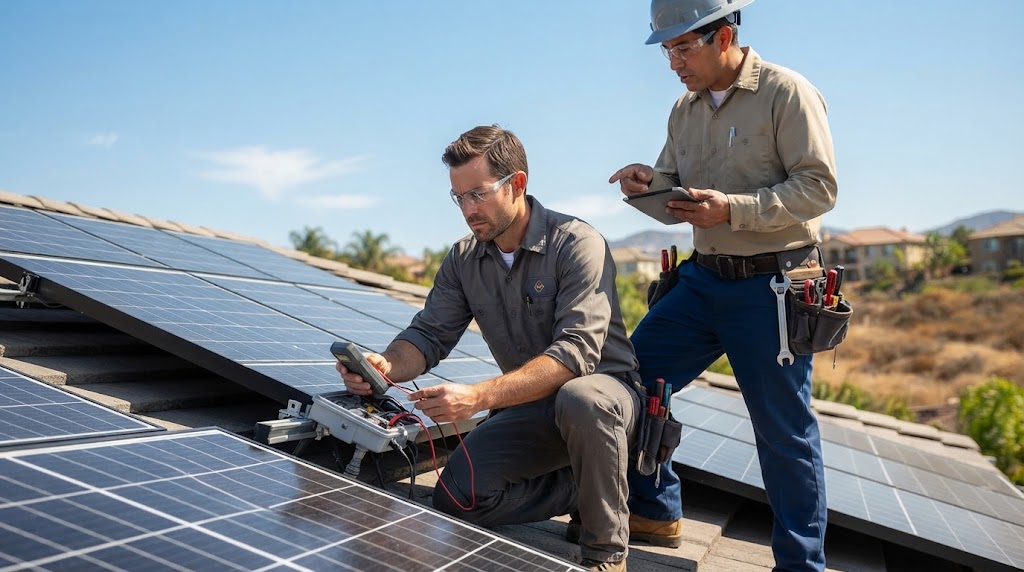
When you arrange for California solar panel repair, a certified professional will evaluate several core system components:
1. Inverter Repairs and Replacements
The inverter converts direct current (DC) power generated by panels into alternating current (AC) power used by your home. Because inverters work continuously under high voltage and heat, they are the most common component to require service. Technicians can clear fault codes, replace failed cooling fans, repair internal circuit boards, or install a replacement inverter unit.
2. Wiring and Junction Box Service
Wiring running across roofs is exposed to UV rays, heat, moisture, and potential pest activity. Degraded wire insulation or corroded junction boxes interrupt energy flow and pose safety risks. Electricians locate damaged wire sections, replace degraded conduits, re-torque electrical terminals, and seal junction boxes against weather penetration.
3. Panel Glass and Cell Maintenance
Impacts from fallen branches, debris, or severe hail can shatter panel glass or fracture internal silicon wafers. While light surface grime can be cleaned, cracked glass allows moisture to enter, damaging internal cells. In these cases, technicians carefully isolate and replace the damaged panel module.
4. Racking, Flashing, and Mounting Adjustments
Solar panels must stay anchored securely to prevent roof leaks and structural movement. Repair pros inspect lag bolts, aluminum racking rails, grounding wires, and roof flashings to ensure the assembly remains watertight and structurally sound.
DIY vs. Professional Solar Panel Repair: What You Need to Know
While home improvement projects can be rewarding, solar electric systems require certified expertise and specialized equipment.
Why DIY Solar Repair is Dangerous
- High Voltage Exposure: Solar arrays remain energized as long as sunlight strikes the panels. Contact with live DC power can result in severe shock or arc flash injuries.
- Roof Safety Hazards: Working on steep pitch, multi-story, or fragile tile roofs requires certified fall protection equipment and trained footing techniques to prevent severe falls or roof tile damage.
- Warranty Voidance: Most equipment manufacturers require maintenance and repairs to be performed by licensed solar or electrical contractors. DIY intervention can immediately void remaining warranties.
- Roof Leak Risks: Improperly loosening or refastening roof attachments can breach flashing seals, resulting in hidden roof leaks and costly interior damage during winter rains.
Safe Steps You Can Take Before Calling a Professional
- Check your home’s main breaker box and solar subpanel to see if any solar circuit breakers have tripped.
- Confirm your household internet connection is working so your solar monitoring system can communicate with cloud servers.
- Conduct a ground-level visual check using binoculars to look for obvious signs of physical damage, detached wiring, or heavy dirt/ash buildup.
- Record any error messages, light colors, or fault codes displayed on your solar inverter or monitoring app.
What Factors Influence Total Solar Repair Costs?
Solar repair costs vary depending on system design, component types, and site conditions:
- Inverter Configuration: Centralized string inverters are accessible and typically faster to evaluate, while systems with microinverters mounted under each panel require removing individual panel modules to access equipment.
- Roof Material and Height: Tile roofs (Spanish clay or concrete tile), steep slopes, or multi-story structures demand extra safety equipment, delicate handling, and higher labor hours.
- Pest and Barrier Removal: If your solar system features bird netting or wire guards, disassembling and reinstalling these barriers to access wiring can increase overall labor time.
- Warranty Coverage: If your system components fall within their 10-to-25-year manufacturer warranty period, replacement parts may be covered, leaving only service labor costs.
How We Help You Connect with the Right Solar Repair Contractor
Finding a qualified contractor shouldn’t mean spending hours making phone calls, leaving unreturned voicemails, or worrying whether a technician holds the right licenses. That is where we help.
Our primary focus is connecting California homeowners directly with experienced, licensed local professionals specializing in solar diagnostics, equipment repairs, and system maintenance.
Why Use Our Service to Find a Pro?
- California Local Expertise: We pair you with contractors familiar with California electrical codes, local utility grid requirements (such as PG&E, SCE, or SDG&E interconnection guidelines), and regional environmental factors.
- Fast and Convenient Process: Rather than searching dozens of individual directories, you can quickly request information and speak directly with local experts ready to assist you.
- Clear, No-Obligation Quotes: Receive detailed estimates so you can compare repair options, understand potential costs clearly, and make an informed decision for your home budget.
- Licensed and Insured Professionals: We connect you with vetted contractors carrying active state licensing and liability insurance for complete confidence.
Whether you need a quick inverter error code diagnosis, wiring repair, or a thorough system checkup, connecting with an experienced local specialist is straightforward and stress-free.
Key Questions to Ask Before Hiring a Solar Repair Contractor
When speaking with a local contractor, asking these straightforward questions will help ensure you select the right team:
- Are you licensed, bonded, and insured to perform solar and electrical work in California? Verify that the contractor holds an active C-10 (Electrical) or C-46 (Solar) license.
- Do you have experience repairing my specific inverter and panel brands? Equipment brands (Enphase, SolarEdge, Tesla, SMA, Canadian Solar, etc.) have distinct diagnostic protocols and warranty guidelines.
- Will you handle warranty claims with the equipment manufacturer? A supportive contractor will verify if broken parts are covered under factory warranties and handle replacement paperwork.
- Do you provide a warranty on labor and repair work? Reputable service contractors offer a clear labor guarantee covering their workmanship.
- What does your diagnostic fee cover, and is it applied toward the repair bill? Understanding upfront inspection fees prevents surprises on your final invoice.
Common Mistakes to Avoid When Choosing a Solar Repair Company
Protect your home and budget by avoiding these frequent mistakes:
- Hiring Unlicensed Handymen: Solar installations are complex electrical setups. Hiring uncertified labor without specialized electrical licenses introduces serious safety hazards and code violations.
- Ignoring System Error Alerts: Delaying service on a minor inverter fault leads to lost energy generation and can transform a basic repair into an expensive full-system replacement.
- Assuming You Must Use Your Original Installer: If your original installer has closed or relocated, independent licensed solar contractors can step in, evaluate your system, and fulfill manufacturer warranty work.
- Proceeding Without Written Estimates: Always request a clear, written estimate detailing labor rates, part costs, project scope, and estimated completion dates before authorizing work.
Signs You Should Schedule a Professional Solar Inspection Today
You should schedule a professional diagnostic check if you notice any of these indicators:
- Your electric bills have steadily increased without any change in household power usage.
- The solar inverter shows a red light, error code, or fails to turn on during daytime hours.
- You see cracked panel glass, burn spots, loose mounting hardware, or hanging wires on your roof.
- Your monitoring application reports zero energy generation on sunny days.
- You hear unusual mechanical buzzing or loud fan noises coming from your inverter box.
- Birds or rodents are nesting beneath your solar array.
Promptly addressing these signs protects your home investment, keeps power generation steady, and ensures safe operation.
Frequently Asked Questions About California Solar Repair
How often should solar panels be inspected and cleaned in California?
Due to extended dry seasons, dust, pollen, and occasional wildfire ash, having your solar system inspected and cleaned at least once a year is recommended. Annual service ensures electrical connections remain tight, roof seals stay intact, and panels operate at peak production efficiency.
Will my homeowner’s insurance cover solar panel repairs?
Standard homeowners insurance policies typically cover solar panel damage caused by covered events such as windstorms, hail, fallen tree branches, or lightning strikes. Damage resulting from age, lack of routine maintenance, or pest activity is usually excluded. Check your specific policy details with your insurer.
How do I check if my solar panels or inverter are still under warranty?
Solar equipment generally carries two main warranties: a 10-to-25-year performance warranty on panel modules and a 10-to-12-year warranty on inverters (which can often be extended to 25 years). Labor warranties provided by original installers usually last 1 to 10 years. A qualified technician can check your equipment serial numbers to verify warranty status.
What should I do if my original solar installer went out of business?
If your original solar installer is no longer operating, licensed independent solar service contractors can evaluate your system, perform repairs, and work directly with equipment manufacturers to process warranty replacement parts.
How much energy production can dirty panels lose in California?
Dust, grime, and ash accumulation can reduce solar energy production by 15% to 30%. Routine professional cleaning using non-abrasive equipment and deionized water safely restores output efficiency.
Can severe heat damage my solar panels over time?
Solar panels are engineered to endure outdoor conditions, but continuous exposure to high temperatures accelerates normal thermal wear on solder joints, seals, and electrical diodes. Proper installation that maintains airflow beneath panels helps minimize heat-related degradation.
Connect with Top-Rated California Solar Repair Professionals Today
You invested in solar panels to reduce electricity expenses, lower your carbon footprint, and enjoy reliable home energy. When system faults occur, you don't need to navigate technical electrical issues alone or spend hours looking for reliable service pros.
Taking care of your home solar system is simple when you connect with the right expert. Let us simplify your search by matching you directly with certified, top-rated solar repair contractors in California who can inspect your system, resolve issues safely, and get your power generation back on track.
Ready to restore your solar system's performance?
Don't let a faulty solar inverter or damaged panel increase your utility bills. Speak with a qualified, licensed California solar contractor today to diagnose your system and restore reliable power. Find top-rated service pros for your project or call us at 1 (888) 646-7358!