Affordable Window Repair and Replacement in Nevada
Sep/15/2026 36Affordable Window Repair & Replacement in Nevada
If you have ever felt a sudden burst of heat standing next to your living room window in the middle of a July afternoon in Las Vegas, or noticed a cold draft creeping through your frame during a chilly winter night in Reno, you know how frustrating bad windows can be.
Windows do far more than offer a view of the Silver State’s outdoor landscapes. They form a core line of defense for your home’s envelope, protecting your family against blistering desert sun, high winds, dust, and dramatic daily temperature shifts. When windows fail, your indoor comfort plummets, and your monthly utility bills can climb out of control.
Many Nevada homeowners worry about the unexpected expenses of glass work. You might ask yourself: Can I get away with a simple repair, or am I facing a complete window replacement? How much is this really going to cost me? How do I find a reliable contractor without overpaying?
This comprehensive guide breaks down key window replacement signs, explains what goes into the cost to replace windows in Nevada, and highlights how upgrading to energy efficient windows can lower energy usage while improving year-round home comfort.
What is Window Repair vs. Window Replacement?
Quick Answer: Window repair fixes minor visual or operational issues like broken latches, damaged weatherstripping, or stuck sashes. Window replacement removes the old window unit—and sometimes the entire frame—to install a brand-new, modern window assembly that restores structural integrity and energy efficiency.
Understanding the difference saves both time and money:
- Window Repair: Ideal when the glass and frame structure are still sound, but small functional components are failing. Repairs focus on restoring smooth operation or stopping minor surface air leaks.
- Window Replacement: Necessary when structural damage, rot, permanent frame warping, or major double-pane seal failures occur. In these cases, superficial fixes are temporary Band-Aids that waste money over time.
7 Critical Window Replacement Signs Every Nevada Homeowner Should Watch For
Recognizing when glass or frames have reached the end of their lifespan helps prevent water intrusion, pest entry, and sky-high utility costs. Look for these clear warning signs:
1. Unexpectedly High Energy Bills
Nevada’s intense desert sunlight forces air conditioning systems to work overtime. If summer utility bills spike year over year without a change in household habits, single-pane glass or worn seals may be letting unwanted heat directly into the living space.
2. Noticeable Drafts and Hot Spots
Walk by windows on a windy or hot afternoon. If you feel a distinct draft or a sudden temperature spike near the glass, air seal integrity has degraded.
3. Fog, Moisture, or Condensation Between Panes
Double-pane insulated glass units (IGUs) rely on a tight seal enclosing insulating gas (like argon). When that seal ruptures due to expansion and contraction, moisture enters between the panes, creating a foggy appearance that cannot be wiped clean from either side.
4. Difficulty Opening, Closing, or Locking
Extreme temperature swings cause building materials to expand and contract. Over time, frames can warp, swell, or shift out of alignment. If forcing a sash open or struggling to lock a window is common, safety and security are compromised.
5. Excessive Outside Noise
Older single-pane or failing windows do little to block noise from neighborhood traffic, lawn mowers, or high winds. Upgrading to double-pane glass or sound-dampening laminated glass restores quiet indoors.
6. Water Damage, Soft Spots, or Rot
Water leaking around window frames during seasonal rainstorms can rot wooden subframing, warp drywall, and create mold growth. Soft wood or discolored drywall near window trim indicates moisture penetration.
7. Visible Frame Degradation or Decay
Cracked vinyl, splintered wood, or dented aluminum frames are more than aesthetic issues; they indicate structural decline that invites pests, moisture, and dust into walls.
Can You Repair a Window Yourself or Should You Hire a Professional?
Deciding between DIY fixes and hiring a qualified professional comes down to safety, tool availability, and project scope:
| Task / Problem | Repair Approach | Estimated Difficulty | When to Call a Pro |
|---|---|---|---|
| Squeaky or Sticking Track | DIY | Low | Call if the frame itself is visibly warped or crushed. |
| Worn Weatherstripping | DIY | Low | Call if new weatherstripping fails to block air drafts. |
| Broken Window Latch/Hardware | DIY | Low–Medium | Call if replacement hardware is obsolete or custom-sized. |
| Foggy Double-Pane Glass | Professional | High | Call a contractor; glass units require specialized factory seals. |
| Rotten Frame or Subfloor Water Damage | Professional | High | Call a contractor immediately to address underlying structural integrity. |
| Full Window Replacement | Professional | High | Call a contractor to ensure code compliance, proper flashings, and warranty protection. |
Caution: Attempting DIY glass replacement or structural alterations without professional experience risks voiding manufacturer warranties, violating local building codes, and causing hidden moisture damage inside wall cavities.
Understanding the Real Cost to Replace Windows in Nevada
What should you expect to invest when replacing windows? Rates vary based on frame material, glass technology, size, and labor complexity.
Average Window Replacement Costs in Nevada (2026 Benchmarks)
On average, Nevada homeowners spend $350 to $1,200 per window installed for standard replacement scenarios. Complete full-house projects typically range from $4,500 to $18,000+, depending on home size and product specifications.
Key Factors Influencing Total Project Price
-
Frame Material:
- Vinyl: Most affordable ($300–$700 installed). Highly durable, low maintenance, and thermally non-conductive.
- Aluminum: Mid-tier pricing ($400–$1,200 installed). Extremely strong and slim, but requires modern thermal breaks to prevent desert heat transfer.
- Fiberglass: Premium tier ($500–$1,500 installed). Mimics wood optics, offers strength against high temperatures, and resists expanding or contracting.
- Wood: High-end pricing ($650–$1,900+ installed). Beautiful interior finish, but requires maintenance to prevent desert drying and cracking.
-
Glass Packages & Panes:
- Double-Pane Glass: The standard for modern home efficiency ($300–$1,000 installed).
- Triple-Pane Glass: Maximum insulation and sound protection ($500–$1,500 installed).
- Low-E Coatings & Gas Fills: Adding Low-Emissivity (Low-E) coatings and Argon/Krypton gas insulation adds roughly $50–$150 per window unit, yielding lower heat gain.
-
Installation Type (Retrofit vs. Full-Frame):
- Retrofit (Insert) Installation: Leaves existing exterior frames intact, replacing only sashes and glass. Costs less in labor ($100–$250 per window).
- Full-Frame Replacement: Removes existing trim, casing, and framing down to studs. Required if rot or water damage exists ($250–$400+ per window labor).
-
Home Accessibility and Location:
Second-story windows, custom shapes (arches, bay/bow windows), or egress basement conversions require extra staging, labor, and safety equipment.
Why Energy Efficient Windows Matter in Nevada’s Climate
Installing energy efficient windows isn't just a stylistic choice—it directly impacts indoor climate control and monthly budget management.
Essential Features of Desert-Ready Windows
- Low Solar Heat Gain Coefficient (SHGC): SHGC measures how much solar heat enters through glass (scale 0 to 1). In Nevada, target an SHGC rating below 0.25 to block intense radiant heat from warming interior spaces.
- Low U-Factor: U-factor measures thermal insulation capability. A lower U-factor (ideally 0.20 to 0.30) keeps air-conditioned air inside during summer and retains heating warmth during cold winter nights.
- Spectrally Selective Low-E Coatings: Microscopic metallic layers reflect infrared radiation (heat) while letting natural daylight pass through, protecting furniture, carpets, and artwork from UV fading.
- Argon Gas Fill: Non-toxic argon gas sealed between panes insulates significantly better than plain air, reducing overall heat conduction.
Utility Rebates and Tax Incentives
State utility programs (such as NV Energy PowerShift or Southwest Gas rebates) and federal Energy Efficient Home Improvement Credits offer tax incentives and rebates—up to $500 or 30% of project costs—when upgrading to ENERGY STAR® certified windows.
How Long Does a Window Replacement Project Take?
Quick Answer: Once custom windows arrive from manufacturers (typically 3 to 6 weeks), physical installation for a typical single-family home takes 1 to 2 days. Most professional crews replace 8 to 12 windows per day.
Project Timeline Breakdown
- Initial Inspection & Custom Measurements (Day 1): A contractor measures frame openings down to the millimeter and reviews glass options.
- Manufacturing & Delivery (Weeks 2–6): Custom window packages are fabricated to match precise specifications.
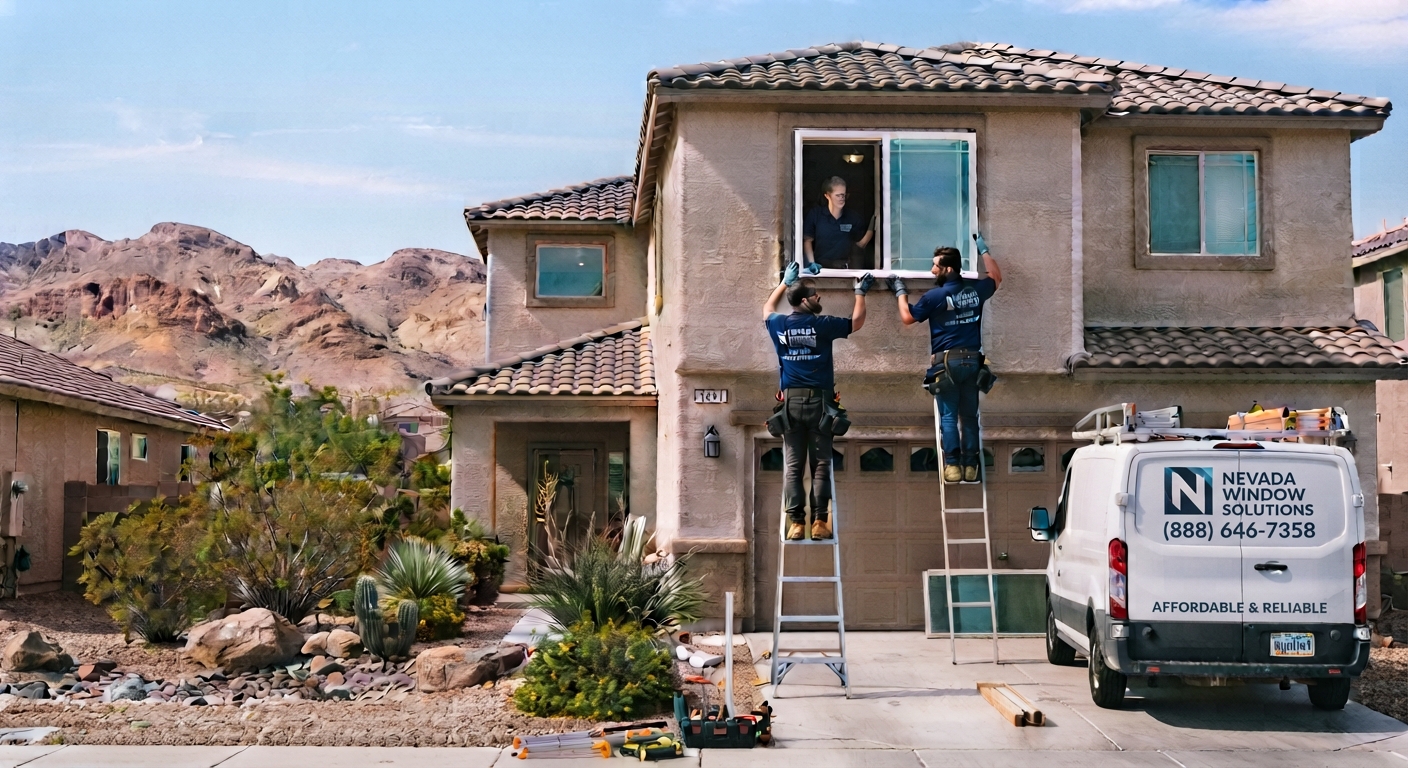
- Installation Day(s) (1–2 Days):
- Site prep and drop-cloth placement.
- Old window removal and frame inspection.
- Waterproof flashing application and window leveling.
- Insulation, perimeter caulking, and exterior trim installation.
- Final Inspection & Clean-Up (1 Hour): Testing sash operation, checking seal lines, and walking through maintenance tips.
What Nevada Homeowners Should Know About Local Conditions
Nevada presents environmental challenges that impact building materials:
- Extreme Solar UV Exposure: Nevada receives over 290 sunny days annually. Inferior vinyl frames can yellow or become brittle over time. High-grade UV-stabilized vinyl, composite, or aluminum with thermal breaks withstand sun exposure best.
- Daily Temperature Swings (Thermal Expansion): High daytime temperatures followed by cool desert nights cause framing materials to expand and contract repeatedly. Professional sealant application is crucial to prevent premature air leaks.
- Wind and Dust Storms: Fine desert dust works its way into mechanical window tracks and balance assemblies. High-performance weatherstripping keeps airborne dust out of living areas.
How to Choose a Reliable Window Contractor in Nevada
Selecting a skilled, trustworthy installer ensures project performance and long-term satisfaction.
Contractor Selection Checklist
|
Put Check (/) |
Checklist Item |
|---|---|
|
|
Valid Nevada State Contractors Board (NSCB) License |
|
|
Active General Liability and Workers’ Compensation Insurance |
|
|
Transparent, Itemized Estimate Breakdown — Labor vs. Materials |
|
|
Clear Warranty Coverage — Manufacturer materials and installer labor |
|
|
Strong Local References and Verified Customer Reviews |
Key Questions to Ask Before Hiring
- Are you licensed by the Nevada State Contractors Board, and what is your license monetary limit?
- Does this quote cover full removal, disposal of old windows, new flashing, and interior/exterior trim work?
- What warranty coverage applies to glass seal failures, and what warranty covers installation labor?
- Are your installation technicians direct employees or third-party subcontractors?
- Will you assist with utility rebate documentation for energy efficient window upgrades?
4 Costly Mistakes Nevada Homeowners Should Avoid
- Choosing Price Over Quality Performance Ratings: Buying low-end single-pane or non-coated windows to save upfront leads to higher monthly utility costs over time.
- Caulking Over Rotten or Damaged Frames: Sealing over soft wood or damaged structural framing hides water issues without fixing them, leading to costly structural repairs down the road.
- Failing to Verify Contractor Licensing: Hiring unlicensed handymen for structural window installation risks voiding manufacturer product warranties.
- Ignoring Local Permitting Requirements: Many Nevada municipalities require permits for window replacements that alter structural openings or egress emergency exit requirements.
Frequently Asked Questions (FAQs)
What is the average cost to replace windows in Nevada?
Most Nevada homeowners spend between $350 and $1,200 per window installed. Total costs depend on frame choice (vinyl vs. wood/fiberglass), glass packages (double vs. triple pane), and full-frame vs. insert installation requirements.
Can I repair a broken seal on double-pane glass?
Once a double-pane seal fails and fogging appears inside the glass unit, the seal cannot be permanently repaired in place. The glass sash unit or entire window must be replaced to restore insulation performance.
Are energy efficient windows worth the investment in Nevada?
Yes. Upgrading from single-pane to ENERGY STAR® qualified double-pane windows can significantly lower cooling energy demands during hot summers, while making indoor living spaces noticeably more comfortable.
How long do modern vinyl replacement windows last?
High-quality vinyl replacement windows generally last 20 to 40 years with basic track cleaning and hardware maintenance.
Is it cheaper to replace all windows at once?
Yes. Replacing all home windows in a single project reduces per-unit installation costs, saves on contractor mobilization fees, and ensures consistent appearance and performance throughout the house.
Take the Next Step Toward Home Comfort
Failing, drafty, or hard-to-open windows do not have to drain your monthly budget or compromise home security. Recognizing clear window replacement signs—from fogged glass panes to rising cooling costs—allows you to take control of home maintenance before minor issues become major expenses.
Evaluating replacement vs. repair options is easier with expert advice. Having a qualified professional evaluate your current window frames, perform accurate thermal measurements, and explain local rebate options provides clarity on the best path forward.
Ready to explore your options? Connect with a trusted, licensed Nevada window contractor today to schedule a hassle-free inspection and receive a clear, itemized quote tailored to your home and budget.
Please visit us here to find Find top-rated service pros for your project or call us at 1 (888) 646-7358!