How Long Does Flooring Installation Take?
Oct/09/2026 44How Long Does Flooring Installation Take?
Stepping across worn, squeaky, or water-damaged floors every single day takes a quiet toll on your peace of mind. Whether you are staring at outdated carpet in your living room, cupping hardwood planks in your hallway, or scratched vinyl in the kitchen, updating your flooring is one of the most transformative home improvement projects you can undertake. Yet, the moment you decide to start planning, a wave of practical questions usually brings your momentum to a sudden halt.
How long does flooring installation take? Will your family need to move out for a week? How long will your home be turned upside down with furniture pushed into corners and subfloors exposed?
It is completely normal to feel hesitant when facing the uncertainty of a major home project. You want beautiful, durable new floors, but you cannot afford to have your daily life put on hold indefinitely. The good news is that flooring installation does not have to be an overwhelming mystery. For most California homes, a professional flooring installation takes anywhere from 1 to 5 days, depending on the material you choose, the total square footage, and the condition of your subfloor.
Understanding what drives these timelines helps you plan your schedule with total confidence. By learning how preparation, material choice, and local climate factors affect your project duration, you can transform a stress-inducing renovation into a seamless, predictable upgrade. Best of all, getting clear answers for your exact home layout does not require hours of exhausting phone calls. Submitting a simple online quote request connects you directly with pre-vetted, licensed California flooring pros who can assess your space, deliver precise timelines, and help you get your project moving without any high-pressure sales pitch.
Understanding the Problem: Why Flooring Projects Get Delayed
When homeowners ask about installation timelines, they are usually trying to schedule work around job responsibilities, family routines, pets, or upcoming travel. However, unexpected delays can turn a planned two-day job into a frustrating week-long ordeal. To keep your project moving on schedule, it helps to understand the common root causes and hidden pitfalls that often disrupt flooring timelines.
Material Acclimation Requirements
One of the most frequently overlooked factors in flooring timelines is material acclimation. Natural wood and composite products expand and contract based on humidity and ambient temperature. If a installer lays hardwood or laminate the exact same day it arrives from a climate-controlled warehouse, the planks will inevitably warp, buckle, or gap once they adjust to your home's unique indoor climate. Hardwood flooring typically requires 3 to 7 days to acclimate inside your house before installation can even begin, while luxury vinyl plank (LVP) may only require 24 to 48 hours. Skipping or rushing this step leads to severe structural issues down the line.
Subfloor Moisture and Damage
What lies beneath your old floor determines how smoothly your new installation will progress. California homes feature a wide variety of foundation styles, from raised foundation crawl spaces in older suburban neighborhoods to concrete slab-on-grade foundations in newer developments. Concrete slabs absorb ground moisture, especially after atmospheric rivers or during heavy rainy seasons. If an installer uncovers damp, uneven, or cracked subflooring after ripping up your old carpet, that underlying surface must be dried, repaired, leveled, or treated with a moisture barrier before the new floor goes down. Addressing subfloor damage can add anywhere from 12 to 36 hours to your overall project timeline, but doing so is vital to protect your investment.
Layout Complexity and Room Prep
A wide-open, rectangular room goes down surprisingly fast. However, custom room layouts significantly increase labor time. Installing flooring around stone fireplace hearths, kitchen islands, curved staircases, built-in cabinetry, and narrow hallways requires precise measuring and intricate hand-cutting. Furthermore, if rooms are still filled with heavy furniture, or if old materials like glued-down parquet or thick ceramic tile require intensive demolition, the preparation stage can take just as long as laying the new material itself.
California Environmental Factors
California’s diverse microclimates play a direct role in how materials behave during installation. Coastal homes face lingering marine layers and high humidity from salt air, which slows down the drying time for adhesives, subfloor leveling compounds, and finishes. Inland regions experience intense heat waves and low indoor humidity, causing wood products to shrink rapidly if not handled correctly. Additionally, homes near coastal or mountain zones must navigate seasonal moisture fluctuations that demand extra care during surface prep. Ignoring these regional climate factors invites future cupping, cracking, or floor failure.
Answers to Your Pressing Flooring Timeline Questions
How long does flooring installation take for a standard 1,000-square-foot home?
For a standard 1,000-square-foot California home, professional installation usually takes between 2 and 4 days. Luxury vinyl plank or click-lock laminate projects can often be completed in 2 to 3 days, while glued-down engineered wood or nailed hardwood takes 3 to 5 days, excluding acclimation time.
When should you call a pro for flooring installation?
You should contact a licensed professional whenever your project involves subfloor repairs, concrete slab leveling, whole-home replacements, or materials requiring specialized adhesives and damp-proofing. Calling a pro early ensures proper material selection, accurate moisture testing, and compliance with California building standards.
Is it worth repairing old flooring or replacing it entirely?
Replacement is generally worth the investment if your existing flooring covers more than 30% visible damage, has severe water staining, shows deep structural cupping, or if the subfloor feels soft. Replacing old flooring restores home equity, improves indoor air quality, and prevents hidden mold or subfloor decay from worsening.
DIY vs. Professional Expertise: Knowing Your Limits
It is easy to watch an online video tutorial and feel inspired to tackle a weekend flooring installation on your own. While taking on a hands-on project can be rewarding, it is essential to evaluate the realistic difference between minor cosmetic DIY tasks and complex, structural labor that requires a licensed contractor.
Minor Maintenance You Can Tackle Yourself
There are several low-risk tasks that handy homeowners can manage without professional assistance:
- Removing lightweight, non-fixed furniture from bedroom areas prior to installation day.
- Detaching old, loose baseboards using a pry bar and putty knife if you plan to install new trim yourself.
- Pulling up loose, non-glued carpet pads in small room layouts.
- Applying superficial scratch touch-ups or replacing minor trim pieces along doorways.
Complex Work Requiring Licensed California Contractors
When a project moves beyond basic preparation, DIY mistakes become exceptionally expensive to fix. Hiring a licensed California contractor is crucial for several complex aspects of the job:
- Subfloor Leveling and Moisture Mitigation: Testing concrete slabs for moisture vapor emission rates requires calibrated tools. Applying self-leveling underlayment or specialized vapor retarders demands precise chemical ratios and swift execution. A mistake here can ruin thousands of dollars in new flooring.
- Structural Subfloor Repairs: Replacing rotted joists or water-damaged plywood subflooring requires structural knowledge to ensure your home remains safe and level.
- Complex Material Methods: Nailed-down solid hardwood, full-spread adhesive applications, and intricate tile patterns demand commercial-grade equipment and refined craftsmanship to prevent squeaks, buckling, or shifting.
- Permitting and Code Compliance: California has strict indoor air quality standards and building codes. Professional contractors ensure that underlayment materials, adhesives, and acoustic barriers comply with local municipal codes and California Title 24 energy and environmental standards.
When you weigh the physical labor, tool rental costs, material waste, and the potential risk of ruining expensive products, attempting a major DIY installation often costs more time and money than hiring an expert. Connecting with a licensed local contractor ensures the job gets done right the very first time.
Realistic Timelines by Flooring Type
To give you a clear picture of what to expect once work begins, here is a breakdown of realistic timelines based on the most popular flooring materials used in California homes.
Luxury Vinyl Plank (LVP) & Laminate
- Acclimation Time: 24 to 48 hours.
- Installation Speed: 300 to 500 square feet per day.
- Total Project Time (1,000 sq ft): 2 to 3 days.
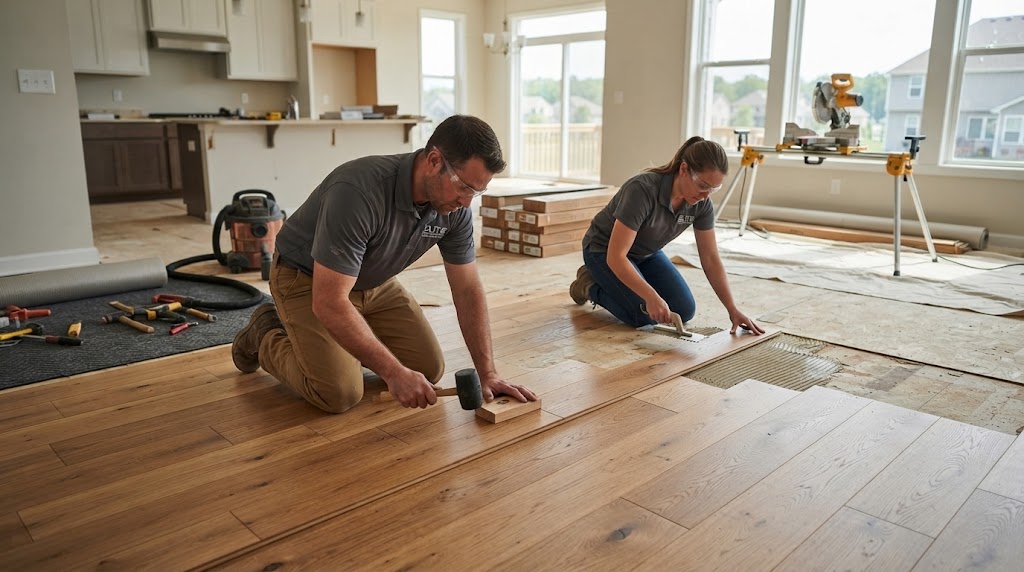
Luxury vinyl plank and floating laminate are among the fastest materials to install. Because many LVP options feature click-lock mechanisms and pre-attached acoustic underlayment, installers can lay planks rapidly over a clean subfloor. These materials are highly water-resistant, making them an ideal choice for California homes subject to tracked-in sand, pool water, or kitchen spills.
Engineered Hardwood
- Acclimation Time: 3 to 5 days.
- Installation Speed: 200 to 350 square feet per day.
- Total Project Time (1,000 sq ft): 3 to 4 days.
Engineered hardwood offers the classic warmth of real wood with improved dimensional stability against indoor temperature changes. Installation takes slightly longer than vinyl because planks are typically glued down to concrete slabs or stapled to wood subfloors. Glued installations require precise setting times and meticulous cleanup to keep adhesive off the factory finish.
Solid Hardwood (Unfinished or Pre-Finished)
- Acclimation Time: 5 to 7 days.
- Installation Speed: 150 to 250 square feet per day.
- Total Project Time (1,000 sq ft): 4 to 7+ days.
Solid hardwood requires the most time and precision. Planks must adapt thoroughly to your home's ambient humidity. If you choose unfinished solid wood, the installation phase is followed by sanding, staining, and applying protective topcoats. Each coat of finish needs 24 hours to cure, extending the overall timeline. However, the end result is a timeless floor that can be refinished for generations.
Ceramic, Porcelain, or Natural Stone Tile
- Acclimation Time: None required.
- Installation Speed: 100 to 200 square feet per day.
- Total Project Time (1,000 sq ft): 4 to 6 days.
Tile installations are labor-intensive due to the multi-step setting process. Installers must lay cement backer board or uncoupling membranes, apply thin-set mortar, place tiles with precise spacing, allow the mortar to cure overnight, apply grout, and finally seal the surface. Bathrooms, entryways, and kitchens with complex layouts naturally lean toward the longer end of this timeline.
Navigating Costs and Project Scope
Understanding flooring installation costs allows you to budget intelligently without facing uncomfortable surprises midway through the job. Rather than relying on generic guesses, it helps to break down the primary factors that influence your final estimate.
Material Selection
Material costs form the foundation of your budget. High-end natural stone or rare solid hardwoods naturally carry a higher price per square foot than standard sheet vinyl or mid-range laminate. Additionally, high-traffic areas often benefit from upgraded wear layers or sound-dampening underlayments, which slightly increase material costs while adding long-term value.
Labor and Skill Level
Professional labor rates reflect the technical expertise required for your specific material. Laying a floating click-lock vinyl floor requires less specialized labor time than hand-scraping solid hardwood or setting large-format porcelain tile. Experienced, licensed contractors carry proper workers' compensation and liability insurance, protecting you from personal liability if an accident occurs on your property.
Demolition and Disposal
Removing old flooring requires manual labor and hauling fees. Ripping up thin carpet goes quickly, but breaking up old ceramic tile set in thick mortar or scraping down fully glued linoleum demands heavy equipment and additional time. Your quote will account for the labor required to tear out, load, and dispose of your old flooring in compliance with local environmental recycling rules.
Subfloor Preparation and Permit Fees
If an installer discovers unlevel concrete, rotted subfloor panels, or underlying moisture issues, addressing those problems requires additional materials like self-leveling compounds or moisture-barrier membranes. In certain California municipalities, major structural subfloor modifications or extensive commercial-scale renovations may also require local building permits, which your contractor can manage on your behalf.
Because every California home features a unique combination of square footage, layout, and subfloor conditions, the best way to get an accurate price and timeline is to request a tailored quote based on your specific needs.
How Online Quote Forms Simplify Finding the Right California Pro
Searching for a reliable contractor used to mean spending hours calling local listings, leaving voicemails, and waiting days just to get a call back. Fortunately, modern online quote requests have completely changed how homeowners connect with top-rated service professionals.
What to Look for in a California Contractor
When handing your home over to a professional, peace of mind comes from knowing they are fully qualified. Always verify that your chosen pro possesses:
- An active license with the California Contractors State License Board (CSLB) in the appropriate classification (such as C-15 Flooring and Floor Covering).
- Comprehensive general liability insurance and active workers' compensation coverage.
- Positive local reviews and a portfolio of completed local projects.
- Clear, written contracts detailing exact scope, timeline, and payment schedules.
The Power of a 60-Second Inquiry Form
Submitting an online inquiry form takes the frustration out of finding a contractor. Instead of playing phone tag, you simply enter your project details, location, and preferred timeline.
Within moments, our system matches your request with pre-vetted, licensed local contractors who are actively working in your area. These professionals know local California building standards, understand regional climate factors, and are ready to provide competitive, clear estimates. It is the fastest, lowest-pressure way to gather information, compare local experts, and make an informed choice on your own schedule.
Crucial Questions to Discuss with Your Matched Contractor
Once a matched local professional reaches out to discuss your quote, you can use these helpful questions to keep your communication clear and structured:
- How many days will you need for material acclimation before installation starts?
- Is subfloor moisture testing included in your initial site estimate?
- Will your crew handle heavy furniture moving, baseboard removal, and old material disposal?
- What specific underlayment or moisture barrier do you recommend for my home’s foundation?
- How long after installation before my family and pets can safely walk on the new floors?
Frequently Asked Questions
Can I stay in my home during a flooring installation?
In most cases, yes. If installers are working on one or two rooms at a time, you can comfortably remain in your home. However, if you are replacing flooring throughout your entire house, or if you choose solid hardwood that requires dusty sanding and strong-smelling polyurethane finishes, staying elsewhere for a couple of days may be far more comfortable.
How long does it take for underlayment and concrete leveler to dry?
Self-leveling concrete compounds typically require 4 to 24 hours to dry before flooring installation can resume. Liquid moisture barriers or specialized adhesives may take anywhere from 2 to 12 hours depending on ambient temperature and humidity levels inside your home.
Do I need to move all my furniture before the installers arrive?
Yes, installation areas must be completely clear of furniture, personal items, and floor coverings before work begins. Many professional flooring crews offer furniture moving services for a reasonable fee, which you can easily request when discussing your initial project estimate.
How long should luxury vinyl plank acclimate in my home?
Luxury vinyl plank should acclimate in the room where it will be installed for at least 24 to 48 hours. Planks should be laid flat in their unsealed packaging so they can adapt to your home's normal living temperature and humidity levels.
Why does hardwood take so much longer to acclimate than other materials?
Hardwood is a natural, porous material that absorbs and releases moisture based on surrounding air conditions. It requires 3 to 7 days to reach equilibrium with your home's humidity. Installing wood before it reaches equilibrium causes planks to expand or contract after being nailed down, leading to severe warping or gapping.
What happens if an installer finds moisture under my old carpet?
If moisture is detected on your subfloor, the installer will stop to test the surface and identify the source. The subfloor must be thoroughly dried and treated with an appropriate moisture barrier or sealant before new flooring goes down. Addressing moisture right away prevents mold growth and protects your warranty.
Are licensed California contractors required for residential flooring jobs?
In California, any home improvement project where the total cost of labor and materials exceeds $500 must be performed by a contractor licensed by the California Contractors State License Board (CSLB). Hiring a licensed pro ensures your installer meets state competency standards and carries required insurance.
Internal Linking Opportunities
To help visitors explore related home improvement topics, here are recommended anchor text placements and target subjects to incorporate across your website:
-
Anchor Text: "understanding subfloor moisture testing"
Target Topic: A detailed guide explaining how concrete slab moisture impacts home flooring choices and foundation care.
-
Anchor Text: "California CSLB licensing standards"
Target Topic: An informative overview of state licensing requirements, insurance protections, and consumer rights for California homeowners.
-
Anchor Text: "comparing luxury vinyl plank vs engineered wood"
Target Topic: A comprehensive product comparison helping homeowners weigh durability, water resistance, and costs for modern materials.
-
Anchor Text: "preparing your home for contractor work"
Target Topic: A practical checklist covering room prep, pet safety, and dust containment strategies prior to home renovation projects.
Take the Next Step Toward Beautiful New Floors
You do not have to let uncertainty about installation timelines or contractor searches delay your home improvement goals. Updating your flooring is one of the most rewarding investments you can make, bringing fresh beauty, enhanced comfort, and real market value to your home.
By reaching out to local professionals, you gain instant clarity on exact timelines, material recommendations, and transparent pricing tailored specifically to your home layout. Taking that first step is completely stress-free.
Request Your Free, No-Obligation California Flooring Quote Today
Connect with top-rated, background-checked, and CSLB-licensed flooring specialists right in your neighborhood. Fill out the quick form below to receive customized estimates, expert advice, and clear project timelines—with zero obligation.
Please visit us here to find Find top-rated service pros for your project or call us at 1 (888) 646-7358!