How Many Solar Panels Does a California Home Need?
Oct/08/2026 57How Many Solar Panels Does a California Home Need?
California homeowners face some of the highest electricity rates in the nation. Between scorching summer heat waves driving air conditioners non-stop, shift toward electric vehicle adoption, and continuous rate hikes from major utility providers, switching to solar power feels less like a luxury and more like a financial necessity.
When you start researching solar energy, the process can quickly feel overwhelming. You are suddenly confronted with complex electrical terminology, battery storage requirements, changing net metering rules, and a overwhelming array of equipment choices. The most common question almost every homeowner asks right at the start is straightforward: How many solar panels does my home actually need?
The short answer is that the average California household typically requires between 12 and 22 solar panels to offset 100% of its electricity usage. However, because no two homes consume energy in the exact same way, relying on broad averages can lead to an underpowered system or paying for equipment you do not need. Getting an exact number tailored to your specific roof layout, daily routine, and future power requirements is the key to maximizing your financial return.
Connecting with a qualified local solar installer through a quick online inquiry form is the fastest, lowest-pressure way to turn confusing calculations into a clear, actionable plan. Let us break down everything that impacts your ideal solar panel count so you can evaluate your options with complete confidence.
Understanding Your Home's Solar Power Needs
Determining your exact panel count is not based on the square footage of your home alone. A 1,500-square-foot house with a pool, central air conditioning, and two electric vehicles can easily consume twice as much electricity as a 3,000-square-foot home with gas appliances and minimal cooling needs. Your system size comes down to four core variables:
1. Annual Kilowatt-Hour (kWh) Consumption
Your utility bill measures electrical usage in kilowatt-hours (kWh). To figure out your baseline requirement, pull out your electric bills from the past 12 months. California homes typically use anywhere from 6,000 kWh to over 14,000 kWh per year, depending on home size, climate zone, and personal energy habits. Knowing your annual total allows an installer to calculate the exact total wattage your solar array needs to produce annually.
2. Panel Wattage and Efficiency Ratings
Solar panels are rated by their power output under standard test conditions. Modern residential solar panels generally range from 350 watts to 430 watts per panel. High-efficiency panels generate more electricity per square foot, making them ideal for homeowners with limited roof space. If you choose 400-watt panels, you will need fewer individual physical units than if you select 350-watt panels to achieve the same total system capacity.
3. Roof Orientation, Pitch, and Shading
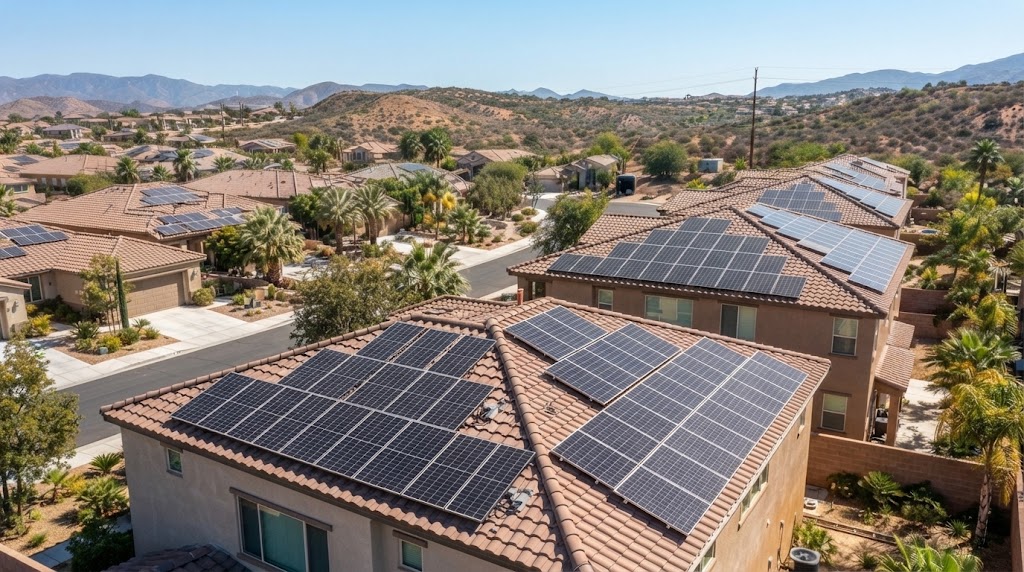
In California, south-facing roofs receive the most consistent, direct sunlight throughout the day, generating the maximum amount of energy per panel. West-facing roofs are also highly valuable because they produce power during late afternoon peak hours when utility electricity prices spike. East-facing roofs perform reasonably well, while north-facing roofs are rarely ideal. Trees, neighboring buildings, chimneys, or dormers that cast shadows across your roof will reduce production, requiring either microinverters or a slightly larger panel count to make up for lost output.
4. Regional Solar Irradiance Across California
California spans several distinct climate microclimates. A home in sunny inland areas like Fresno, Bakersfield, or the Inland Empire receives significantly more peak sunlight hours per day than a home along the coastal fog belts of San Francisco, Monterey, or Humboldt County. Homes in regions with higher sun intensity generate more kilowatt-hours per panel, meaning inland homeowners often require slightly fewer panels than coastal homeowners with identical electricity bills.
Quick Answer Guide: Common California Solar Questions
How many solar panels are needed for a 2,000 square foot home in California?
A typical 2,000-square-foot California home using approximately 7,500 to 9,000 kWh of electricity per year generally needs 14 to 20 solar panels rated at 400 watts each. The exact panel count depends on your daily cooling habits, whether you own an electric vehicle, and the orientation of your roof.
When should you call a licensed California contractor for a solar evaluation?
You should reach out to a licensed professional as soon as your monthly utility bill consistently exceeds $200, or before you make major home updates like installing an EV charger, building a pool, or upgrading your main electrical panel. A pre-vetted contractor can evaluate your electrical infrastructure and design a system to match your upcoming energy needs.
Is it worth installing solar panels in California under NEM 3.0?
Yes, solar is still highly worthwhile under NEM 3.0, but system design has shifted. Under the new rules, pairing solar panels with a home battery backup system allows you to store excess daytime solar energy and use it during high-cost evening peak hours, maintaining strong long-term utility savings.
DIY Solar Planning vs. Hiring a Licensed California Contractor
With endless online calculators and self-help tutorials available, some homeowners wonder if they can size, buy, and install a solar energy system on their own. While analyzing your past utility bills is a great first step, professional system design and installation require deep industry expertise, specialized tools, and strict regulatory compliance.
What You Can Handle on Your Own
- Gathering 12 months of utility statements to review your historical kilowatt-hour usage.
- Identifying obvious roof obstructions such as overhanging tree branches or large skylights.
- Deciding on long-term home electrification goals, such as buying an electric vehicle, installing heat pumps, or adding a swimming pool.
Why Professional Execution Matters in California
- Title 24 Energy Code Compliance: California has strict building energy efficiency standards. A licensed contractor ensures your system meets state energy guidelines and structural load-bearing limits.
- CSLB Licensing & Safety: Solar installation involves high-voltage electrical work and structural roof penetrations. Contractors licensed by the California Contractors State License Board (CSLB) possess the required C-10 (Electrical) or C-46 (Solar) licenses to execute work safely.
- Permitting and Municipal Approvals: Every California city and county has unique permitting processes and structural engineering requirements. Experienced pros handle all paperwork, building inspections, and utility interconnection agreements on your behalf.
- Utility Grid Interconnection: Connecting your system to major utilities like PG&E, SCE, or SDG&E requires precise documentation and adherence to complex interconnection rules. Professional contractors navigate these bureaucratic processes seamlessly.
Attempting a DIY installation or hiring an unlicensed handyman jeopardizes your homeowner's insurance, voids manufacturer warranties on panels and roof materials, and can lead to severe structural or electrical safety risks. Submitting a simple online inquiry matches you with fully vetted, insured, and state-licensed professionals who handle every detail from permit to power-on.
Navigating System Costs, NEM 3.0, and Real Financial Factors
Understanding solar economics in California requires looking beyond panel counts to examine how utility policies, equipment options, and local incentives shape your actual return on investment.
The Impact of NEM 3.0 and Battery Storage
In April 2023, California implemented Net Energy Metering 3.0 (NEM 3.0). Under NEM 3.0, the credit value for excess solar electricity exported back to the utility grid during the day was reduced by approximately 75%.
To maximize savings today, modern California solar systems are designed around self-consumption. Adding a solar battery storage system allows you to store your abundant daytime solar power instead of sending it back to the grid for reduced credits. You then draw from your battery during expensive peak rate hours (typically 4:00 PM to 9:00 PM), avoiding premium utility charges entirely.
Key Cost Drivers
- Equipment Quality: Premium high-efficiency panels and microinverters cost more upfront but deliver higher energy output and longer warranty coverage (often 25 years).
- Battery Integration: Adding energy storage increases upfront equipment costs but is essential for unlocking maximum savings and providing emergency backup power during outage events.
- Roof Condition and Electrical Upgrades: Older roofs may require repairs or a full re-roof before solar installation. Additionally, older homes with 100-amp electrical panels may require a main panel upgrade (MPU) to handle the solar input.
- Incentives and Tax Credits: The Federal Inflation Reduction Act offers a 30% Residential Clean Energy Credit on qualified solar equipment and battery storage installation costs, significantly lowering your net investment.
Because pricing depends heavily on your specific utility provider, roof condition, and energy goals, fixed online estimates are rarely accurate. Requesting a custom, no-obligation quote from a local specialist provides an itemized breakdown tailored to your home.
How Online Quote Forms Simplify Finding the Right California Pro
Searching for a reliable solar contractor through traditional directory listings or cold-calling local companies can be frustrating and time-consuming. Utilizing an online quote request system streamlines the entire vetting process, putting you in direct contact with verified local pros who are ready to earn your business.
What to Look for in a California Solar Contractor
When reviewing potential installers, ensure they satisfy these mandatory state requirements and quality markers:
- Active CSLB License: Verify that the company holds an active C-10 (Electrical) or C-46 (Solar) license in good standing.
- Comprehensive Insurance: Ensure they carry both general liability insurance and workers' compensation coverage to protect your property and workers during installation.
- Transparent Warranties: Look for contractors offering strong workmanship warranties alongside 25-year manufacturer performance warranties for panels and inverters.
- Verified Customer Reviews: Check recent feedback from local homeowners in your city to verify past performance, communication quality, and project timelines.
How a Simple 60-Second Inquiry Form Helps You
- Saves Hours of Research: Instead of searching through dozens of websites and making frustrating follow-up calls, submitting your basic project details automatically routes your request to qualified, background-checked pros in your area.
- Delivers Tailored System Designs: Matched contractors utilize satellite imagery and advanced design software to analyze your roof dimensions, shading, and local sun exposure before ever setting foot on your property.
- Puts You in Full Control: You receive clear, side-by-side proposals with itemized pricing, estimated utility savings, and equipment choices. There is zero obligation to buy, allowing you to review options at your own pace.
Essential Questions to Ask Your Matched Contractor
Once a local pro reaches out to discuss your project proposal, ask these targeted questions to make an informed decision:
- What specific panel brands, inverter technologies, and battery systems do you recommend for my roof, and why?
- Will my roof require any repairs or electrical panel upgrades before the solar installation begins?
- How do you handle the city permitting, building inspection, and utility interconnection processes?
- What specific warranties cover workmanship, roof leak protection, and equipment performance over time?
- How is my system designed to maximize energy savings under California's current NEM 3.0 rules?
Frequently Asked Questions by California Homeowners
How do I figure out my exact annual electricity usage?
Check your online utility portal account (PG&E, SCE, SDG&E, or your local municipal provider). Look for your historical energy summary page, which lists your monthly kilowatt-hour (kWh) usage for the past 12 to 24 months. Total up the last 12 months to get your baseline annual consumption figure.
Can solar panels power my whole house during a utility grid outage?
Solar panels alone automatically shut off during grid outages for safety reasons (to prevent backfeeding electricity onto lines where utility personnel may be working). However, if your solar system is paired with a home battery storage system, your home can automatically switch to battery power during an outage, keeping critical appliances, lights, and medical devices running seamlessly.
How much roof space do I need to install solar panels?
Each residential solar panel is approximately 3.5 feet wide by 5.5 feet long (about 17.5 to 20 square feet). A typical 16-panel array requires around 300 to 350 square feet of unobstructed, unshaded roof space.
What happens if my roof needs to be replaced in a few years?
It is strongly recommended to repair or replace an aging roof before installing solar panels. If you replace your roof after panels are installed, you will have to pay a contractor to detach and reset the solar array while the roofing work is being done. Coordinating roofing and solar work together often saves time and reduces labor costs.
Do solar panels increase property taxes in California?
Under current California tax guidelines, installing a active solar energy system is generally excluded from property tax reassessments. This means you can add significant value and functional equity to your home without triggering an immediate increase in your annual property tax bill.
Take the Confusion Out of Solar: Get Your Custom Quote Today
Every California home is unique, from its daily energy demands and architectural layout to its local climate and utility rate structures. While general estimates provide a starting framework, the best way to get absolute clarity on panel counts, battery requirements, equipment costs, and monthly utility savings is to request a customized system proposal designed specifically for your home.
Partnering with a pre-vetted, state-licensed California contractor ensures your system is designed safely, complies fully with Title 24 energy codes, and delivers maximum financial savings for decades to come.
Take the guesswork out of switching to solar power. Fill out our quick, zero-obligation online inquiry form below to connect with top-rated, licensed solar professionals in your area today!
Get Matched with Vetted California Solar Pros
Ready to see how much you could save on your monthly energy bills? Take 60 seconds to complete the inquiry form below. We will match you with top-rated, fully licensed, and insured solar contractors in your local California neighborhood for a personalized, no-pressure system evaluation.
Please visit us here to find Find top-rated service pros for your project or call us at 1 (888) 646-7358!