Flooring Trends That Can Transform Your Home
Nov/27/2026 40Flooring Trends That Can Transform Your Home
Walking into a room with brand-new floors changes the entire feeling of a house. You can paint the walls, buy new couches, and hang expensive art, but if your floors are scratched, faded, or stuck in a style from twenty years ago, the whole space still feels tired. On the flip side, updating your floors gives your home an instant facelift. It makes rooms look bigger, brighter, cleaner, and far more valuable.
If you are thinking about starting a flooring project soon, you are in a great spot. Flooring technology and interior design have come a long way. Today, you do not have to choose between a floor that looks like a magazine cover and a floor that can survive muddy boots, spilled juice, and energetic dogs. Modern materials give you both.
Before you pick up the phone to schedule an in-home estimate with a local flooring contractor, it helps to know what is currently shaping modern homes. Walking into that first contractor meeting with a clear vision saves you time, prevents costly mistakes, and helps you get accurate quotes. Let us walk through the most exciting flooring trends that are transforming homes right now, along with practical tips on how to talk about them with your installer.
Saying Goodbye to Cold Gray and Welcoming Warm Wood Tones
For the past decade, cool gray floors took over almost every home renovation show on television. People loved them because they felt sleek and modern. However, after living with gray floors for years, many homeowners realized that cool gray can make a living room feel cold, sterile, and a little bit gloomy—especially on cloudy days.
The biggest shift in home design right now is a strong return to warm, natural wood tones. Designers and homeowners are falling back in love with colors that feel grounded, cozy, and inviting. Think about soft honey oak, warm caramel, golden beige, rich chestnut, and natural walnut. These shades bring life back into a room. They pair effortlessly with creamy white walls, warm beige furniture, black metal accents, and natural stone countertops.
Even better, warm mid-tone woods are remarkably forgiving in daily life. Very dark espresso floors show every speck of dust and every tiny scratch, while stark white or gray floors highlight dirt and pet hair. A warm, medium-toned oak hides everyday crumbs and paw prints between cleanings, making your life much easier.
When you speak with your contractor, ask to see samples of warm oak or chestnut in your actual home lighting. Wood tones look completely different under bright store fluorescent lights than they do in your living room at four in the afternoon. A good contractor will always let you hold samples against your baseboards and cabinets before you place an order.
Wide Planks That Make Small Rooms Feel Huge
If you look at older hardwood floors, you will notice the boards are usually very narrow—often just two or three inches wide. While thin strips have a classic charm in historic houses, modern homeowners are going much wider. Planks that measure seven, eight, or even nine inches across are now one of the most requested styles in home remodeling.
The reason wide planks work so well comes down to simple visual math. Wider boards mean fewer seams and fewer lines breaking up the floor. When your eyes are not distracted by dozens of busy lines, the floor looks calm, clean, and continuous. This trick instantly makes a small living room, narrow hallway, or open-concept kitchen feel much larger and more spacious than it actually is. Wide boards also allow the natural swirls, knots, and grain patterns of the wood to shine through without looking cluttered.
There is an important technical detail to discuss with your contractor if you want wide planks. Real solid hardwood naturally expands and contracts when the humidity in your house changes between summer and winter. Because wide solid wood boards have more surface area, they can sometimes cup or warp if moisture levels swing wildly. To solve this problem, most contractors recommend engineered hardwood or high-end luxury vinyl plank for extra-wide styles. Engineered wood has a real hardwood top layer bonded to a super-stable plywood core, giving you the authentic beauty of wide wood boards without the risk of warping. Also, ask your installer about subfloor flatness—wide planks require a very flat subfloor so the edges stay flush and do not creak when you walk across them.
Waterproof Luxury Vinyl Plank That Fools Everyone
Ten years ago, if someone mentioned vinyl flooring, you probably pictured thin, shiny sheets that peeled up at the corners in an old kitchen. Those days are completely gone. Modern Luxury Vinyl Plank, often called LVP, has become a powerhouse in the remodeling world, and for good reason.
Today’s LVP uses advanced printing and texturing technology called "embossed in register." This means the tiny grooves and textures pressed into the surface of the plank line up directly with the printed wood grain underneath. When you look at it and walk on it barefoot, it feels remarkably like real textured oak or hickory.
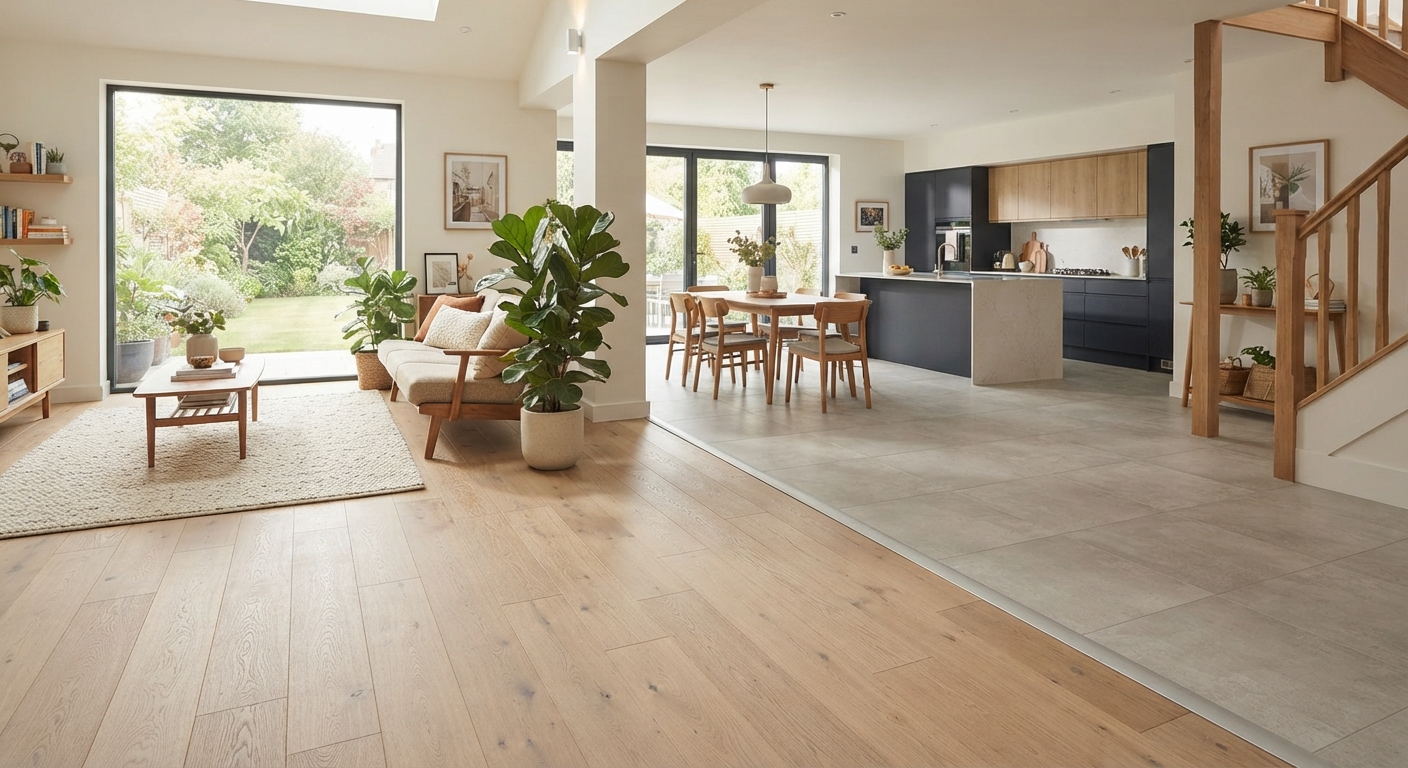
The true magic of LVP, however, is its toughness. Quality LVP is completely waterproof from top to bottom. You can install it in kitchens, bathrooms, laundry rooms, and basements without worrying about a leaking dishwasher or wet bathmats ruining your investment. It also resists scratches from dog nails and dents from dropped toys far better than traditional softwoods. Many busy families now run the exact same waterproof LVP through their entire main floor—from the front entryway straight through the kitchen and into the living room—creating a seamless, unified look throughout the house.
If you decide to explore LVP with a contractor, do not just look at the color. Ask about the wear layer thickness and the core type. A thicker wear layer (measured in mils, with 20 mil or higher being ideal for busy homes) protects the design from heavy foot traffic. You should also ask about rigid core options like SPC (Stone Plastic Composite), which stays rock-solid even in sunny rooms where temperatures rise.
Statement Patterns: Herringbone, Chevron, and Soft Checkerboard
Sometimes, the biggest transformation does not come from a new material—it comes from changing the direction in which the floor is laid. Straight, parallel boards will always be popular, but patterned layouts are making a massive comeback for homeowners who want their house to feel custom-designed.
Herringbone is at the top of the list. In a herringbone pattern, rectangular planks are arranged in a staggered zigzag that resembles the bones of a fish. It adds instant architectural elegance and movement to a room. Chevron is a close cousin, where the ends of the planks are cut at an angle so they meet in a sharp, continuous V-shape. Both patterns turn an ordinary floor into a work of art.
Meanwhile, in kitchens, mudrooms, and entryways, checkerboard tile is experiencing a stylish revival. Instead of the harsh, high-contrast black-and-white diner look from the 1950s, today’s checkerboard floors use soft, earthy colors. Homeowners are pairing warm cream tiles with soft sage green, muted clay, taupe, or gentle charcoal limestone. It feels vintage, cozy, and timeless all at once.
You do not have to put a bold pattern across your entire house to get the effect. Many smart homeowners use herringbone wood in the front entryway or formal dining room to create a dramatic first impression, then transition to standard straight planks in the main living areas.
Keep in mind that patterned floors require real craftsmanship. Cutting angles and keeping diagonal lines perfectly straight across a room takes extra skill and time. When getting quotes from contractors, always mention upfront if you want herringbone or checkerboard. Expect labor costs to be slightly higher for intricate layouts, and expect to buy about ten to fifteen percent extra material to account for angled cuts and waste.
Low-Sheen, Matte Finishes Over High Gloss
For decades, shiny, glossy wood floors were seen as a sign of luxury. People buffed and waxed their floors until they looked like mirrors. Today, the exact opposite is true. High-gloss floors have fallen out of favor because they show every single footprint, smudge, dust bunny, and micro-scratch the moment sunlight hits the room.
Modern homeowners overwhelmingly prefer matte and satin finishes. A matte finish has very little shine. Instead of bouncing harsh glare back into your eyes, it absorbs light softly, making the floor look like raw, natural, untouched timber. Paired with subtle wire-brushed textures—where soft wood fibers are gently brushed away to highlight the harder grain—matte floors feel organic and relaxed under your feet.
From a practical standpoint, matte finishes are a dream for busy households. They hide minor wear and tear effortlessly, meaning you will not feel the urge to mop every single afternoon just to keep the floor looking presentable.
When discussing finishes with your contractor, ask about matte UV-cured urethane or aluminum oxide coatings. These modern factory finishes give you that gorgeous, low-luster natural oil look while providing an invisible shield against scratches and stains. If you are having real hardwood sanded and stained on-site by a contractor, ask them to show you sample boards coated in a water-based matte polyurethane so you can see how clean and natural the final sheen will look.
Large-Format Tiles That Eliminate Messy Grout Lines
If you have ever spent a Saturday afternoon on your hands and knees scrubbing dark, dirty grout lines in a kitchen or bathroom, you already know why large-format tile is taking over.
Standard floor tiles used to be twelve-by-twelve-inch squares. Today, homeowners are choosing massive porcelain tiles measuring twenty-four by twenty-four inches, twenty-four by forty-eight inches, or even larger. Because each tile covers so much ground, there are far fewer grout joints across the room.
Fewer grout lines do two wonderful things for your home. First, they make cleaning dramatically easier because dirt and spills have nowhere to hide. Second, they create a sleek, uninterrupted surface that makes bathrooms, kitchens, and sunrooms feel expansive and serene. Many modern porcelain tiles mimic warm limestone, travertine, or soft concrete, giving you the spa-like beauty of natural stone without the hassle of sealing porous rock every year.
Installing large-format tile is not a beginner DIY project—it is a job where hiring an experienced contractor pays off massively. Heavy, oversized tiles require specialized leveling systems so one corner does not stick up higher than the next (a problem installers call "lippage"). They also require a completely rigid, flat subfloor so the large tiles do not crack under pressure. Ask your tile contractor if they use a lippage tuning system and an uncoupling membrane underneath the tile to guarantee a flawless, crack-free installation.
Sustainable and Healthy Eco-Friendly Flooring
More than ever, homeowners are thinking about what their floors are made of and how those materials affect the air they breathe inside their homes. Since flooring covers every square foot of your living space, choosing healthier, eco-friendly materials makes a huge difference in indoor air quality.
Several sustainable materials are gaining huge popularity right now:
- Cork Flooring: Harvested from the bark of cork oak trees without cutting the tree down, cork is completely renewable. It is naturally warm to the touch, absorbs sound so footsteps stay quiet, and has a gentle bounce that feels wonderful on your knees and back while cooking in the kitchen.
- Marmoleum (Natural Linoleum): Not to be confused with synthetic vinyl, true linoleum is made from natural linseed oil, pine rosin, wood flour, and jute. It is naturally antibacterial, biodegradable, and comes in gorgeous modern colors.
- FSC-Certified Hardwood and Bamboo: Wood certified by the Forest Stewardship Council ensures the trees were harvested from responsibly managed forests. Strand-woven bamboo is another fast-growing grass option that is actually harder than traditional red oak.
- Low-VOC Finishes and Adhesives: Volatile Organic Compounds (VOCs) are chemicals that can release fumes into your home after installation. Homeowners are specifically requesting low-VOC or zero-VOC flooring products, glues, and sealers so their homes stay fresh and safe for kids and pets from day one.
If healthy indoor air is a priority for your family, bring it up during your initial consultation. Ask your contractor to recommend FloorScore or GREENGUARD Gold certified products, which are tested to meet strict indoor air emission standards.
Cozy, Textured Carpet Making a Smart Return in Bedrooms
For a few years, some homeowners ripped out every single inch of carpet in their houses, putting hard surfaces in every room. Now, people are realizing that while hard floors are unbeatable in kitchens, hallways, and living rooms, nothing beats soft carpet when you step out of bed on a chilly morning.
Carpet is making a smart, targeted comeback in bedrooms, walk-in closets, home theaters, and finished basements. However, the carpet trending today is not the thick, shaggy plush carpet of the past. Instead, homeowners are choosing low-pile textured carpets, patterned loops, and soft wool blends in warm neutral tones like oatmeal, warm sand, and soft taupe.
Subtle geometric patterns, ribbed textures, and flecked weaves give the floor visual depth while hiding vacuum tracks and footprints. Plus, modern synthetic fibers like solution-dyed nylon and triexta have built-in stain resistance that cannot wash off, making spills easy to blot away with plain water.
When getting a quote for bedroom carpet, pay close attention to the carpet pad underneath. Contractors often tell clients that a high-density, moisture-barrier carpet pad is just as important as the carpet itself. A good pad makes the carpet feel twice as luxurious underfoot, absorbs noise between floors, and extends the life of the carpet fibers by years.
How to Prepare Before Meeting With a Flooring Contractor
Knowing the trends is half the battle. The other half is working smoothly with a professional contractor so your vision turns into reality without budget surprises or scheduling headaches. When you invite local flooring pros into your home to measure and give you quotes, keeping a few smart habits in mind will put you in total control of the project.
1. Think About Lifestyle Before Looks
Be honest with your contractor about how you actually live. Do you have two golden retrievers that race around corners? Do you have toddlers who drop sippy cups? Do you host big holiday dinners where people wear high heels? A great contractor will steer you away from soft pine or delicate marble if you have a busy household, pointing you toward durable engineered oak, rigid-core LVP, or tough porcelain tile that fits your real routine.
2. Ask About Subfloor Preparation
The secret to a floor that lasts twenty years is hidden underneath the surface. Before new flooring goes down, old carpet, tile, or glue must be removed, and the wooden or concrete subfloor must be checked for dips, squeaks, or moisture. When comparing quotes from two different contractors, check if subfloor leveling and furniture moving are included in the price. Sometimes a quote looks cheaper simply because the contractor left subfloor prep out of the initial estimate, only to add it as an extra charge once the job starts.
3. Discuss Transitions and Baseboards
Ask your contractor how the new floor will meet existing floors in other rooms, doorways, and stairways. Flush transitions look much cleaner than bulky plastic strips. You should also ask whether they will remove and reinstall your existing baseboards or install quarter-round molding along the bottom edge. Knowing these finishing details upfront guarantees you will love the final look.
4. Always Compare Multiple Local Quotes
Every home has unique angles, closet spaces, and subfloor conditions. Getting at least two or three written estimates from vetted local flooring contractors allows you to compare pricing, timelines, and warranty coverage side by side. Pay attention to how well each contractor communicates, whether they bring physical samples to your home, and how clearly they explain the installation process.
Ready to Bring Your Vision to Life?
Replacing your floors is one of the smartest investments you can make in your home. Whether you are drawn to the cozy warmth of wide-plank honey oak, the worry-free durability of waterproof luxury vinyl, or the timeless elegance of a herringbone entryway, the right floor will make you fall in love with your house all over again.
Now that you know which styles, textures, and materials are leading the way, you are ready to take the next step. Reach out to trusted local flooring contractors in your area, invite them over to measure your space, and look at samples in your own lighting. With a clear idea of what you want and the right pro on your side, your dream home transformation is right beneath your feet.
Please visit us here to find Find top-rated service pros for your project or call us at 1 (888) 646-7358!