Common Roofing Problems in California
Oct/12/2026 47California Roofing Repair Quote: Fix Common Roof Damage Fast
If you have ever caught yourself staring up at a dark, faint water stain expanding across your living room ceiling after a heavy downpour, you know that sudden sink-in feeling in your chest. Or maybe you were walking out to grab the morning paper and noticed a cluster of curled, sun-baked shingles scattered across your front lawn after a brutal summer heatwave.
Your home is your sanctuary, and the roof above your head is its very first line of defense. When something starts going wrong overhead, it is completely natural to feel overwhelmed. You might start stressing about massive unexpected expenses, worrying about whether you can find a trustworthy contractor who won't take advantage of you, or wondering if a minor drip means you need a costly, full-scale replacement.
Here is the good news: catching roof issues early is the single best way to protect your budget and your home's structural integrity. You do not have to figure out complex construction schedules or navigate state building permits on your own. Modern home service connections make finding the right help easier than ever. By submitting a simple online inquiry form, you can instantly eliminate the stress of cold-calling contractors and get matched directly with local, vetted California roofers who will inspect your roof and provide a clear, no-obligation cost estimate.
Understanding Common Roofing Problems in California
Living in California offers incredible sunshine and beautiful landscapes, but our unique regional weather puts continuous, intense pressure on residential roofs. From coastal moisture and atmospheric rivers to relentless summer UV rays, California homes face environmental conditions that accelerate wear and tear in ways many homeowners do not realize until water starts coming through the ceiling.
Understanding what is happening above your head is the first step toward protecting your investment. Let us look at the most common roofing issues affecting Golden State homes, why they happen, and what can occur if they are left unaddressed.
Thermal Shock and Thermal Degradation from Intense Sun
In regions like the Central Valley, Inland Empire, and Southern California deserts, roofs endure month after month of scorching sunshine and intense ultraviolet radiation. Summer attic temperatures can easily surpass 150 degrees Fahrenheit.
This extreme, continuous heat bakes asphalt shingles, drying out the natural oils that keep them flexible and water-resistant. Over time, shingles become brittle, crack, and lose their protective mineral granules. Furthermore, California homes frequently experience high daytime temperatures followed by sudden nighttime cooling. This rapid shifting causes roofing materials to expand and contract repeatedly—a phenomenon known as thermal shock. Thermal shock breaks sealant bonds, pulls flashing away from structural joints, and causes shingles to buckle or pull loose.
Atmospheric Rivers, Heavy Rainfall, and Wind Damage
While California is famous for dry spells, winters often bring powerful atmospheric rivers. These atmospheric events dump immense volumes of water alongside strong, sustained wind gusts over short periods.
When high winds sweep across your roof, they lift up worn or improperly fastened shingles, breaking their adhesive seals. Driven rain can then slide upward underneath the lifted shingles, saturating the underlayment below. If your underlayment is aged or deteriorated, that water finds the smallest seam or nail hole and drips directly into your attic space, ceiling drywall, and wall cavities.
Coastal Salt Air and High Humidity Corrosion
For homeowners along the coast—from San Diego up through the Bay Area and Northern California beaches—ocean air presents a unique set of challenges. Salt-laden fog and persistent marine layers carry high moisture and sodium content that settles directly on roof surfaces.
This salty air rapidly corrodes metal roof components, including valleys, edge flashing, pipe boots, and exposed nails or fasteners. As metal flashing corrodes and weakens, water creates subtle pathways into your home that can go undetected for months, quietly rotting the roof deck beneath.
Wildfire Ash, Debris Accumulation, and Tile Cracking
Wildfire season brings dry conditions, hot winds, and heavy air born of smoke and ash. Fine ash settles into roof valleys, gutters, and downspouts. When mixed with dew or light rainfall, ash forms a dense, heavy sludge that clogs gutter channels and traps standing water against your roof's lower edges.
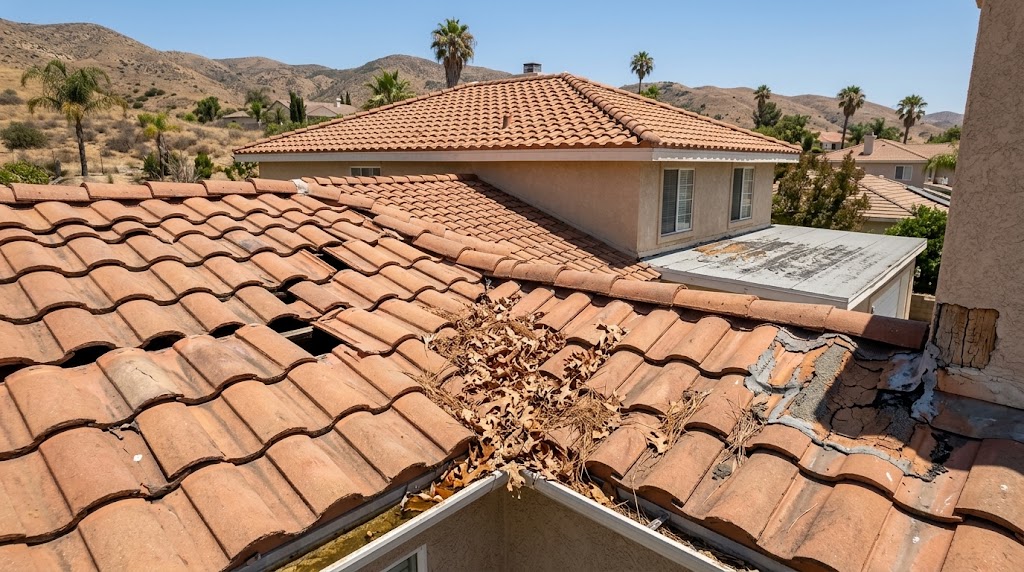
Additionally, many California homes feature beautiful concrete or clay tile roofing designed to resist fires and complement Mediterranean architecture. However, heavy debris, falling tree branches, or even improperly placed foot traffic during routine maintenance can easily crack these brittle tiles. Once a tile cracks or shifts out of alignment, the sensitive felt underlayment beneath is exposed directly to sun and water, leading to rapid deterioration.
The Hidden Dangers of Delaying Roof Repairs
It is tempting to put off minor roof fixes, especially if a leak only appears during heavy rainfall. However, ignoring small symptoms usually leads to exponentially higher repair bills down the road:
- Structural Wood Rot: Water migrating past shingles quickly saturates structural wood, including plywood decking, rafters, and ceiling trusses. Replacing rotted framing is far more expensive than replacing localized shingles.
- Toxic Mold and Mildew: Trapped moisture in warm attics creates an ideal environment for dangerous mold spores to flourish within 24 to 48 hours, posing serious health risks to your family and requiring costly professional remediation.
- Insulation Destruction: Saturated attic insulation loses its thermal resistance (R-value) permanently, causing your heating and cooling bills to skyrocket as warm or cool air leaks out of your home.
- Electrical Hazards: Water leaking near ceiling light fixtures, junction boxes, or wall outlets creates severe short-circuit and fire hazards.
Frequently Asked Questions About California Roof Repairs
When facing potential roof repairs, having clear, direct answers helps you make informed choices about your home. Here are quick answers to key questions every California homeowner should know.
How Much Does a California Roofing Repair Cost?
A standard residential roof repair in California generally ranges between $400 and $1,800, depending on the severity of the damage, roofing material, and pitch. Minor repairs like replacing a few damaged asphalt shingles or sealing a pipe boot often fall on the lower end. Complex repairs involving structural deck rot, valley replacement, or matching custom clay tiles can cost $2,500 or more. Obtaining a professional online inquiry quote is the best way to determine precise, localized pricing.
When Should You Call a Professional Roofing Contractor?
You should call a licensed professional as soon as you notice visible water stains on ceilings, sagging rooflines, missing or curled shingles, damaged flashing around chimneys, or piles of shingle granules at downspout outlets. Attempting to inspect or repair steep or damaged roofs yourself presents serious safety risks. Professional contractors have the specialized fall protection equipment, licensing, and expertise required to diagnose hidden leaks safely and accurately.
Is it Worth Repairing a Roof, or Should You Replace It?
If your roof is under 15 to 20 years old, in overall good structural condition, and the damage is localized to a small area, a targeted repair is highly cost-effective and can extend your roof's lifespan for years. However, if your roof is past its expected lifespan, shows widespread material degradation across multiple sections, or requires repairs exceeding one-third of total replacement costs, investing in a full replacement is usually the smarter long-term financial decision.
DIY vs. Professional Roofing Expertise
When a homeowner notices a problem overhead, the instinct to save money by taking a DIY approach is understandable. Tackling weekend home improvements can be rewarding, but roofing is one area where DIY attempts frequently turn small, manageable issues into costly disasters.
What Minor Maintenance Homeowners Can Safely Handle
There are a few basic preventive maintenance tasks that comfortable homeowners can perform safely from ground level or a sturdy stepladder:
- Clearing Lower Gutters: Keeping lower gutter troughs clear of fallen leaves, twigs, and light ash allows rainwater to drain away freely, preventing standing water backups.
- Ground-Level Inspections: Walking around your home's perimeter with a pair of binoculars after major storms helps you spot missing shingles, damaged ridge caps, or sagging gutters without ever leaving the safety of the ground.
- Trimming Nearby Overhanging Branches: Pruning back small tree branches hanging close to your roof line prevents squirrels and roof rats from jumping onto your home and keeps abrasive leaves from scraping away protective shingle granules.
Why Complex Roof Work Requires a Licensed California Contractor
Beyond simple visual checks and basic ground-level cleaning, actual roof repair work should always be handled by a qualified, licensed professional. Here is why:
+------------------------------------------------------------------+
|               RISKS OF DIY VS. PROFESSIONAL ROOFING              |
+------------------------------------------------------------------+
| DIY DANGERS                        | LICENSED PRO ADVANTAGES     |
| • Severe fall & injury risks       | • Full safety gear & OSHA   |
| • Misdiagnosed leak sources        | • Thermal/diagnostic tools  |
| • Voided manufacturer warranties   | • Retains factory coverage  |
| • Non-compliant permit work        | • CSLB & Title 24 compliant |
+------------------------------------------------------------------+
Extreme Personal Safety Hazards
Roofing consistently ranks among the most dangerous home maintenance jobs. Sloped surfaces, unseen slippery moss, loose granules, and heavy equipment create massive slip-and-fall hazards. Professional contractors carry specialized safety harnesses, scaffolding, and commercial ladders, along with comprehensive workers' compensation insurance to protect everyone involved.
Hidden Leak Pathways
Water rarely travels in a straight line. A leak dripping through your kitchen ceiling might actually be entering the roof deck 15 feet away at a higher chimney flashing joint, traveling along a rafter before finally dripping down. Un-trained DIYers often apply tar or caulk over the visible leak spot inside or directly above it, leaving the real moisture entry point open to continue rotting the internal roof structure.
Preserving Factory Warranties
Most modern roofing material manufacturers require certified, professional installation and repair to keep material warranties valid. Applying unapproved sealants, driving nails through incorrect shingle zones, or using incompatible underlayment materials can instantly void your multi-year warranty coverage, leaving you fully liable for future product failures.
Navigating California Roof Repair Costs and Scope
Understanding how roofing costs are calculated helps eliminate the mystery and anxiety surrounding contractor estimates. When a licensed contractor prepares a quote for your home, they evaluate several key variables that influence the total investment required.
Key Factors Shaping Your Roofing Estimate
1. Material Types and Quality
The specific roofing material installed on your home plays a primary role in overall repair or replacement expenses:
- Standard 3-Tab Asphalt Shingles: Generally the most economical option initially, though highly susceptible to thermal degradation and wind uplift over time.
- Architectural/Dimensional Shingles: Slightly higher cost, but offer significantly thicker protection, better wind ratings, and longer lifespans under California's intense heat.
- Concrete and Clay Tiles: Premium roofing option common across California homes. While highly durable and fire-resistant, individual replacement tiles are more expensive, and matching existing colors or discontinued styles requires specialized sourcing.
- Flat and Low-Slope Membranes (TPO, PVC, Modified Bitumen): Common on modern architectural designs and home additions. Require specialized hot-air welding or adhesives, impacting labor costs.
2. Scope of Damage and Decking Condition
A simple surface fix is straightforward, but if moisture has penetrated beneath the top roofing layer, damaged plywood decking must be cut out and replaced. Structural framing repairs or structural reinforcements require additional skilled labor and materials, shifting the scope from a quick patch to a deeper restoration.
3. Roof Pitch, Accessibility, and Layers
A steep, multi-story roof with multiple gables, dormers, and valleys demands extra rigging, safety equipment, and labor time compared to a single-story, low-slope ranch house. Additionally, if previous repairs resulted in multiple layers of old shingles stacked on top of each other, California building standards require tearing off all existing layers down to the bare deck before installing new roofing materials, increasing disposal and labor fees.
4. California Title 24 Energy Standards and Local Municipal Permits
California has some of the strict energy efficiency and environmental building codes in the nation. Under California's Title 24 Building Energy Efficiency Standards, major roof replacements or extensive repairs in specific climate zones must incorporate "cool roof" rated materials designed to reflect solar heat away from the building. Additionally, reputable contractors must pull municipal permits and arrange official city or county building inspections to ensure your roof meets all regional seismic, wind, and fire safety codes.
How Online Quote Forms Simplify Finding the Right California Pro
Finding a trustworthy, licensed contractor used to mean asking around for word-of-mouth recommendations, calling multiple offices during business hours, leaving unanswered voicemails, and waiting days just to schedule a initial walk-through. Today, submitting a quick online inquiry form removes the frustration, confusion, and delay from home repairs.
What to Look for in a Qualified California Contractor
When evaluating any roofing professional, verifying key credentials protects you against scam artists and unqualified handymen:
- Active CSLB Licensing: California law mandates that any construction or home improvement work valued over $500 (including labor and materials) must be performed by a contractor licensed by the California Contractors State License Board (CSLB). Ensure your roofer holds a valid C-39 Roofing Contractor license.
- Comprehensive Liability and Workers' Comp Insurance: A legitimate contractor carries active commercial general liability insurance and workers' compensation coverage to protect your property and workers in case an unexpected accident occurs on-site.
- Verifiable Local Experience: Look for contractors who have established roots in your immediate community. Local pros understand regional building inspectors, micro-climates, and local material suppliers.
- Written, Itemized Proposals: Avoid contractors who offer vague verbal quotes or demand large upfront cash payments. Trustworthy pros provide clear, written contracts breaking down labor, materials, permit fees, payment schedules, and warranty details.
Key Questions to Ask Your Matched Contractor
Once your matched contractor contacts you to review your roof, asking these practical questions will ensure complete alignment on your project:
- "Are you fully licensed under CSLB with active workers' compensation and liability insurance for your entire crew?"
- "Will my roof repair or replacement require a local municipal permit, and will your team handle the permitting and inspection process?"
- "Do you recommend 'cool roof' materials that comply with California Title 24 energy standards for my specific climate zone?"
- "What specific manufacturer and workmanship warranties come with the materials and labor for this job?"
- "How will your team protect my property, driveway, landscaping, and gutters during the tear-off and repair process?"
Frequently Asked Questions (FAQ) for California Homeowners
1. How quickly can a matched roofer come out to inspect my leaking roof?
Most local roofers matched through our online system respond within 24 hours. During active rainy seasons or after major severe weather events, emergency inspection slots are often prioritized to apply protective temporary tarping and prevent immediate interior water damage.
2. Is submitting an online quote request completely free and no-obligation?
Yes, absolutely. Submitting an inquiry form costs you nothing and carries zero obligation to hire any contractor. It simply gives you a fast, direct line to receive accurate, localized pricing from trusted professionals so you can make informed decisions.
3. How do I know if my contractor is properly licensed in California?
You can easily verify any contractor's license standing by taking their license number and entering it directly into the online CSLB license verification portal. Legitimate contractors will proudly feature their active CSLB license number on their business cards, written estimates, and promotional materials.
4. Will my homeowners insurance cover my roof repair costs?
Homeowners insurance typically covers roof damage caused by sudden, accidental events such as severe windstorms, fallen tree branches, or hail. However, standard policies generally do not cover gradual wear and tear, age-related degradation, or damage resulting from neglected routine maintenance. Your matched contractor can assist you by documenting storm damage for your insurance adjuster.
5. What are "Cool Roofs" and does my California home need one?
"Cool roofs" are built using specialized shingles, tiles, or liquid coatings designed to reflect solar radiation and absorb less heat than standard roofing materials. Under California’s Title 24 standards, cool roofs are required for many new builds and major roof replacements across warm inland climate zones to reduce home energy consumption and lower municipal heat island effects.
6. What should I do inside my house immediately while waiting for a roofer to arrive?
If water is actively dripping into your living space, catch it using sturdy buckets or plastic bins. If you notice a large water bulge forming in your ceiling drywall, carefully poke a small hole in the center of the bulge with a screwdriver to relieve weight and channel water directly into a bucket, preventing a sudden, messy ceiling collapse. Move furniture and electronics away from the area, and lay down towels to protect surrounding flooring.
Protect Your California Home with a Free, No-Obligation Roof Repair Quote
Your home is your single largest investment, and its roof works hard every single day to protect your family from intense heat, coastal air, and sudden atmospheric rainstorms. Ignoring minor signs of roof distress—a small drip, a loose shingle, or a cracked tile—only leads to bigger headaches, higher costs, and unnecessary stress down the road.
You do not have to waste hours searching online, guessing at repair costs, or worrying about whether you are hiring the right person. Getting clarity on your roof's condition is fast, simple, and entirely low-pressure.
Take the very first step toward total peace of mind today. Fill out our simple online inquiry form below to get connected with top-rated, CSLB-licensed, and fully insured local roofing professionals right in your neighborhood. Get your free, no-obligation estimate and ensure your home stays dry, safe, and protected for years to come.
Connect with us now!
Ready to restore your home's protection, safety, and comfort? Let us match you with qualified, C-39 licensed local experts who can inspect your roof, explain your options clearly, and deliver lasting quality.
Please visit us here to find Find top-rated service pros for your project or call us at 1 (888) 646-7358!